ASTM D4236 vs EN 71-3: What Art Supply Buyers Should Request
ASTM D4236 and EN 71-3 answer different safety questions. A buyer should not treat one report as a substitute for the other, or apply either automatically to every art supply item. Start with the finished product, its intended user, the way it is marketed and the destination market. Then request documents that identify the exact SKU, components and applicable requirements.
What ASTM D4236 Covers
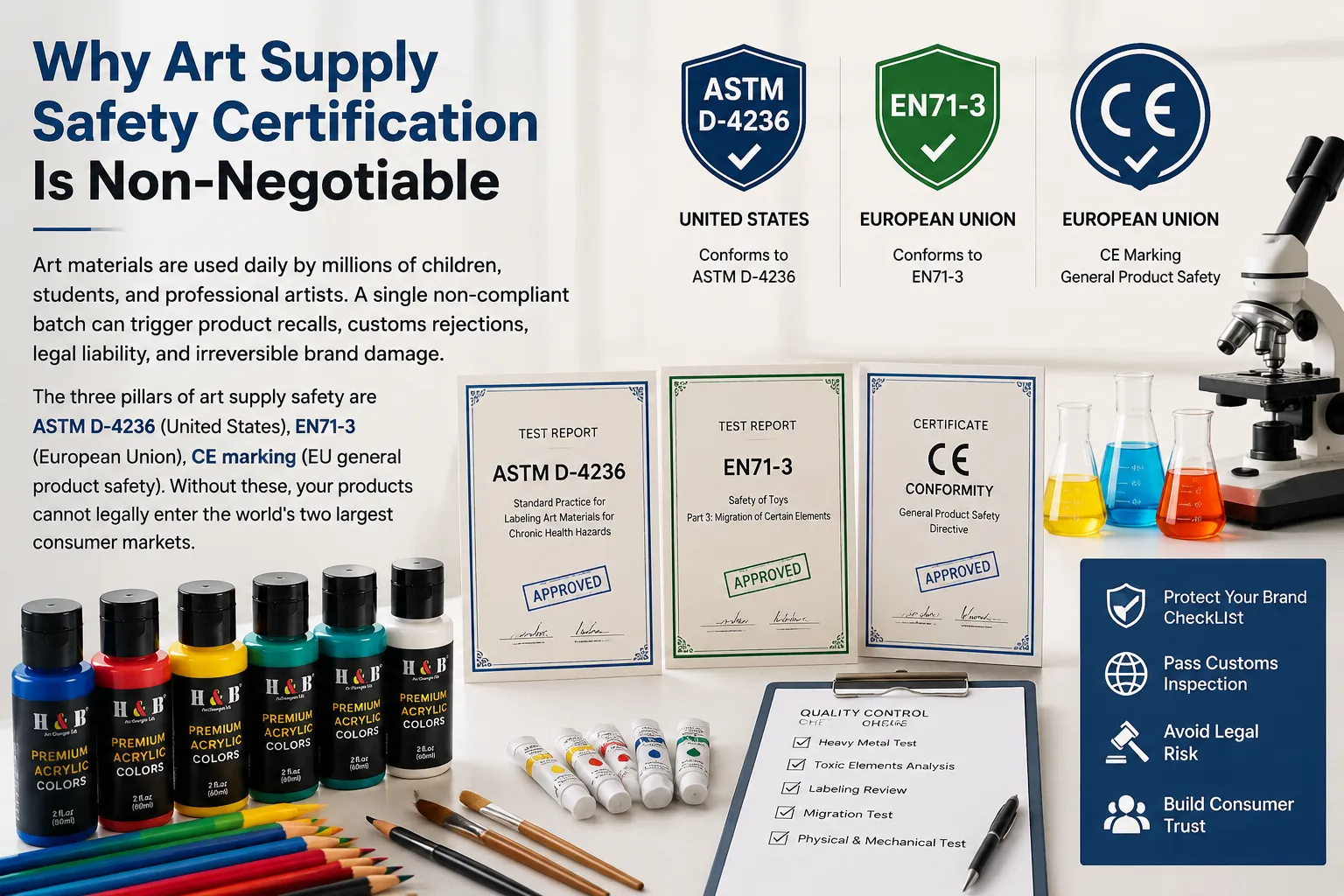
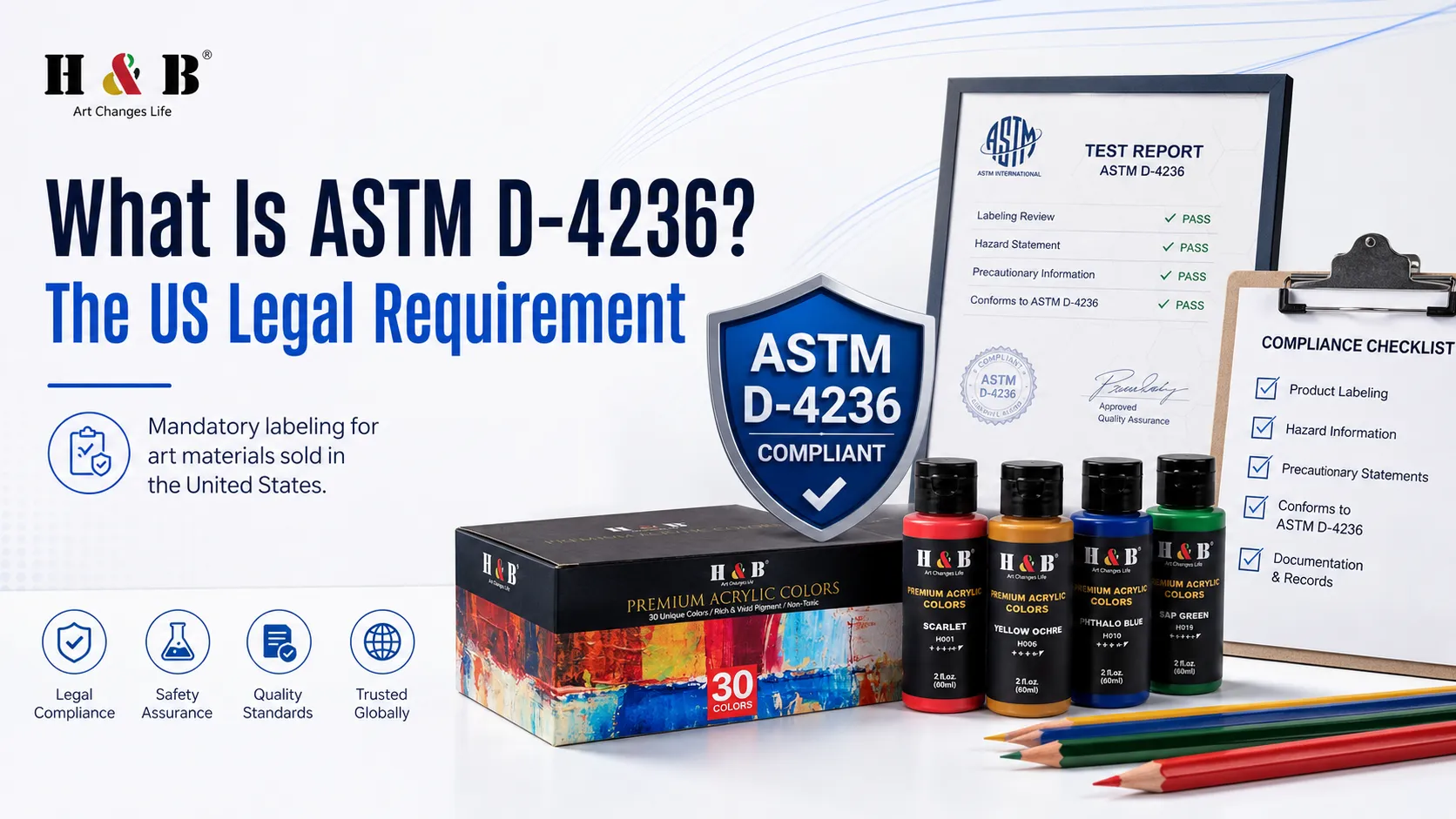
ASTM International describes D4236 as a practice for precautionary labels on art materials with known chronic health hazards. It does not prescribe a test method that proves a substance is “non-toxic.” The U.S. Consumer Product Safety Commission explains the toxicological assessment and conformity statement required for art materials under the U.S. framework.
For a U.S. order, ask the supplier which product formulation and package size were reviewed, when the assessment was completed and whether the final packaging carries the required statement and any cautionary language. A generic laboratory certificate, an old report for a different color set or an unsupported “non-toxic” icon is not the same thing as a current review of the item you will sell.
What EN 71-3 Covers
EN 71-3 is part of the European toy-safety standards and addresses migration of certain elements from toy materials. The European Commission’s toy standards page lists the applicable harmonized-standard references. A report should identify tested materials, the standard version, sample date and product configuration. The relevant rule depends on whether the finished item is classified as a toy.
A watercolor set with paint, brush and accessories may contain more materials than a single test report covers. Check the scope for each relevant component and color group. If a product changes its pigment, coating, sharpener or packaging material, ask whether the evidence must be updated. Do not assume a report for one SKU extends to all sets from a manufacturer.
How CE Marking Fits the EU Review
The European Commission says toys sold in the EU must carry CE marking and that the mark represents the manufacturer’s declaration that the toy meets applicable essential safety requirements. CE marking is not the same as an EN 71-3 test report. A photograph of the mark alone does not show the technical file, declaration or tests supporting the finished item.
Ask for the EU Declaration of Conformity, technical documentation and final warnings or language panels where the product is a toy. Check the responsible economic operator and the markets where the item will be placed. For non-toy art materials, determine which EU requirements actually apply rather than adding a toy checklist by default.
Do These Documents Prove a Product Is Safe for Children?
No single statement proves suitability for every child or use. Age marking, foreseeable use, mechanical parts, chemical composition, warnings and destination-market rules all matter. The CPSC says “non-toxic” is not a term defined by the U.S. art-material regulation. Avoid turning “Conforms to ASTM D4236” into a blanket “certified non-toxic” claim.
A buyer of school materials should specify the intended age and use, then ask for the applicable evidence for the full kit. A supplier may have legitimate documentation, but the buyer still needs to see whether it covers the exact pencils, paints, paper, accessories and packaging proposed for purchase.
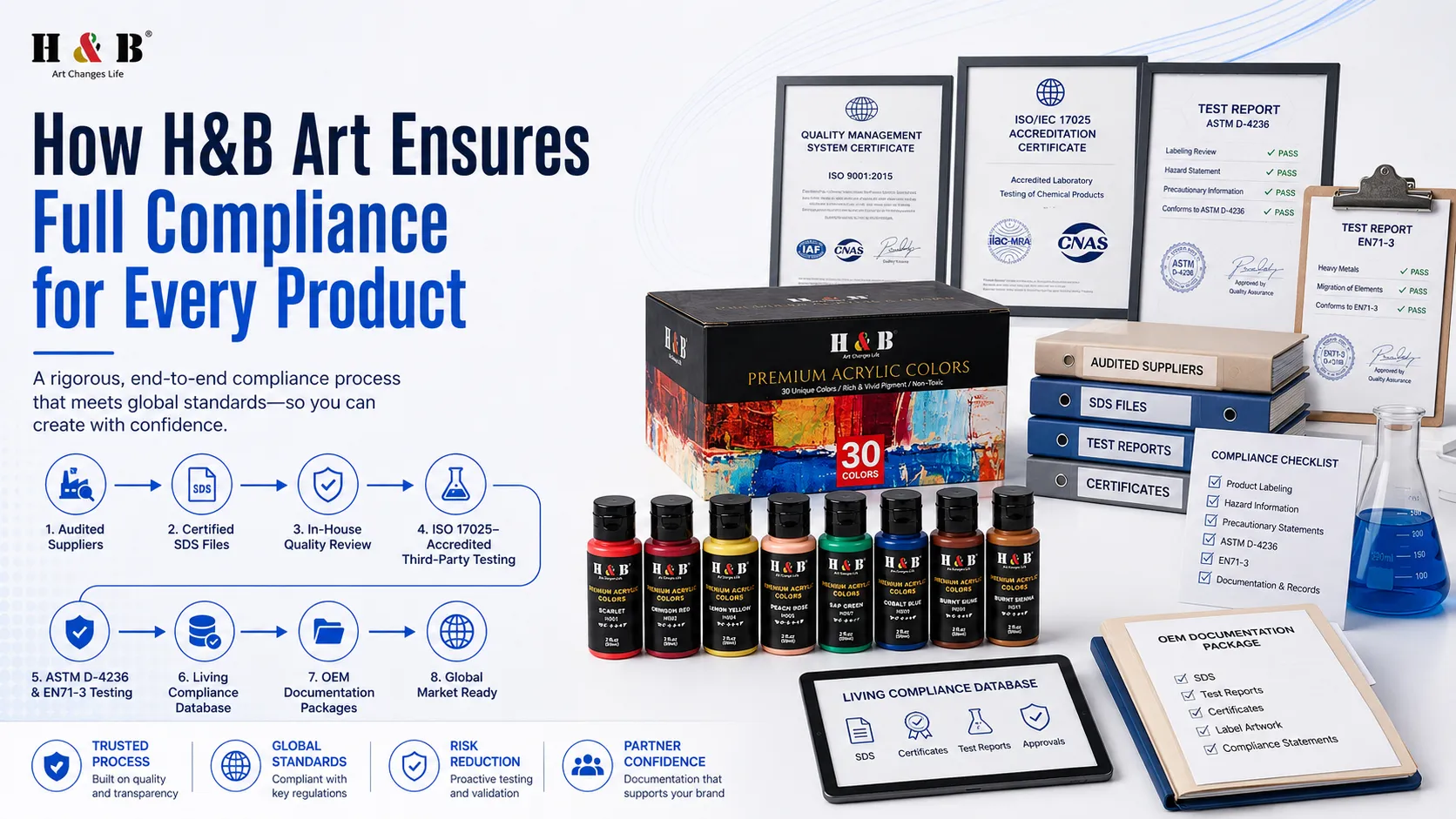
Use a Document Matrix for Each SKU
- Identify the item: model, components, formulation, color range, manufacturer and age marking.
- Define the market: destination country and whether the item is an art material, toy or another product category.
- Map the evidence: U.S. art-material assessment and label, EU toy report and declaration where applicable, plus any other confirmed local requirements.
- Check scope and dates: tested materials, versions, report holder, sample identity and changes since testing.
- Approve final artwork: claims, warnings, language panels, traceability and responsible-party details.
- Control changes: require notice when the formulation, color range, accessory or supplier changes.
Keep the matrix with the purchase specification and approved physical sample. If a document does not match the item, record the gap and resolve it before printing claims or accepting production. The answer may be a new test, corrected artwork or a narrower claim.
Questions to Ask Before Approving an Export Order
Which exact SKU and colors are covered by the U.S. review? Is the EU item classified as a toy, and what evidence supports that decision? Which materials were tested for EN 71-3 where applicable? Does the final box match the reports and declarations? Who will notify the buyer if a component changes? Can the supplier provide the final artwork and document versions in one approval pack?
Official rules and harmonized-standard references can change. Check the current destination-market requirements at the time goods are placed on the market, and use qualified product-compliance advice when classification is uncertain. A short, accurate document request is more useful than a long list of “certifications” that cannot be tied to the product.