Art Material Safety Documents for US and EU Buyers: ASTM D4236, EN 71-3 and CE Marking
A pencil, paint set or marker may be used in a classroom, a studio or a child’s play kit. Those uses can lead to different documentation and labeling questions. Buyers should begin with the intended user, product classification and destination market, then request evidence for the exact SKU and packaging configuration they will sell.
Start With the Product and Its Intended Use
List the contents of the set, the age group shown on the packaging, how it is marketed and where it will be sold. A loose artist pencil, a classroom pack and a toy-like activity kit may need different assessments. Packaging and online listings matter because they communicate the intended use to the buyer and to market authorities.
Ask the supplier to identify the manufacturer or responsible economic operator, the exact model and color range, materials and formulation families, and all components in the finished pack. If a kit includes a brush, sharpener, eraser or case, include those components in the review rather than treating the color medium as the entire product.
What ASTM D4236 Addresses in the United States
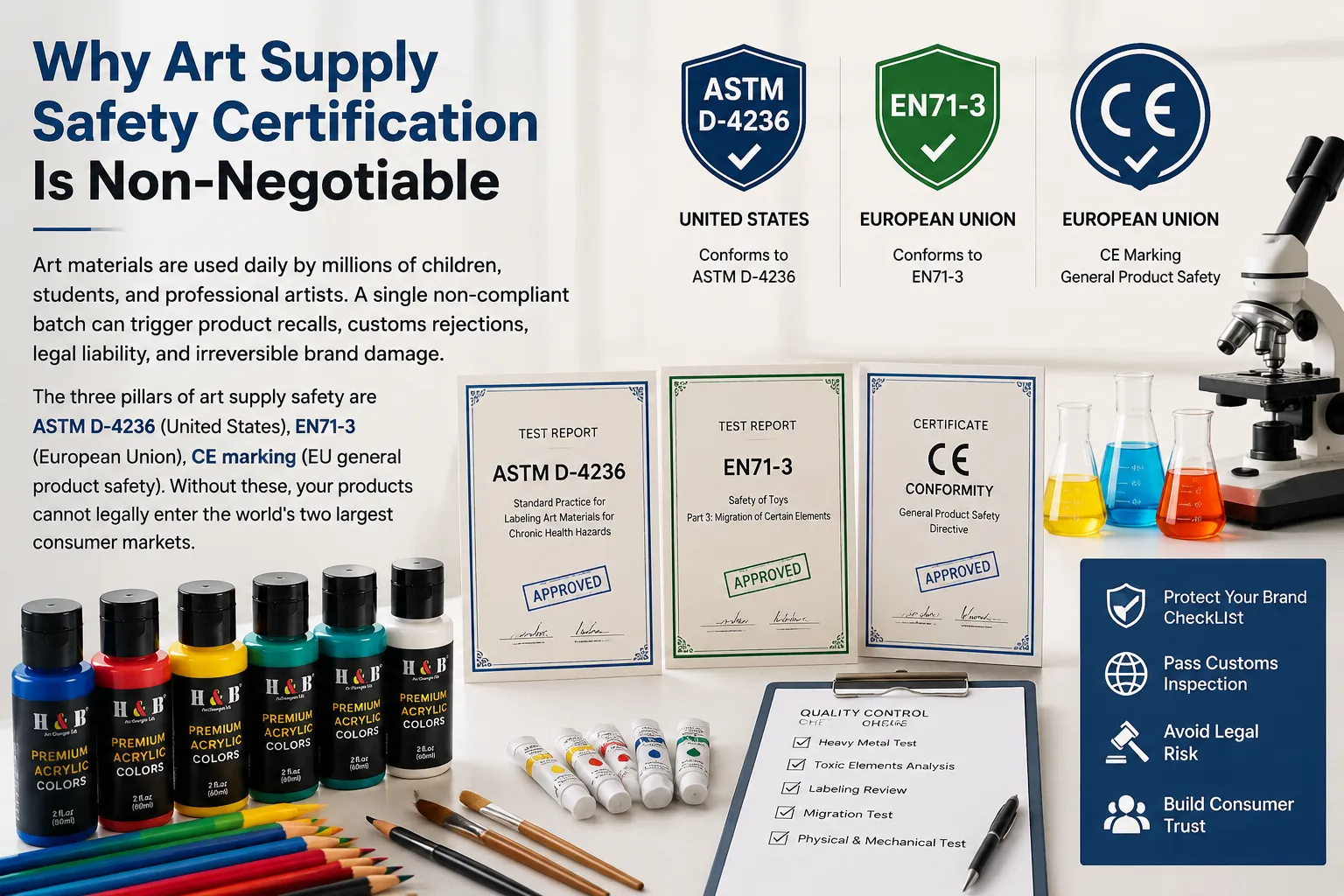
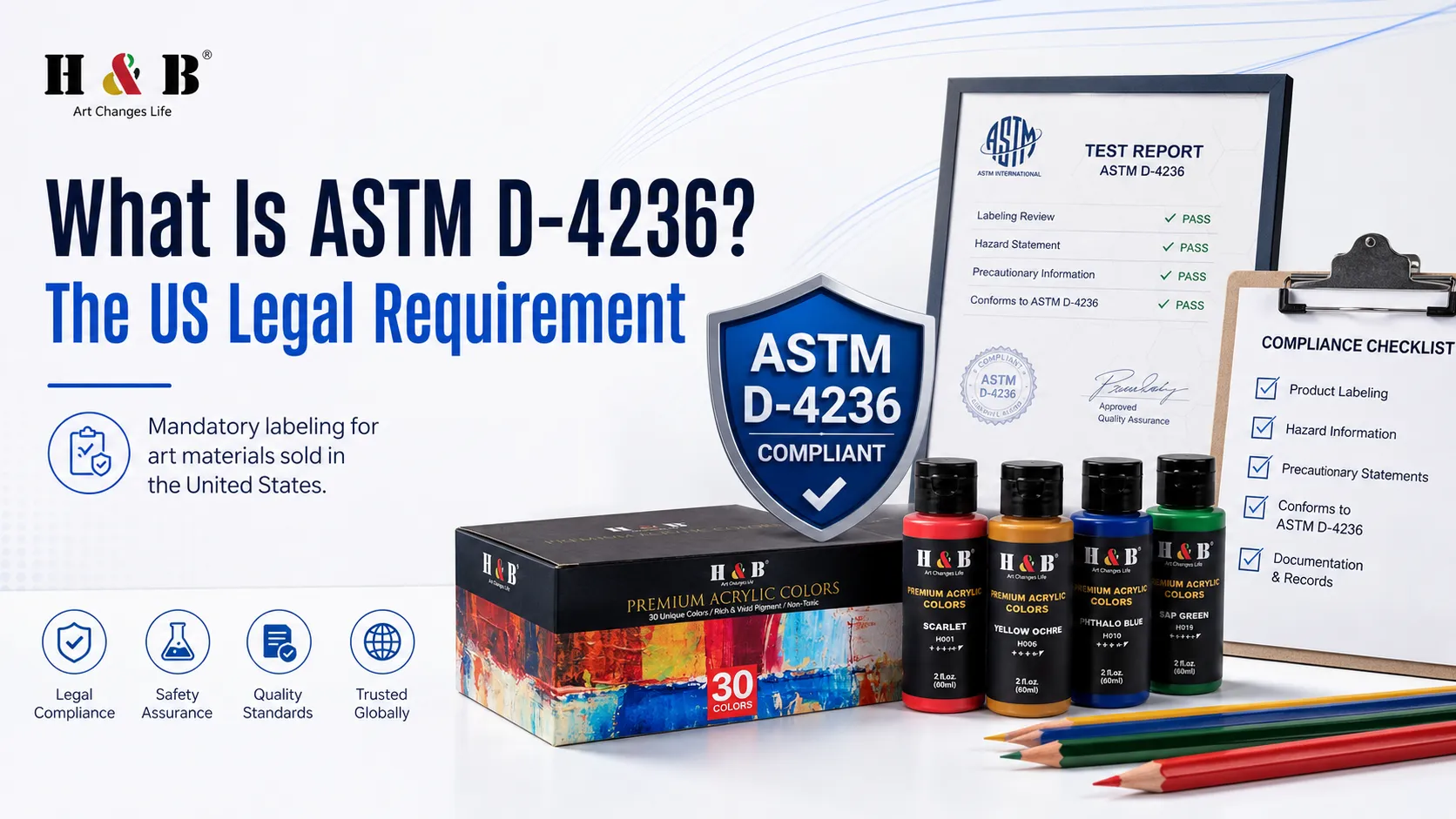
ASTM International describes D4236 as a practice for developing precautionary labels for art materials with known chronic health hazards. It is a labeling practice, not a test method that by itself establishes whether a material is harmless. The U.S. Consumer Product Safety Commission (CPSC) says art materials must receive a toxicological assessment at least every five years and explains the conformity statement used on art materials.
For purchasing, request the product-specific conformity statement, evidence of the current toxicological review and the final U.S. label artwork. Check the formulation and package size covered. If a color or raw material changes, ask whether the assessment and label must be revisited. A supplier’s general certificate or a logo on a catalog is not a substitute for identifying the actual product reviewed.
Be precise with “non-toxic.” CPSC says the term is not defined by the relevant regulation. A D4236 conformity statement does not automatically authorize a broad “non-toxic” marketing claim, and it does not replace assessment of other applicable product hazards. Ask who substantiated any proposed claim and which formulation and use conditions it covers.
What EN 71-3 and CE Marking Address in the EU
The European Commission’s toy safety guidance explains that toys placed on the EU market must meet toy safety requirements and carry CE marking. EN 71-3 is the toy safety standard dealing with migration of certain elements from toy materials. It is not an EU counterpart to ASTM D4236: the two address different questions.
First decide whether the finished product is a toy under the applicable rules; do not infer this solely from the word “art” or a colorful package. For an EU toy, ask for the relevant test reports, an EU Declaration of Conformity, technical documentation, warnings and language-specific label artwork. Check that reports identify the materials and components in the sellable set, the applicable standard version, sample date and tested SKU. CE marking is the manufacturer’s declaration of conformity; a standalone photograph of the mark does not show which requirements were evaluated.
The EU adopted a new Toy Safety Regulation in 2025, with application scheduled for 1 August 2030 after a transition period, according to the European Commission. For current orders, confirm the rules in force on the date the goods will be placed on the market and plan artwork and documentation updates ahead of that transition.
Keep Management System Evidence Separate From Product Evidence
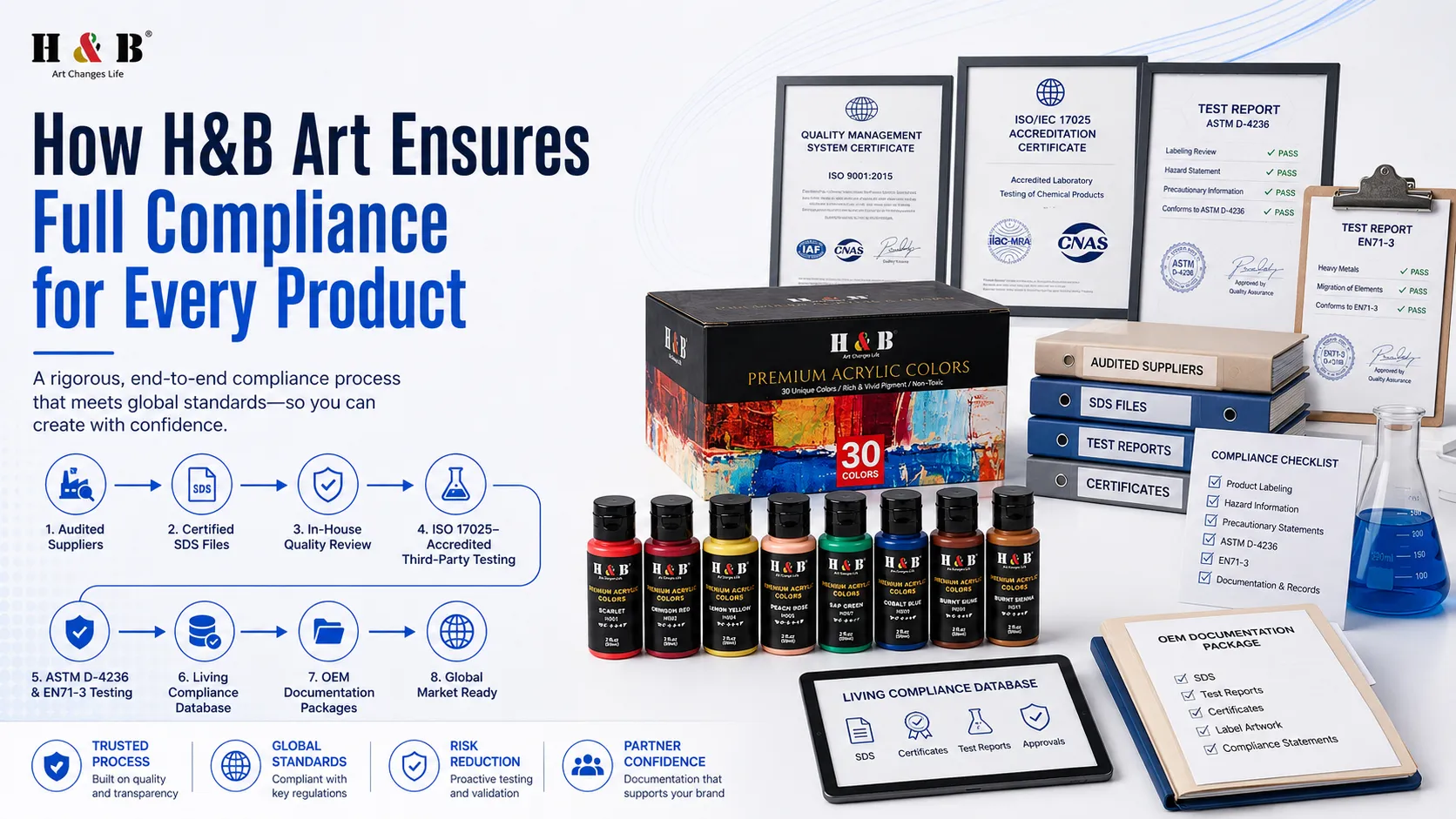
An ISO 9001 certificate, if held by a manufacturer, describes a quality management system within its stated scope and validity dates. It does not certify each pencil batch. ISO explains that external certification bodies issue certificates; ISO itself does not certify organizations. Buyers can request the current certificate and separately agree on incoming material checks, in-process controls, final inspection records and product-specific reports.
Similarly, an EN 71-3 report covers tested materials under the stated conditions; it does not automatically cover every color, accessory or future formulation. Keep a version-controlled record that connects the purchase order, approved sample, bill of materials, test evidence and final artwork.
A Practical Document Request for Each SKU
- Identify the sellable item: record model number, color count, component list, intended user, age marking and destination markets.
- Request the right evidence: ask for the applicable U.S. art-material assessment and label statement, or EU toy documentation where the product is a toy. Add other market or retailer requirements only after confirming their applicability.
- Read the scope: compare model, materials, tested colors, sample date, report version and manufacturer name with the item you will order.
- Review artwork: check warnings, languages, responsible-party details, traceability markings and claims against the approved documentation.
- Control changes: require notice before substitutions in pigments, binders, wood, accessories or packaging so the evidence can be reassessed.
If a document is missing, record the gap and the person responsible for resolving it before approving mass production. Do not fill a gap with a generic claim such as “certified safe for all children.” For buyers of school or beginner ranges, the question is whether the specific item, at the age and market stated, has the right substantiation.
Questions to Put in the RFQ
Ask: What is the intended-use classification for each destination market? Which exact SKU and formulation are covered by each report? Who prepared the toxicological assessment or EU technical file? What are the document dates and version numbers? Which components were included? What changes would trigger a new assessment? Who approves translated warnings and the final packaging proof?
Request answers in a document table, not only in an email saying “compliant.” This lets the purchasing, quality and marketing teams compare the same evidence before making claims to customers. If a requirement is uncertain, use the destination market’s current official guidance or qualified compliance advice for that product classification.
Related Art Supply Formats
Use these product pages to identify candidate configurations, then request documentation for the exact SKU before ordering.