Art Supplies Packaging & Customization: Tins, Boxes & Kit Assembly
Packaging is the part of an art supplies program that buyers notice last and customers notice first. It decides whether a set survives international freight, whether it earns a second look on a retail shelf, whether the compliance information required in each market is present, and whether the product can be photographed well enough to sell online. This guide covers the packaging formats used across art supplies, how customization works from logo printing to full ODM development, what kit assembly involves inside a factory, and the specifications buyers should lock down before placing an order.
What packaging actually does for an art supplies program
In this category, packaging carries four jobs at once. It protects fragile contents such as wooden barrels, graphite cores and glass or plastic pans. It communicates value in a market where a 24-color set and a 120-color set can look identical in a catalog photo. It carries required compliance and safety information. And it determines how efficiently the product ships, because volumetric weight — not just product weight — drives freight cost.
For brands building a private label line, packaging is also the fastest visible difference between their product and a competitor's. Two suppliers can fill the same 24-piece tin with the same components; the one with a well-constructed inner tray, a clean printed lid and a properly labeled master carton is the one that resells.
The four jobs, ranked by buyer impact
- Protection: determines damage rate and return rate after transit.
- Shelf and photo performance: determines click-through in e-commerce and pickup in retail.
- Compliance labeling: determines whether customs and retail compliance teams will accept the shipment.
- Freight efficiency: determines landed cost per unit through carton dimensions and packing density.

Packaging formats used in art supplies
Most art supplies programs choose from a small set of formats. Each one carries different tooling requirements, unit costs and market positioning.
| Format | Typical use | Tooling | Best for |
|---|---|---|---|
| Tin box | Colored pencil, charcoal and sketch sets | Hinged tin mold or stock tin with printed lid | Gift, retail and premium positioning |
| Folding carton | Marker, pastel and paint sets | Die-cut plate | Cost-efficient retail volumes |
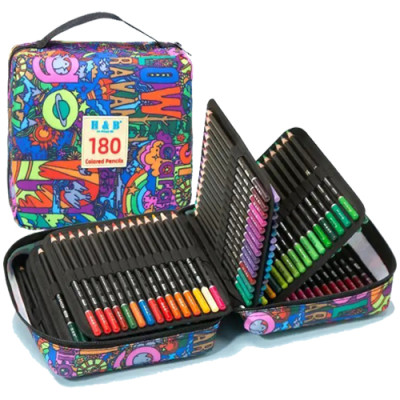
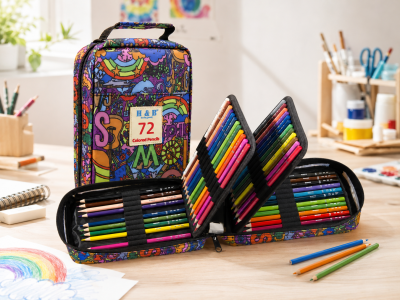
| EVA or plastic case | Large multi-piece kits | Case mold plus insert | Sketching and drawing kits with loose tools |
| Blister or paper wrap | Single items, brush packs | Blister mold or printed sleeve | Low-cost single units and clip strips |
| Gift box with insert | Holiday and premium sets | Box die plus molded or folded insert | Seasonal and gift channels |
| Display carton | Retail counter displays | Die-cut plate plus shelf-ready structure | Brick-and-mortar retail programs |
Designing a custom tin box art set
Tin boxes remain the most requested format for pencil and sketching sets because they protect long, thin contents, stack well and photograph as a gift item. A custom tin program usually moves through five decisions.
1. Stock tin or custom mold
Stock tins come in established sizes with a printed lid or printed wrap, which shortens development and reduces tooling cost. A custom mold is justified when the set needs a specific internal layout, a non-standard depth for a tray, or a shape that distinguishes the product on the shelf.
2. Size and internal layout
The tin must be sized from the inside out. Buyers specify the component list first — pencil count, sharpener, eraser, brush, palette — then the internal tray is modeled around that list. Designing the tin first and fitting contents later is the most common cause of rushed inserts and damaged tips.
3. Insert material
Molded plastic trays hold pencils in a fixed position and resist movement in transit. Folded paper-board inserts cost less and suit lighter contents. EVA inserts are used where a tool needs a shaped cavity, such as a brush or a knife handle.
4. Printing and finishing
Lid printing typically involves offset printing with optional gloss or matte varnish, spot UV, embossing or foil stamping. The decision that matters most for cost is the number of print colors, followed by any special finishing step. Compliance text, product codes and market-specific language panels are usually placed on the back or underside of the tin rather than the lid.
5. Closure and durability
Hinge quality, lid fit and corner construction determine how the tin survives handling. Buyers running retail or gift programs should request a drop test on the packed tin rather than judging the empty sample.
Kit assembly: turning components into a sellable set
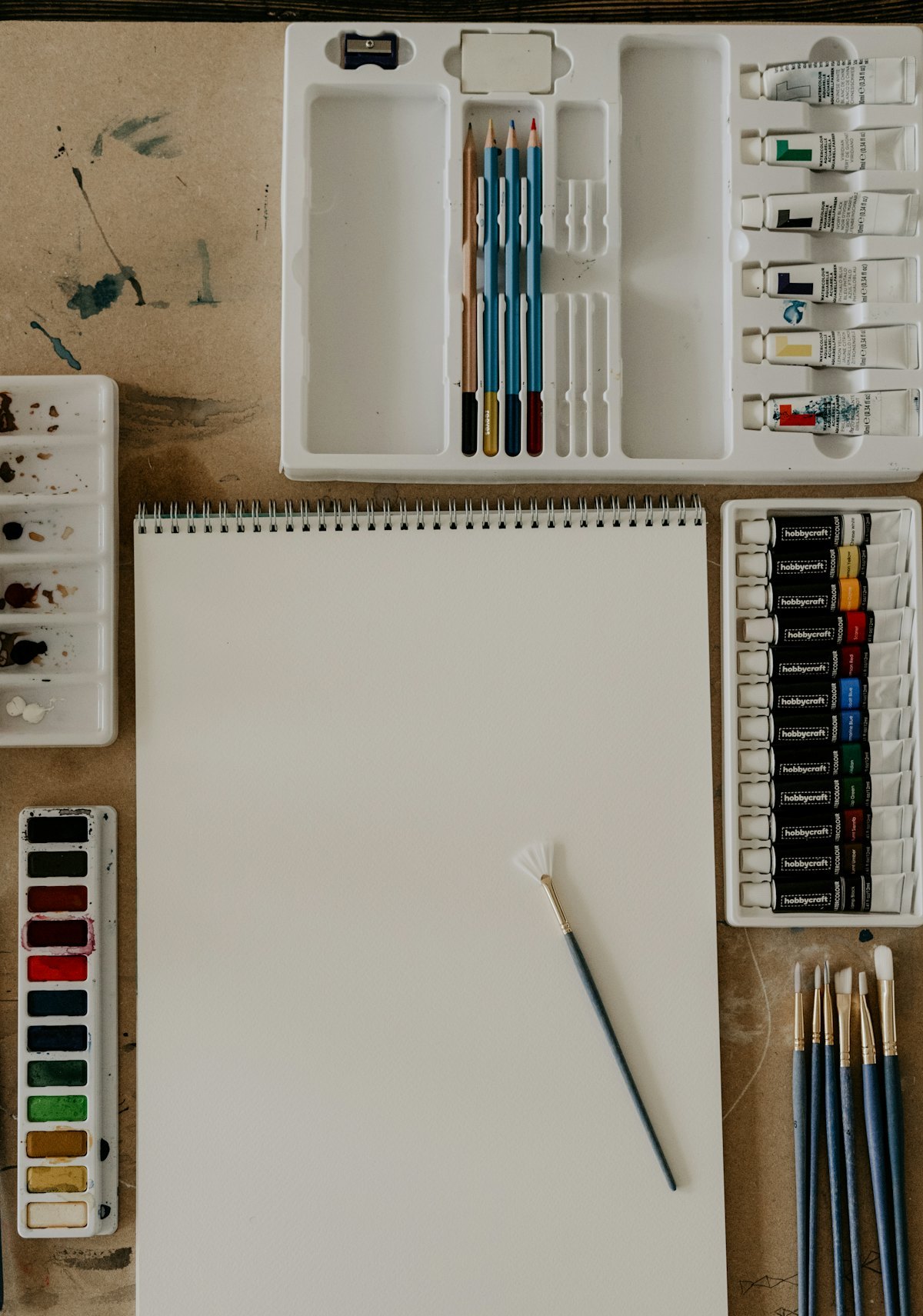
A kit is not a product that exists until it is assembled. In practice, kit assembly is a manufacturing process of its own, with its own bill of materials, line layout and quality gates.
Bill of materials control
Every set starts with a BOM that lists each component, its quantity and its supplier. Color-coded pencils, for example, require the correct color sequence to be present in the correct barrel finish, which means the component check happens before assembly rather than after packing.
Assembly line and kitting accuracy
Assembly is typically arranged as a line: components are counted into trays, trays are seated into the case or tin, printed materials such as instruction sheets or color charts are added, and the unit is closed and weighed. Weighing each unit against a reference weight is a simple and effective check for missing components.
Quality gates before packing
Before cartoning, sets pass through functional inspection — sharpener action, eraser fit, pencil barrel integrity, print registration — and a visual check against the approved sample. The approved sample, signed by both parties, is the reference that protects the buyer during mass production and again during incoming inspection at destination.

Customization levels: from logo printing to full ODM
Customization in this category is usually described in three levels, and understanding which level a program sits at keeps expectations and timelines aligned.
Level 1: Private label on standard products
The product configuration stays within an existing range; the brand element changes. This covers logo printing on the tin or box, a branded color chart, custom instruction sheets and market-specific labeling. It is the fastest route to a branded line because tooling is minimal.
Level 2: Semi-custom configuration
Color counts, component mixes and packaging are adjusted within existing tooling. A buyer might request a 36-color assortment instead of 48, swap a standard sharpener for a different model, or specify a new insert layout inside a stock tin. Development time rises because artwork, tray layout and sample approvals are all in scope.
Level 3: Full ODM development
The supplier develops the product itself — barrel design, core formulation, packaging structure and brand identity — under the buyer's brand. This level requires an approved concept brief, defined target cost, agreed compliance scope and a sampling schedule before development starts.
Compliance and labeling in packaging
Packaging is where compliance becomes visible. Art materials sold into the United States and the European Union are expected to carry the appropriate conformity documentation, with ASTM D-4236 and EN 71-3 being the two standards most frequently requested in this category, supported by CE marking where the product falls under the applicable directive and by factory-level social audits such as BSCI for retail programs.
Practically, buyers should confirm three points with the supplier: which warnings and language panels are required per destination market, whether the artwork as submitted carries all of them, and how any change to a pigment, component or packaging material affects existing test reports. Packaging changes are frequently overlooked in compliance planning even though a changed material can require re-testing.
Cost drivers and order quantities
Packaging cost is driven by four factors: the printing process and number of colors, the number of custom components, tooling amortization, and the order quantity over which tooling is spread. Sets that reuse stock tins and stock trays land at a materially lower unit cost than fully custom structures at the same volume.
On quantity, H&B's standard wholesale programs begin at 500 sets per SKU, with OEM and private label minimums negotiated according to packaging complexity, custom color formulation and branding requirements. Buyers planning a first private label launch should treat the MOQ discussion as part of packaging design — not a step that comes after it — because the packaging structure is usually what sets the threshold.
Why brands build packaging programs with H&B Art
Shanghai Haobin Art & Cultural Supplies Co., Ltd. has been manufacturing art supplies since 2010 and exports to more than 60 countries, working with importers, distributors, retail chains and private-label brands. The company holds the certifications most frequently requested in this category — EN 71, ASTM D-4236, CE and BSCI — and operates as a manufacturer rather than a trading intermediary.
For packaging programs specifically, that means the paint or pencil line and the packaging structure are specified in the same place. Tins, folding cartons, inserts and instruction materials are developed alongside the components they hold, which shortens the approval loop between product and retail-ready box and keeps the signed sample meaningful through production.
Related products from the H&B range
Frequently asked questions
Can packaging be customized without changing the product itself?
Yes. Most first private label programs start with an existing product configuration and change only the brand layer: lid print, color chart, instruction sheets, insert artwork and language panels. Tooling is limited, which keeps both development time and minimum order quantities lower.
How many print colors should a tin lid use?
Most retail programs work well with two to four spot colors plus a varnish, or four-color process where photographic artwork is used. Each additional print step adds cost and setup time, so it is worth testing whether the design holds up at fewer colors before approving artwork.
What is the difference between an inner tray and an insert?
The tray is the structure that positions components inside the case; the insert is the material that holds them in place, such as molded plastic, folded paper-board or EVA. Both are decided together, because a tray shape that does not accommodate the insert will move in transit.
Does packaging affect compliance testing?
Yes. A change to a packaging material or component can require re-testing for the destination market, which is why compliance scope should be defined before artwork approval rather than after the sample is signed.
Planning a custom packaging program?
Send us your component list, target market and packaging direction. Our team will come back with a structure recommendation, sampling plan and quotation.
Send Inquiry Browse Products Contact Us