From Concept to Shelf: A Step-by-Step Guide to Private Labeling Art Supplies
Why Private Label Art Supplies Is One of the Best E-Commerce Opportunities in 2026
Private labeling — sourcing unbranded products from a manufacturer, applying your own brand identity, and selling under your name — has been the dominant growth strategy for Amazon FBA sellers, Shopify DTC brands, and retail chains for the past decade. In the art supplies category, this opportunity is particularly compelling: global art supply sales exceeded $12 billion in 2025 with projected 6-8% annual growth through 2030, colored pencils and markers are the fastest-growing subcategories driven by the adult coloring and creative wellness trends, and art supplies carry high perceived value with low shipping weight — the ideal combination for profitable e-commerce. For entrepreneurs, existing retailers expanding into private label, and established brands adding art supplies to their catalog, the question is not whether to enter this market, but how to do it right. At H&B Art, we have guided over 300 brands through the private label journey — from first sample to first container shipment — and this guide distills everything we have learned into a actionable framework.
Step 1: Define Your Brand Identity and Target Customer
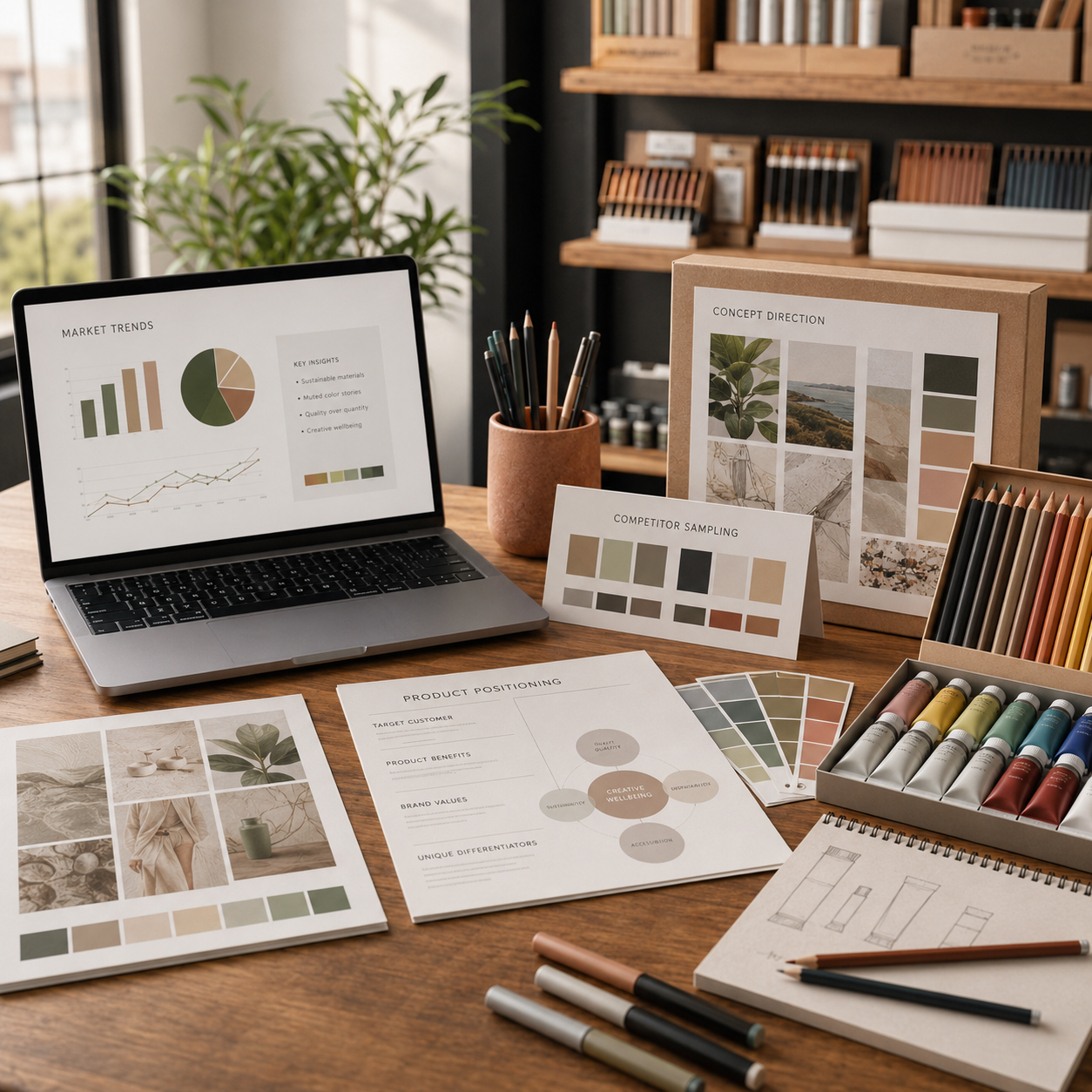
Before selecting a single product, define who you are selling to. The art supply market segments cleanly into four tiers: Value/Student — lowest price point, bulk packs, MOQ-driven, Amazon Basic-tier competition; Hobbyist/Mid-Tier — largest volume segment, 24-72 color sets, gift-ready packaging, $15-35 price range; Premium/Prosumer — artist-grade claims (lightfastness, pigment concentration), metal or wood packaging, $35-80 price range; and Professional/Gallery — museum-grade specifications, individual pencil sales, $80+ sets, niche distribution. Each tier requires different product specifications, packaging, pricing, and marketing. The most common mistake new private label brands make is choosing a tier without understanding the unit economics: a $15 product with 30% margin generates $4.50 per sale, requiring 2,220 units monthly to reach $10,000 profit; a $50 product with 40% margin generates $20 per sale, requiring only 500 units. Higher tier = fewer units needed for the same revenue, but higher customer acquisition cost and more demanding quality standards.
Step 2: Select Your Product Category and Specifications
The art supply category tree starts broad and narrows to your specific SKU. Top-level categories include: colored pencils, acrylic markers, soft pastels, oil pastels, watercolor sets, acrylic paint sets, sketch kits, and brush sets. Within each category, define: color count (12-180), core diameter (2.8mm student vs 3.3-3.8mm professional), binder type (oil-based, wax-based, water-soluble), barrel shape (round, hexagonal, triangular), packaging format (tin box, canvas roll, cardboard box, blister card), and certification requirements (ASTM D-4236 mandatory for US, EN71-3 mandatory for EU). The most profitable first product for new brands is consistently the 72-color professional colored pencil set in tin box packaging — it commands a $30-45 retail price, ships compactly, has strong gift appeal during Q4, and benefits from high repeat purchase rates as colors are consumed unevenly across the set.
Step 3: Find and Vet Your OEM Manufacturing Partner
Your manufacturer is the single most important decision in your private label journey. The right partner provides consistent quality, reliable delivery, competitive pricing, and proactive communication. The wrong partner delivers inconsistent batches, misses shipping deadlines, and damages your brand's reputation before it is established. A qualified art supply OEM manufacturer should meet these criteria: minimum 10 years of export manufacturing experience in your specific product category, current third-party certifications (ASTM D-4236, EN71-3 test reports dated within 12 months from ISO 17025-accredited labs), factory audit documentation (SGS, TÜV, or Bureau Veritas), willingness to provide live video walkthroughs of production lines, English-fluent dedicated account management, and transparent MOQ and pricing structure with no hidden fees. At H&B Art, we meet all of these criteria and maintain a 5-stage QC system for every production batch — a standard we invite every prospective client to verify before placing an order.
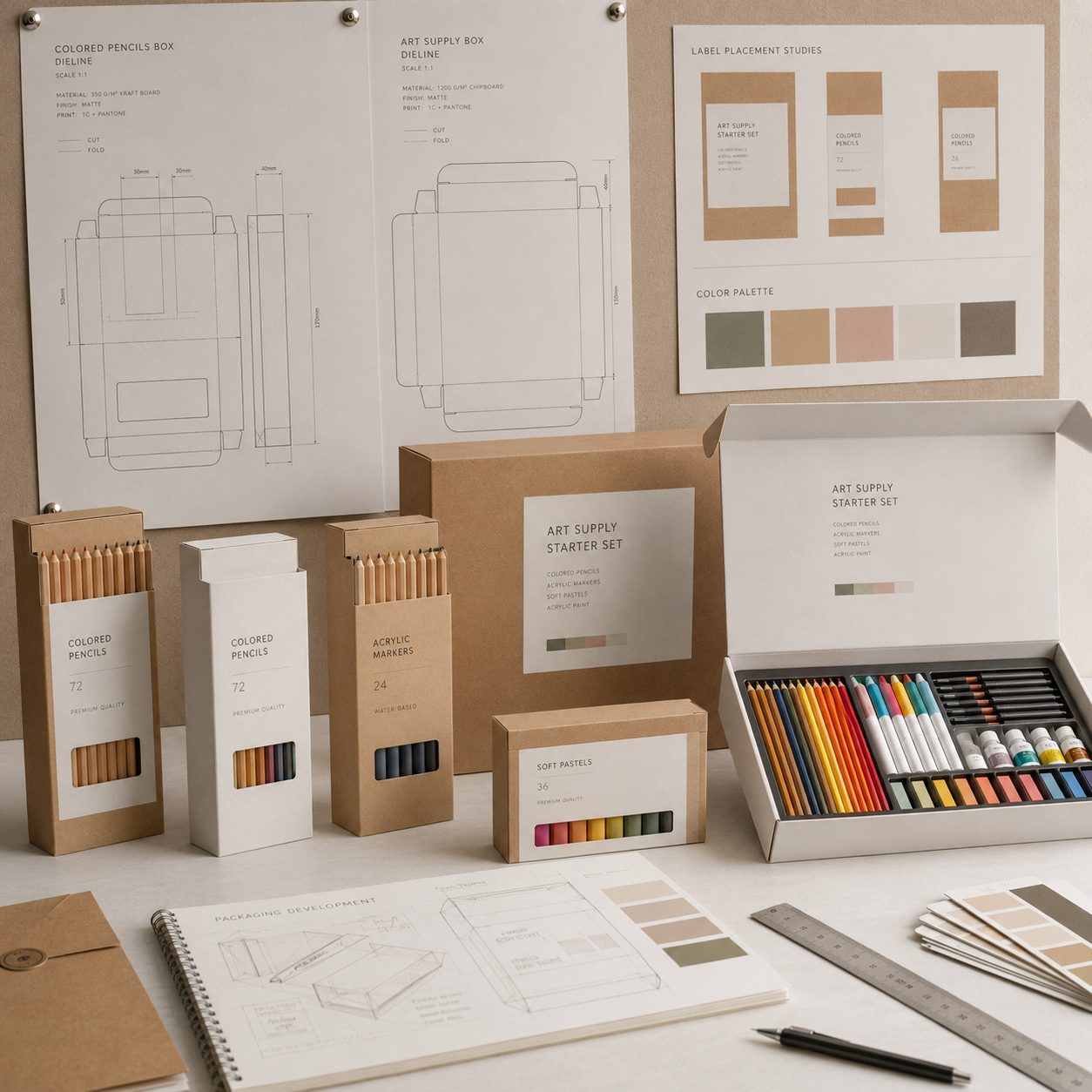
Step 4: Design Your Packaging and Brand Assets
Packaging is the primary driver of perceived value in art supplies — the same set of 72 colored pencils can retail for $19.99 in a cardboard box or $44.99 in a premium tin with foam inserts. Your packaging design must accomplish three things simultaneously: communicate quality at a glance on a crowded Amazon search results page, protect the product during shipping and handling (damaged packaging is the #1 cause of negative reviews in the art supplies category), and differentiate your brand through distinctive visual identity — color palette, typography, and structural design. Essential packaging assets to prepare: box or tin structural design with die-line templates from your manufacturer, front and back artwork (CMYK, 300 DPI minimum), barcode (UPC for North America, EAN for Europe), required regulatory markings (ASTM D-4236 conformance statement, EN71-3 warning for EU, choking hazard warning for products with small parts sold in the US), and insert/foam tray design. Professional packaging design services typically cost $500-$2,000 for the complete package; many OEM manufacturers, including H&B Art, offer in-house design support at reduced cost or included with minimum order quantities.
Step 5: Navigate Compliance and Certification
This step is non-negotiable and the most frequently underestimated by first-time private label brands. For sale in the United States, your product must have a current ASTM D-4236 toxicological evaluation (federal requirement under LHAMA) and may require CPSIA tracking labels if targeting children under 12. For sale in the European Union, you need EN71-3 heavy metals migration test reports and a CE Declaration of Conformity. For Amazon specifically, you must upload these documents to Amazon's Compliance Reference tool — listings without verified compliance documents are removed, and sellers face account suspension for repeat violations. The compliance timeline typically takes 2-4 weeks from sample submission to receiving certified reports, so plan this into your launch calendar from day one. A professional OEM manufacturer provides all required compliance documentation as part of the production package — if your manufacturer resists sharing current test reports, treat that as a disqualifying red flag.
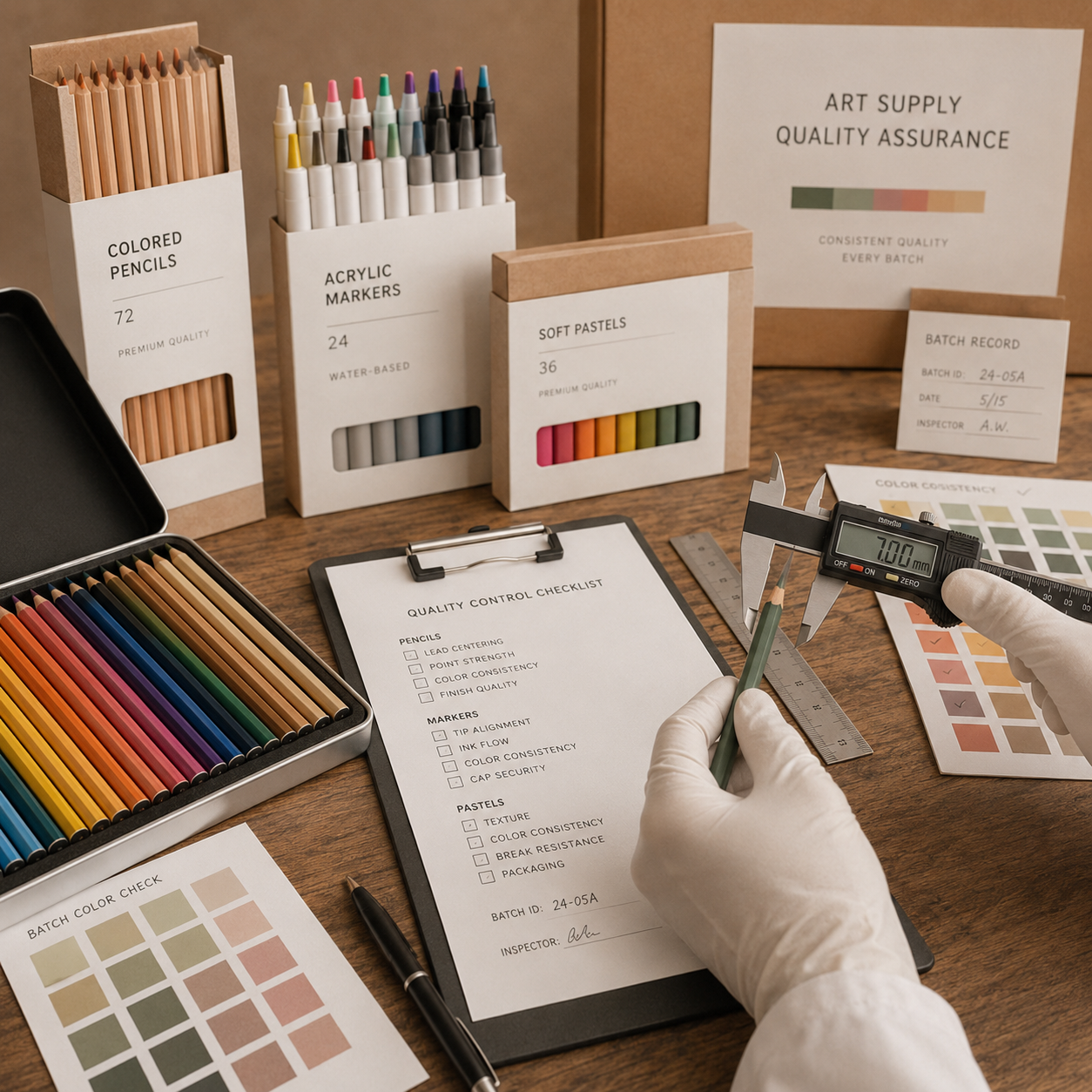
Step 6: Order Samples and Conduct Quality Validation
Never place a bulk production order without first evaluating physical samples. Your sample evaluation should cover: color accuracy against your approved swatches or Pantone references, core centering (off-center cores cause uneven sharpening and breakage), barrel finish quality (smooth paint, clean logo printing, no splinters), packaging durability (drop test from 3 feet, box closure security), and user experience testing (have 2-3 artists or end-users work with the samples and provide honest feedback). Typical sample costs range from $50-200 for standard configurations, with shipping costs varying by destination. Sample production typically takes 5-7 working days, with shipping adding 3-7 days depending on the courier service. At H&B Art, we encourage comprehensive sample evaluation and provide detailed specification sheets for every sample to ensure your production order matches your approved samples exactly.
Step 7: Plan Your Production Timeline and Inventory Strategy
Art supply sales are highly seasonal — approximately 35-40% of annual revenue occurs in Q4 (October-December) driven by holiday gifting and Black Friday/Cyber Monday promotions. Working backward from your target launch date: production takes 15-25 working days, ocean freight to US West Coast takes 15-20 days (East Coast 25-30 days), customs clearance takes 3-7 days, and FBA check-in or 3PL receiving takes 5-10 days. Total lead time from order placement to inventory availability: 8-12 weeks. Your first order should cover at minimum 90 days of projected sales to avoid stockouts during the critical launch period when Amazon's algorithm is assessing your listing's sales velocity. Inventory carrying cost for a 500-unit initial order of a $30 wholesale product is approximately $15,000 — manageable for most brands and essential for launch success.
Step 8: Develop Your Go-to-Market and Launch Strategy
A successful private label launch requires coordinated execution across multiple channels. For Amazon: optimized product listing with professional photography, keyword-rich title and bullet points, A+ Content with comparison charts and lifestyle images, Vine program enrollment for initial reviews, and a targeted PPC campaign budget of $20-50/day for the first 60 days. For your own Shopify/DTC site: dedicated product page, email list announcement to existing subscribers, and social media content calendar with 2-3 posts per week featuring product demonstrations and customer results. For wholesale/retail: Faire and Tundra marketplace listings, trade show presence (Creativation/NAMTA for art supplies), and direct outreach to independent art supply stores and educational buyers. The brands that succeed fastest are those that treat launch as a 90-day campaign, not a one-day event — sustained marketing investment through month three is when conversion rates typically optimize and organic ranking begins to compound.
Why H&B Art is your ideal private label manufacturing partner
For 16 years, H&B Art has assisted brands from various countries around the world in completing the private label development journey outlined in this guide. Our products are certified to ASTM D-4236 and EN71-3, and we have a dedicated OEM account management team that provides weekly production progress updates, pre-shipment quality photographs and end-to-end logistics coordination services. Our minimum order quantity (MOQ) starts at 500 units – ideal for brands testing the waters for the first time – and can be flexibly adjusted as the brand grows. We offer in-house packaging design support, bespoke colour development, and a complete compliance documentation package for Amazon, customs and retail buyers. Book a consultation or request samples today – your art supplies brand is just one step away from its first production run.
Conclusion: Your brand, our manufacturing expertise
Private-label production of art supplies is not a get-rich-quick scheme—it is a systematic process encompassing brand building, quality sourcing and ongoing market execution. Successful brands strictly adhere to the eight-step framework outlined in this guide: defining your target audience, selecting products, vetting manufacturers, designing packaging, ensuring compliance, validating samples, planning stock levels and executing the market launch. At H&B Art, we have spent 16 years building a comprehensive manufacturing infrastructure designed to support brands at every stage of this journey. Whether you are placing your first pilot production order or scaling up an existing brand, we can provide the quality, consistency and partnership your brand deserves. Contact us today so we can work together to achieve greatness.