From Sample to Bulk Order: What Should Be Frozen in the Specification?
A parent opens a beginner watercolor set and finds that the brush shown on the box is missing. An artist buys a replacement colored pencil set and discovers that the familiar blue has changed. A retailer receives a private label kit whose contents are correct but whose outer carton cannot be scanned at receiving. These are different problems with the same underlying question: which version of the product did everyone approve?
An early sample can answer whether a pencil lays down color, a brush holds a point, or a paint activates as expected. It may not answer whether the final color assortment, printed pack, inserts, labels, accessories, and shipping configuration are ready. In a public Reddit sourcing discussion, a buyer of sunglasses had approved an initial product sample without packaging but wanted to see final colors and packaging before production. The example comes from a different product category; it raises an approval question that art supply buyers can also face, but it is not evidence of how common the problem is.
The replies did not agree on a single sampling route. Some emphasized approving the complete sales configuration before production; others pointed out that custom packaging samples may require separate cost and time. A workable response is to state exactly what the first sample approved, identify the missing decisions, and agree which can be checked by physical sample, packaging mock-up, artwork proof, or a later production check. Those are options to negotiate for the particular order, not a claim that any one route is standard for every project.
For an art supply buyer, the practical next step is to define what the customer will actually receive, then connect every approval to a named specification version. Ask for a quotation against that version. If a feature that affects the customer, the listing, or the landed unit cost remains undecided, identify it before treating the sample as approval for bulk production.
Key Takeaways
- Approve the sellable SKU, not just a loose product sample: color range, pack contents, artwork, labels, and retail packaging all matter.
- Use separate approval gates for product performance, final sales configuration, and production readiness when the project requires them.
- Record test methods and acceptance criteria before judging samples. “Looks good” is difficult to reproduce during inspection or reorders.
- Tie the purchase order, approved physical reference, artwork files, and change log to one controlled specification version.
- Ask the supplier to confirm what can be sampled physically, what is approved by proof, and what requires a later production check.
Start With the Experience You Intend to Sell
Before discussing dimensions or printing files, describe the job the set must help the user do. Is a watercolor kit for quick classroom exercises or for portable sketching? Is a colored pencil set intended for dry layering, water activation, or both? Does a brush assortment need to cover broad washes and fine lines, or would that promise require a different mix of shapes?
This matters commercially because a specification is more than a list of parts. It is the bridge between a claim on the package and the result a user can reasonably expect. If the box says “watercolor,” the buyer should decide what water-activated behavior must be demonstrated and on which paper. If an online listing names 24 colors, the inner tray, printed chart, barrel codes, and reorder list should agree. If a beginner set promises everything needed for a first exercise, the included tools and instructions should make that exercise possible.
Write a one-paragraph user brief before the RFQ: target user, main task, sales channel, destination market, expected pack contents, and claims you plan to make. Send the same brief to the supplier and your own product, quality, and marketing teams. It gives everyone a reason to challenge an otherwise attractive sample that does not fit the intended use.
Separate an Early Product Sample From the Final Sales Sample
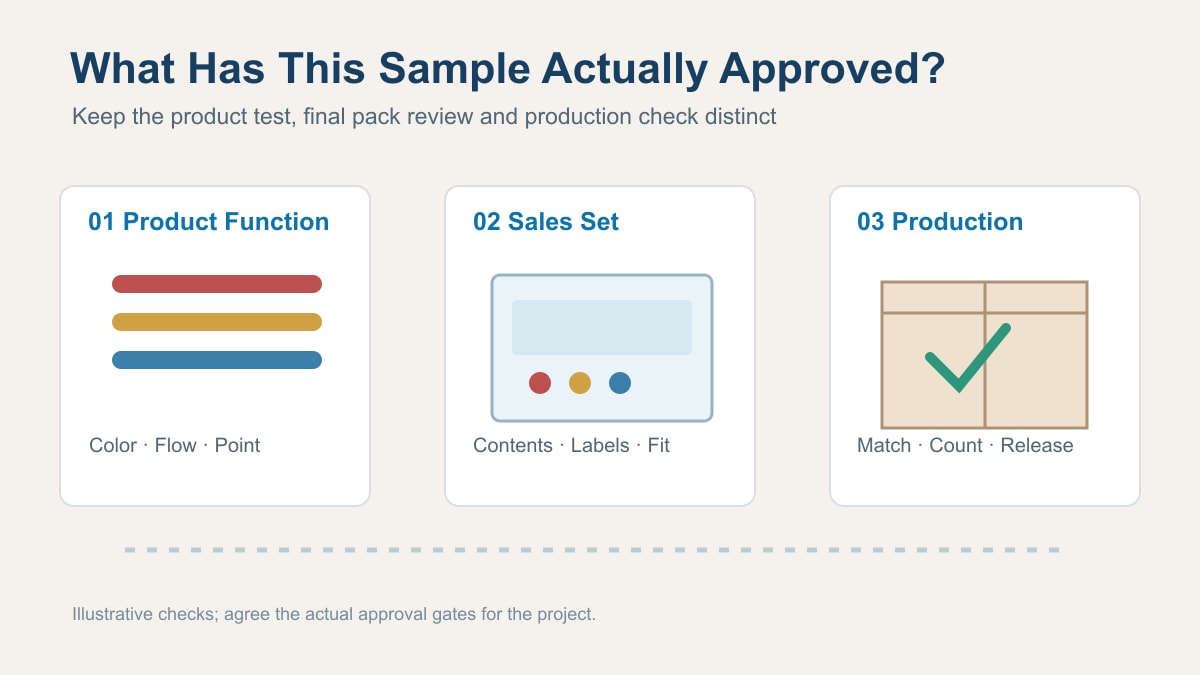
Different samples answer different questions. A functional sample may be the right first step for comparing paint flow, pencil point retention, brush spring, or paper response. A printed packaging proof may be enough to check text placement and dielines at one stage. A final sales sample should show the exact combination the customer will open: product, colors, accessories, inserts, retail pack, and visible labels.
Do not assume every project needs the same number of rounds. Instead, list the open decisions after each round. If the first sample lacks final packaging, record “packaging pending” rather than marking the full SKU approved. If a custom box cannot be produced economically as a one-off, ask what alternative evidence is available: a physical blank mock-up to verify fit, a color proof to review artwork, and a later assembled production sample before release. Agree which step authorizes which work. This is a commercial and quality decision to negotiate, not a universal promise that any supplier can make for free.
Freeze the Product Attributes That Affect Use
The exact fields depend on the category. Start with the parts a user can feel, see, or use, then add the manufacturing identifiers needed to reproduce them. Avoid copying a generic specification that omits the particular reason customers choose the set.
| Art Supply Format | User-Facing Details to Define | Sample Check to Agree |
|---|---|---|
| Colored or watercolor pencils | Color list and codes; dry versus water-soluble function; core and barrel dimensions; finish; sharpening behavior | Same paper, pressure, sharpening method, and water application where relevant |
| Watercolor paint sets | Color assortment; pan or tube format; fill configuration; mixing space; included brush or water brush | Activation, color appearance after drying, tray access, and accessory fit |
| Brush sets | Shape mix, nominal sizes, fiber type, handle and ferrule dimensions, printed identifiers | Stroke width, point or edge recovery, shedding observation, and cleaning routine |
| Paper pads | Sheet count, dimensions, stated grammage, surface, binding, backing board | Intended medium, water load or erasing routine, sheet removal, and pad integrity |
These are candidate checks, not claims that a particular SKU has passed them. For each chosen attribute, enter the actual target, allowed variation if applicable, and method of inspection in your project specification. If color is critical, an approved color name alone is insufficient: keep a physical swatch or defined color reference, and state lighting and substrate for comparison. If a set will be replenished, assign stable identifiers to individual colors and components so the next order can refer to the same assortment.
Distinguish properties fixed by the base product from those being customized. A private label project may change logo and packaging; an OEM/ODM project may also change materials or construction. The greater the change, the more carefully the sample plan should show that the actual combination has been assessed.
Freeze Every Item the Customer Will Find in the Pack
The bill of materials should list every sellable component and its quantity. Include items that are easy to overlook: a sharpener, brush, mixing card, protective tray, color chart, instruction sheet, or replacement tip when applicable. Record the arrangement inside the pack, because damaged points or leaking paint may be caused by poor fit rather than by the art material itself.
Then lock the customer-facing presentation. Specify pack dimensions and material, tray or insert design, barcode placement, SKU or batch identification, artwork version, language versions, and the exact quantity printed on the front. Keep the final artwork file and approved proof with the specification. A visual mock-up should be checked for physical fit as well as appearance: can the pack close without pressure on brush heads, can a pencil be removed without breaking the tray, and do the contents stay in position during normal handling?
Packaging claims deserve their own approval. “Non-toxic,” “lightfast,” “suitable for children,” and similar statements should not be added because a previous product carried them. Ask what evidence applies to the exact materials, colors, age positioning, and destination market for this SKU. Have the responsible team review current local requirements and the supporting documents before artwork is finalized. A supplier document, test report, or standard reference should be matched to the products and claim it actually covers; it is not a blanket certificate for every variation.
Convert Sample Feedback Into Repeatable Acceptance Criteria
“Better color” and “stronger box” are useful starting observations, but they are not inspection instructions. Tell the supplier what you tested, under which conditions, and what result you will accept. Use the same method when comparing a revised sample or checking production goods.
For a pencil, note the paper, application pressure, number of passes, sharpening tool, and whether a damp brush was used. For a brush, define the paint, paper, water load, stroke exercise, washing method, and the condition to inspect after drying. For a pad, record water amount, drying method, and whether a sheet was taped down. Photographs can show the problem, but keep the test conditions alongside them so the image has meaning.
Make acceptance criteria proportional to the user promise. A classroom pencil set may prioritize clear color names, durable points, and accessible packaging. A brush kit sold for fine detail should be judged on the strokes it claims to enable. Do not invent a precise defect threshold because it sounds professional; agree an actual threshold and inspection method with your quality team and supplier. Define which issues stop shipment, which can be corrected before packing, and who makes the final decision when a borderline sample appears.
Where appearance matters, retain an approved physical sample labeled with SKU, version, date, and approvers. Pair it with the written specification, approved artwork, and test record so hidden details remain traceable.
Keep One Approval Record That Everyone Can Identify
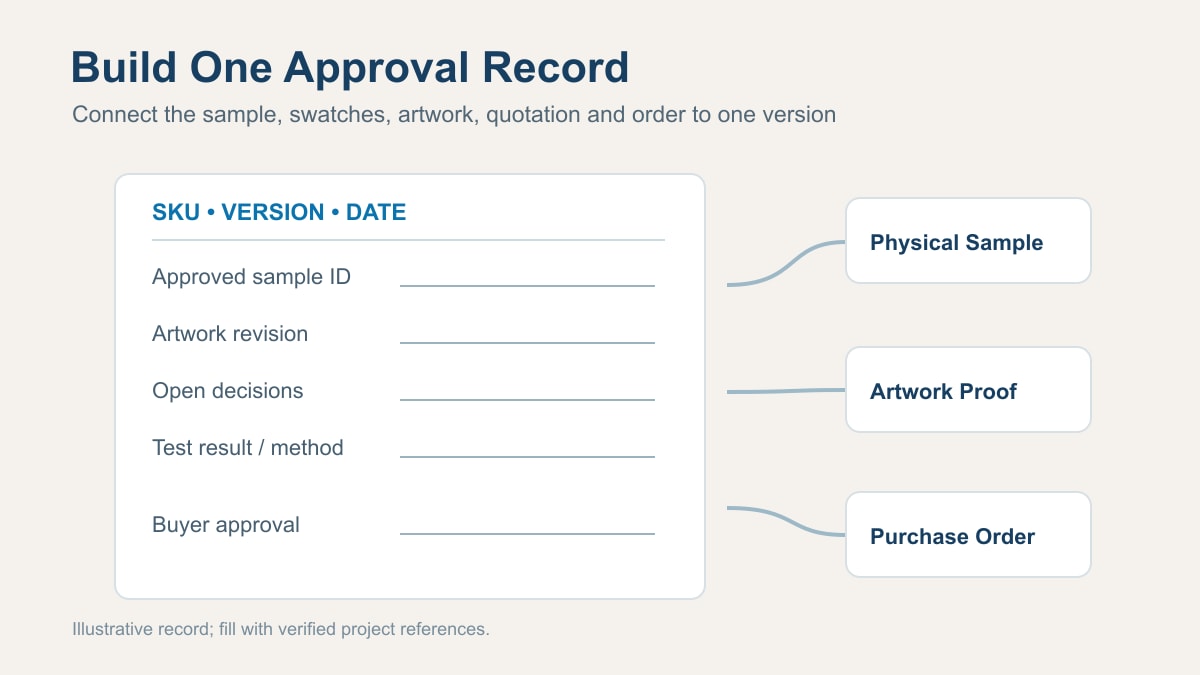
A short versioned record is often more useful than a long email chain. The following fields make a sample decision traceable:
| Record Field | What to Capture |
|---|---|
| SKU and Version | Internal SKU, supplier reference, specification revision, and date |
| Approved References | Physical sample ID, swatches, photos, artwork file name, and proof revision |
| Open Items | Decisions still pending, owner, deadline, and whether they block production |
| Test and Result | Method, paper or other substrate, observed result, and agreed acceptance criterion |
| Commercial Scope | Pack configuration, order quantity, quotation version, and agreed delivery terms |
| Approval | Named buyer and supplier contacts, written decision, and date |
Send a consolidated approval note after each round. State which items are accepted, which need revision, and which have not been reviewed. If a packaging proof is approved but the inner tray has not been checked, say so explicitly. This prevents “sample approved” from being interpreted as permission to produce every element of the final SKU.
The purchase order should identify the same specification and artwork versions. If the quotation was based on an earlier pack size or accessory count, ask for a revised quote before approval.
Control Changes After Approval
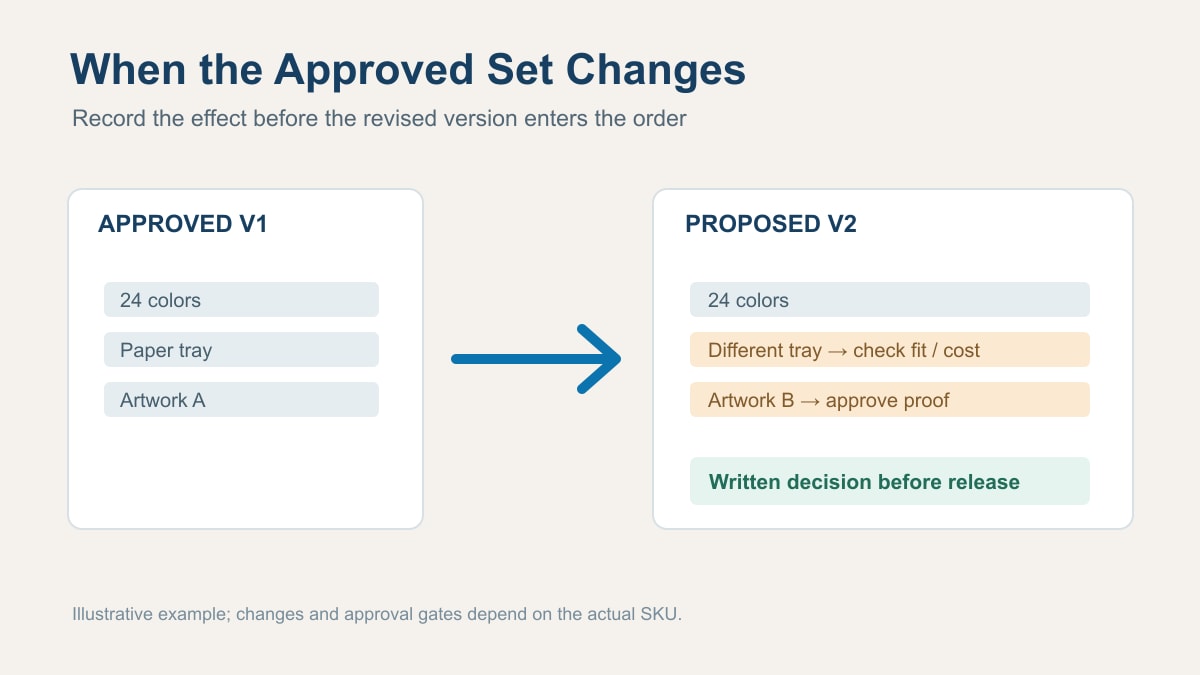
An approved version does not mean nothing can ever change. Materials become unavailable, artwork needs correction, and a buyer may decide to replace an accessory. The useful rule is simple: no silent substitutions. Ask the supplier to describe the proposed change, reason, affected SKUs, cost and schedule effect, and whether new testing or a new sample is needed. Approve or reject it in writing, then issue a new specification revision if accepted.
Treat changes differently according to their impact. Correcting a spelling error on an insert may need an updated proof. Changing the paper, pigment system, brush fiber, package material, or child-facing claim can affect user performance or regulatory review and may need a new physical assessment. Changing carton dimensions can affect freight and warehouse handling even if the retail product is unchanged. The decision belongs in the project record, not only in a chat message.
For repeat orders, compare the new order against the last approved version. Ask whether any material, component, artwork, or pack configuration has changed.
Link the Final Gate to the Purchase Order and Inspection
Before bulk production, run a short gate review. Can a colleague identify the approved SKU from the specification alone? Does the final pack contain what the listing and packaging promise? Are open items closed or clearly held for a later, agreed checkpoint? Are artwork, labels, and destination-market documents the versions the buyer intended to approve? Does the quotation match the same configuration?
Agree how production will be checked against the approved version. The inspection plan should name the attributes to verify, sampling approach if used, responsible party, timing, and process for handling a mismatch. For a set, inspect both the individual material and the assembled unit; a correct pencil in the wrong color tray is still a customer problem. Record carton marks and pack counts so receiving staff can distinguish variants without opening every unit.
If a final production sample is part of the agreement, specify when it will be supplied and what decision it gates. A first-off sample can help verify that the production process is making the approved configuration, but it should not replace clearly defined checks on the rest of the order. Commercial terms, inspection arrangements, and release authority should be written into the order documents so each team knows when work may proceed.
What Should You Send With an H&B Sample or RFQ Request?
For an art supply project, H&B can help select a suitable product format and discuss custom colors, set configuration, logo printing, labels, and packaging. These options can turn a sample that works in isolation into a clearly defined set ready for buyer approval. To request a useful sample or quotation, send H&B a compact brief rather than only asking for a price on “a watercolor set.” Include the intended user and use, destination market, preferred format, color or component list, pack contents, branding and language needs, estimated order quantity, target delivery window, and the decisions the sample must support.
Attach your draft artwork or packaging dimensions if available. Identify which elements are fixed, which are open for a proposal, and which claims require supporting evidence. Ask H&B to separate the cost and timing of product samples, packaging proofs, and any final assembled sample where those stages are relevant. Request a quotation that names the proposed SKU and specification version, so your team can compare the offer with the sample it reviewed.
The most useful final question is: “What remains unapproved before this exact set can be ordered in bulk?” A shared answer lets the buyer release the right configuration, lets H&B confirm what it will make, and helps the end user receive the set that was promised.
Explore Art Supply Formats
Use these current formats as starting points for a sample request. Confirm the proposed SKU, pack contents and specification against your intended user task before ordering.
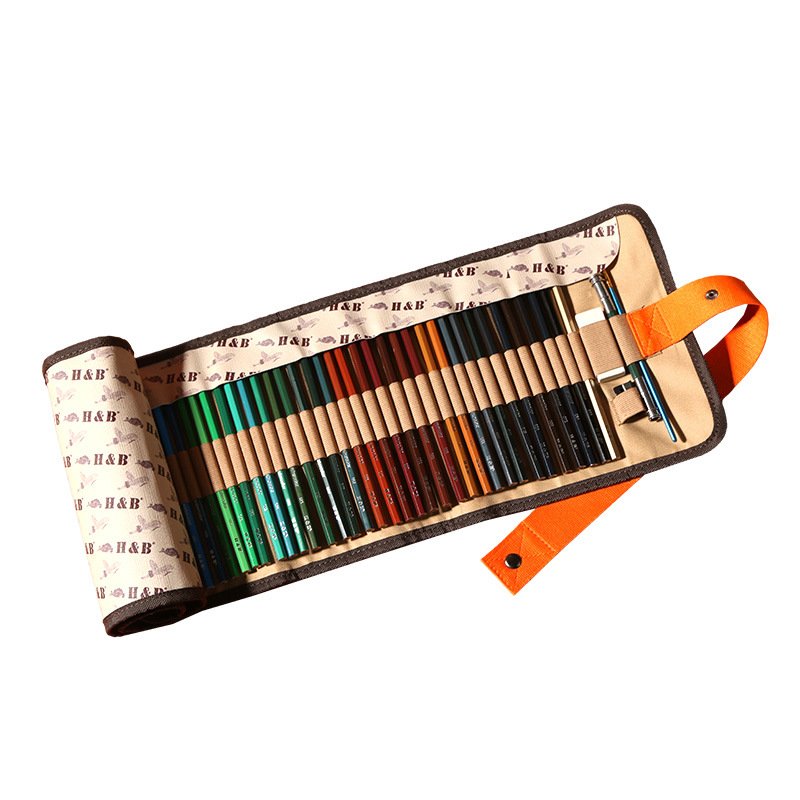 72-Color Water-Soluble Pencil Set
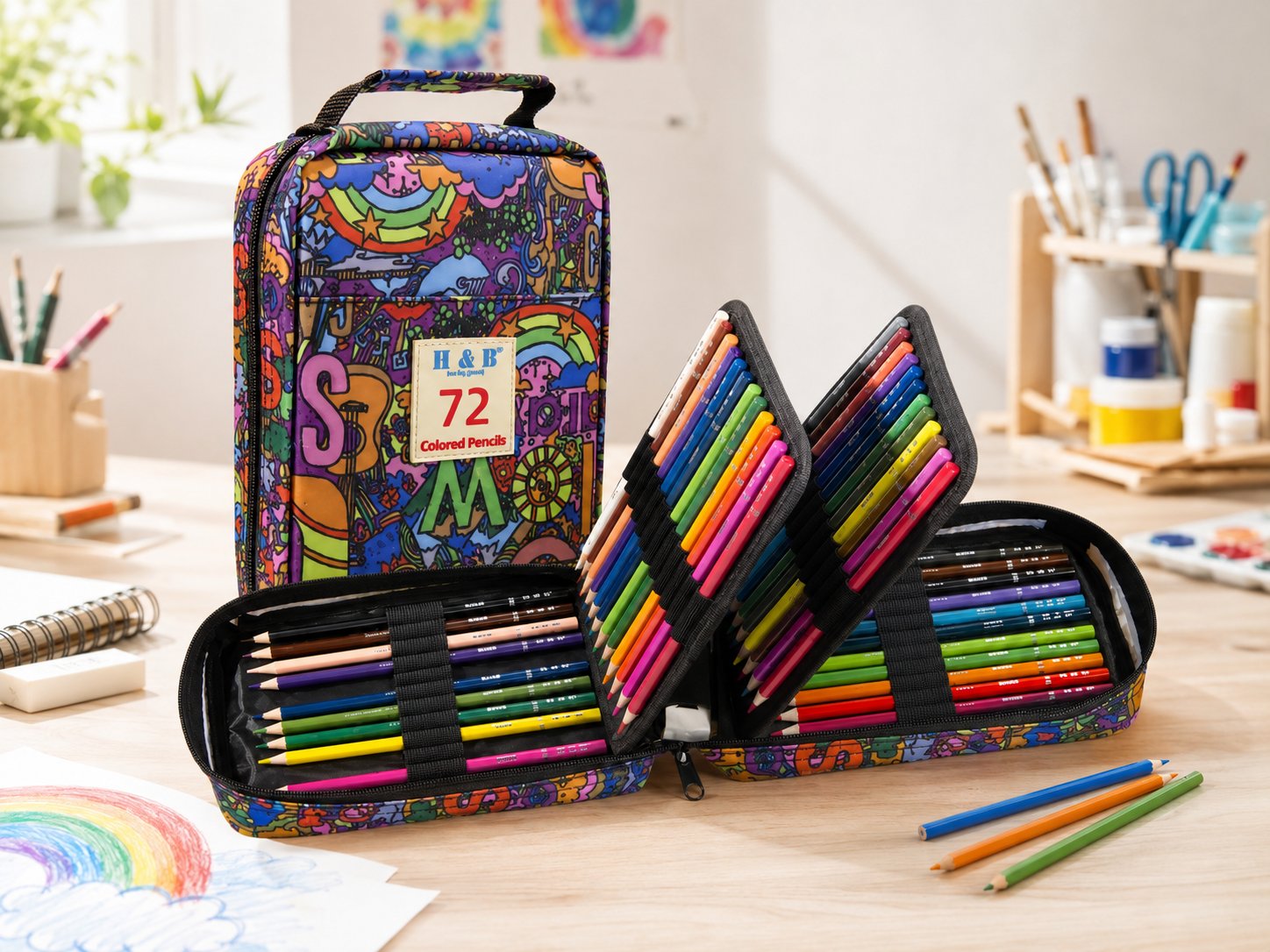 72-Color Oil-Based Pencil Set
 12-Piece Nylon Paint Brush Set
 12-Piece Detailing Brush Set
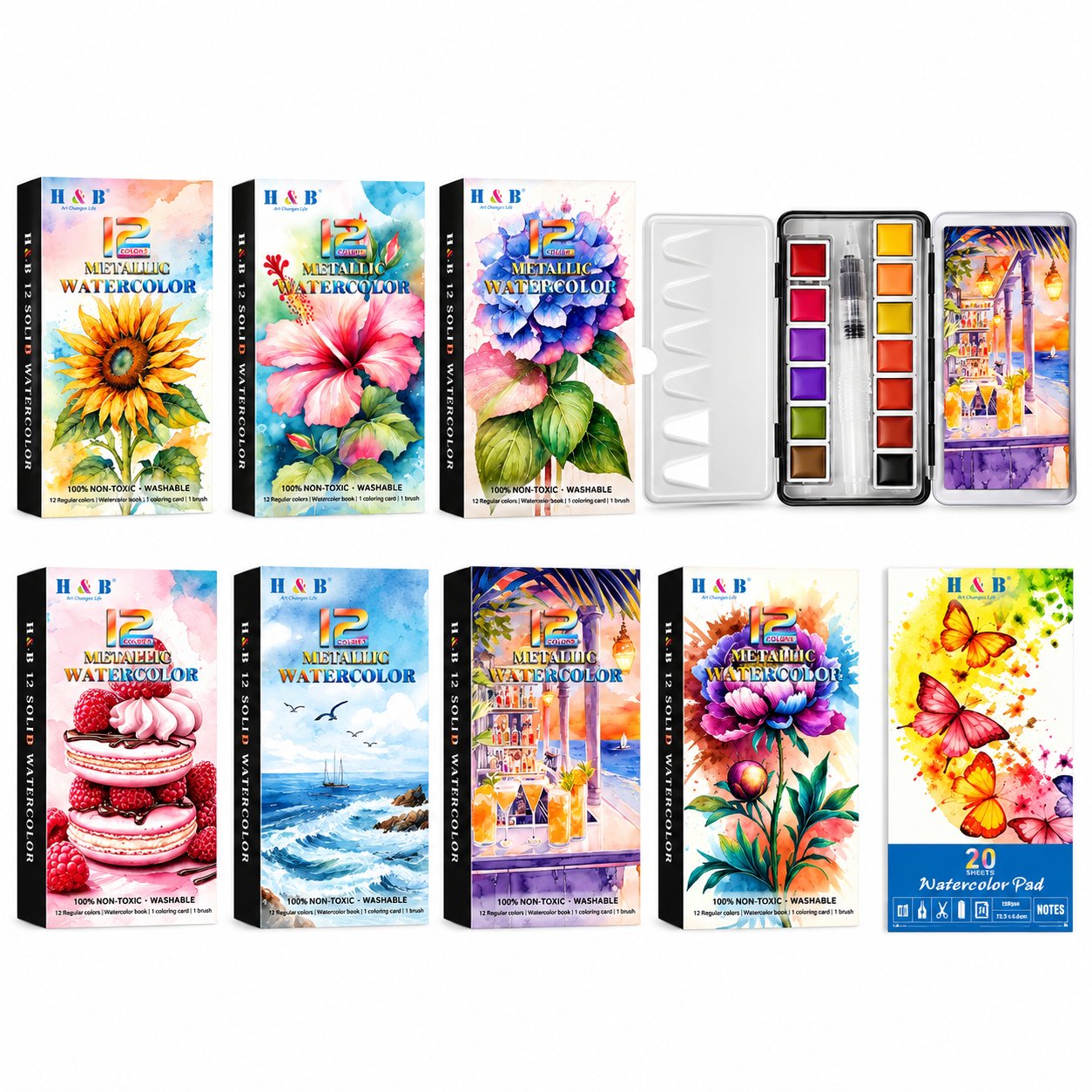 12-Color Watercolor Set with Water Brush
 24-Piece Watercolor Paint Set
Choose a suitable format or share your draft specification with H&B.