Gouache vs Watercolor: Which Paint Fits Your Product Line
If you are building or expanding an art supplies line, the gouache-versus-watercolor question comes up in almost every product meeting. Both are water-based paints, both ship in tubes, pans and sets, and both are usually grouped under the same category heading in a catalog. In practice, they behave differently on the paper, appeal to different buyers, and carry different requirements for packaging, compliance and reorder cycles.
This guide is written for importers, distributors, private-label brands and sourcing managers who need to decide which paint to put on the shelf — and how to spec it correctly with a factory.
The short answer for buyers
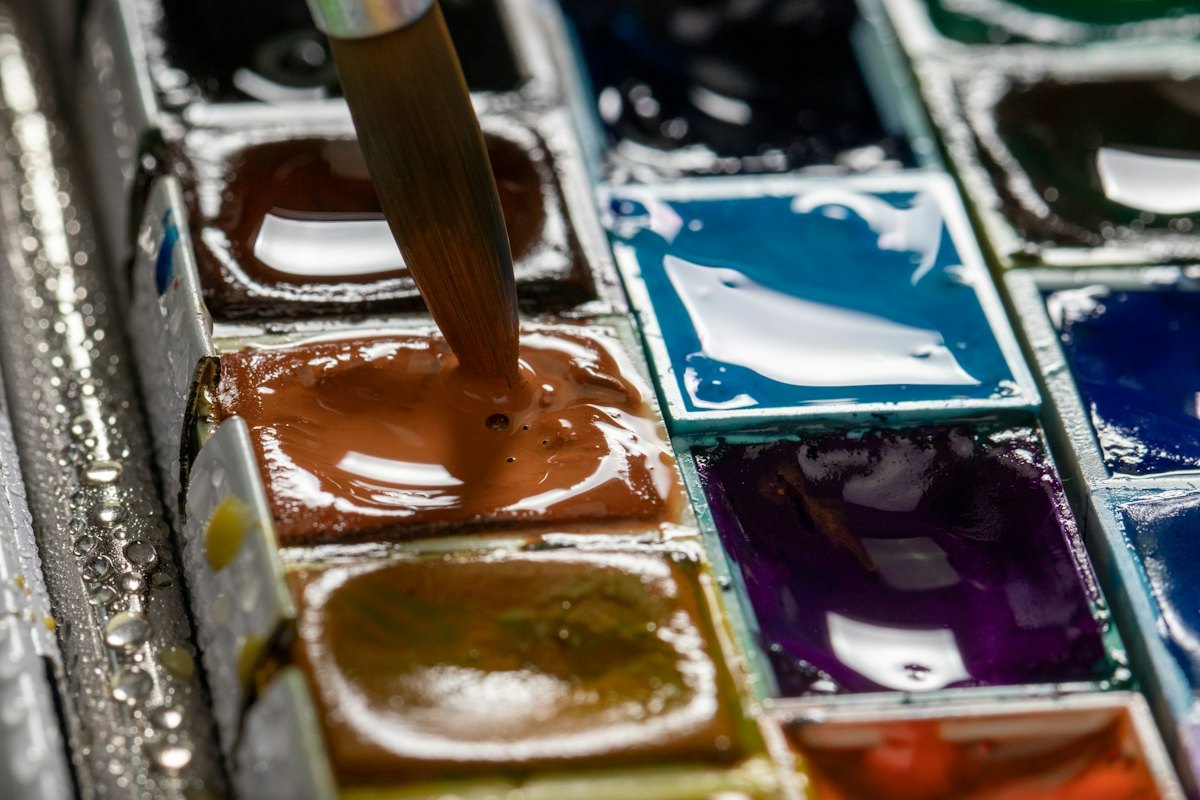
Watercolor is a transparent, water-thinned paint that relies on the whiteness of the paper for its lightest tones; it cannot easily be layered back over with an opaque color. Gouache is an opaque, matte paint that carries a higher pigment load and includes white or a matte-forming agent, so it can cover previous layers and hold flat, solid color areas. If your customers want luminous washes, landscape sketching and a traditional fine-art feel, watercolor is the natural fit. If they want flat color, illustration, design work, poster-style artwork or a medium that behaves predictably on tinted and colored paper, gouache is the stronger product for that shelf.
For a wholesale program, the practical difference is this: watercolor sells as a technique product to buyers who already paint, while gouache sells as an outcome product to buyers who want to reproduce flat color quickly — including students, illustrators, hobby painters and designers.
What actually separates the two paints
Opacity and pigment load
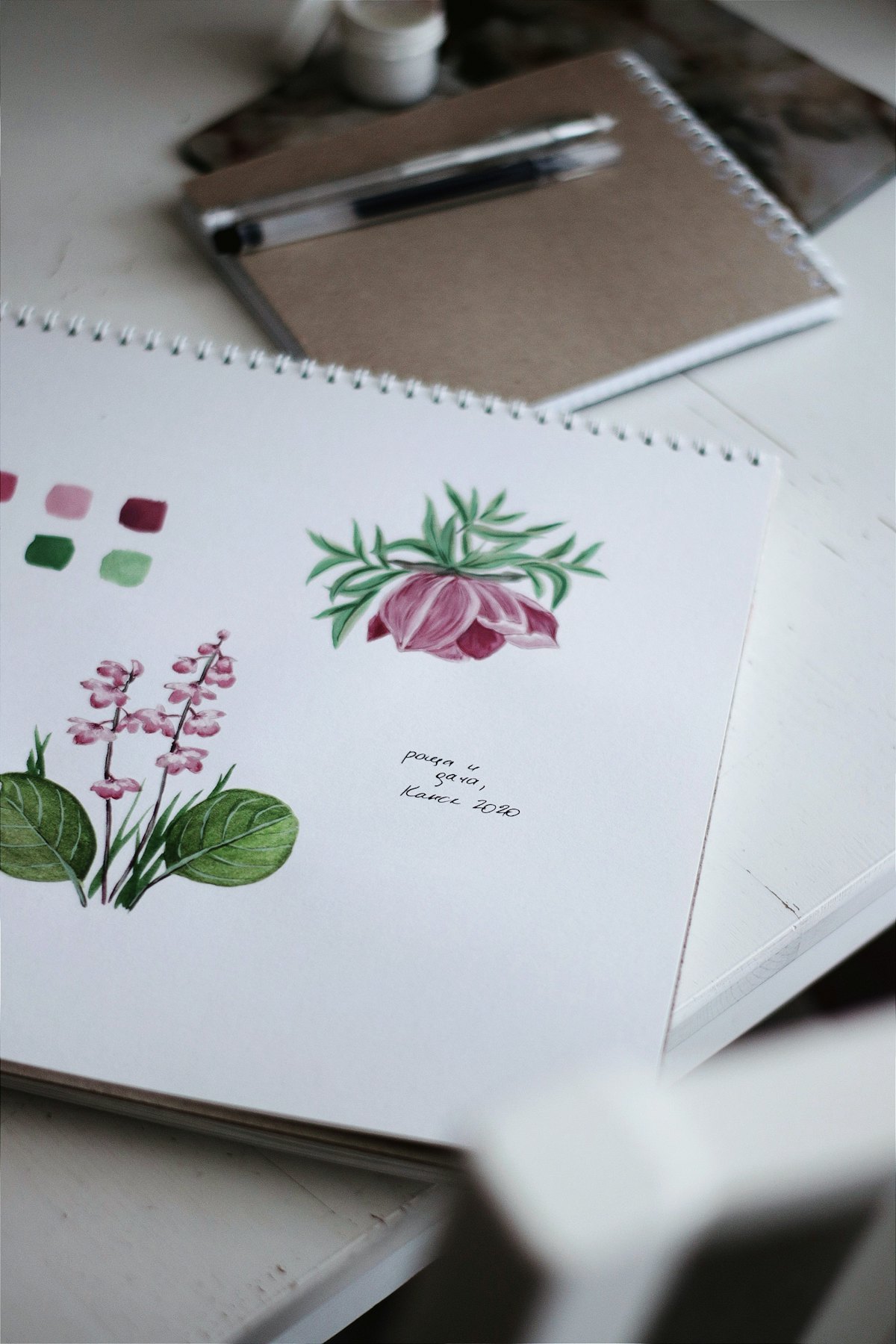
Watercolor gets its character from transparency. Pigment is dispersed in a gum arabic binder at a level that lets light pass through the paint film and bounce back off the paper. That is why watercolor whites are usually the paper itself, and why overlapping washes create new tones instead of a flat top layer.
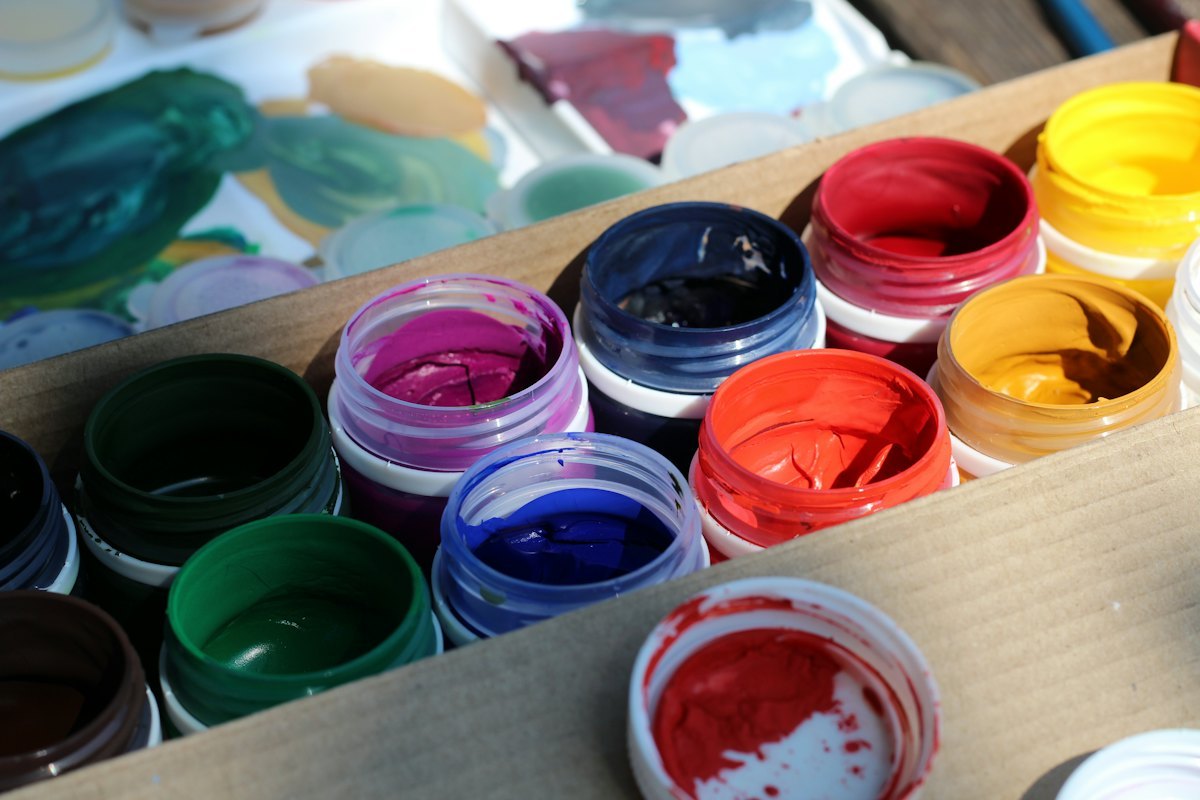
Gouache uses the same family of binders but carries a noticeably higher pigment concentration and adds an opacifying component — commonly a white extender or chalk-type filler. The result is a denser, more heavily packed paint film. Industry comparisons of the two mediums note that gouache pigment is ground to a coarser level than watercolor pigment, which contributes to that dense, solid appearance.
Binder and finish
Both paints are water-based and rewettable. The difference buyers notice immediately is the dried surface: watercolor dries with a translucent, slightly glossy or matte finish depending on the pigment, while gouache dries flat and matte. Gouache also tends to dry a little darker and flatter than it looks wet, which matters for color matching in packaging design and for reorder consistency between production lots.
Rewetting and layering behavior
Both mediums can be reactivated with water after drying. Watercolor is layered light-to-dark because each new wash can disturb or darken what is underneath. Gouache is layered dark-to-light: a new opaque layer can sit on top of a dried layer and cover it. For a manufacturer, this means the two products sit under different quality expectations — watercolor buyers judge granulation, flow and wash evenness, while gouache buyers judge coverage, opacity and repeatable flat color.
Side-by-side comparison for product planning
| Decision factor | Watercolor | Gouache |
|---|---|---|
| Opacity | Transparent | Opaque, matte |
| Layering direction | Light to dark | Dark to light, covers previous layers |
| Typical end user | Fine artists, sketchers, hobby painters | Illustrators, designers, students, hobby painters |
| Common formats | 12 ml tubes, half pans, cakes, sets | 12 ml tubes, jelly cups, sets, solid pans |
| Paper dependency | High — needs watercolor paper to hold washes | Medium — works on watercolor paper, board and tinted stock |
| Repeat-purchase driver | Single-color refill tubes, larger sets | Set-based purchasing, gift and classroom packs |
| Shelf story | Technique and tradition | Flat color, speed, illustration and craft |
Which one fits your product line?
Scenario 1: school, kids and classroom channels
For classroom and children's channels, the deciding factors are coverage, cleanup and safety documentation rather than artistic nuance. An opaque medium lets younger users produce a finished-looking result quickly, which is why gouache and jelly-type gouache formats perform well in classroom kits. Watercolor remains strong in school channels as a low-cost, easy-cleanup option, especially in pan sets that resist spilling.
Scenario 2: entry-level retail and e-commerce
For retail and online channels, the buying decision is driven by the product photo and the perceived "value in the box." Opaque paints photograph well because they hold flat color, and gouache sets often ship with more perceived contents per unit — cups, pans, brushes and a case. Watercolor sets compete on portability and on the appeal of a recognizable, traditional format.
Scenario 3: professional and artist brands
At the professional end, ranges are built around pigment quality, lightfastness and single-color refills. Watercolor lines are usually extended with individual full pans and large tubes; gouache lines are extended with larger tube sizes and with colors that support illustration and design work. Both segments reward buyers who can document pigment information and lightfastness per color.
Specifications to confirm before placing an order
- Color count and assortment: 12, 18, 24, 36 or larger color counts; confirm whether the assortment is fixed or can be customized per market.
- Fill volume: 5 ml, 12 ml and larger tube sizes, or pan and cup formats; fill volume drives unit cost more than almost any other specification.
- Grade: student-grade, studio-grade or artist-grade pigment selection, and whether lightfastness information can be documented per color.
- Format: tube, half pan, full pan, cake, jelly cup or bottled; each format requires a different filling and sealing process.
- Packaging: tin box, folding box, paper wrap or blister; if a retail-ready kit is required, confirm whether brushes, mixing trays or paper are included.
- Private label: logo application on tube, box and case, plus any market-specific labeling or language requirements.
- Compliance documentation: confirm which test reports are needed before production starts and whether they must be renewed per lot.
- Sampling and lead time: agree the approval sequence — color matching, sample approval, packaging proof — before the production slot is booked.
Compliance and testing for export markets
Art paints are treated as a regulated category in most destination markets, so compliance planning should start before the artwork is finalized, not after production. The two most frequently requested documents in this category are ASTM D-4236 for the United States and EN 71-3 for the European Union, supported by CE marking where applicable and by factory-level social compliance audits such as BSCI for retail programs.
In practice, buyers should confirm three things with any supplier: which tests are covered by the existing reports, which pigments or additives in the requested formulation could trigger re-testing, and how long the test cycle adds to the production calendar. Changing a pigment, a filler or a packaging component can invalidate an existing report, and that risk is best managed at the specification stage.
What these material differences change for buyers
Opacity, pigment load and binder chemistry are not only artistic variables — they move cost, durability, compliance and freight. Reading them as purchasing inputs rather than product features is what separates a range that prices correctly from one that does not.
Cost and price ladder
Pigment load is the single biggest driver of unit cost. A higher load delivers the flat, opaque coverage that illustration and design channels pay for, but it also raises the cost of the paint itself. A practical range carries one high-pigment reference at the top of the ladder and a lower-load formulation for classroom and volume channels, rather than pushing the same formulation across every price point.
Durability and shelf behavior
Rewetting behavior and binder choice determine how a set performs after weeks of warehouse storage and repeated opening. A formulation that rewets cleanly is more forgiving in humid transit and in markets with long shelf dwell time; a formulation that skins over demands tighter packaging and shorter distribution chains. Both are valid choices — they suit different channels.
Compliance and testing scope
Whether a set carries pans, tubes, jelly cups or solid cakes changes the components that must be assessed, and pigment formulation determines how much of the testing scope is triggered. Locking the format before artwork is commissioned keeps testing valid; changing a component afterwards can invalidate documentation already paid for.
Freight and pack-out
Format decides carton cube. Watercolor pans and cakes travel denser than tubes, and jelly-cup formats sit between the two. At peak-season freight rates the difference between a dense and a bulky configuration is a real cost line rather than a rounding error, which is why pack-out should be specified at the same time as the paint, not after it.
Why brands source gouache and watercolor from H&B Art
Shanghai Haobin Stationery & Art Material Co., Ltd. has been manufacturing art supplies since 2010 and now exports to more than 60 countries, working with importers, distributors, retail chains and private-label brands. The company holds the certifications most frequently requested in this category — EN 71, ASTM D-4236, CE and BSCI — and operates as an OEM, ODM and private-label manufacturer rather than a trading intermediary.
For paint programs specifically, that means buyers can specify color assortment, fill volume, format and packaging in one place, then run the same supplier for the surrounding kit components. Watercolor and gouache sets are commonly assembled with brushes, pans, trays and cases in the same facility, which shortens the approval loop between the paint itself and the retail-ready box.
Typical minimum order quantities in this category start from around 300 sets per reference, with sampling and color matching completed before the production slot is confirmed. Buyers who need market-specific assortments — a 12-color classroom pack for one market and a 24-color design set for another — should raise that requirement during the sampling stage rather than after artwork approval.
Related products from the H&B range
Frequently asked questions
Is gouache more expensive to produce than watercolor?
Unit cost is driven mainly by pigment selection, pigment load and fill volume rather than by the medium itself. A student-grade opaque set and a student-grade transparent set at the same fill volume sit in a similar cost band; the spread widens when a range moves to higher-grade pigments or to larger tube sizes.
Which medium should a first-time private label launch with?
Most first launches perform best with the format that photographs clearly and matches the intended end user. If the target buyer is a hobby painter or student, an opaque set with a case usually converts well; if the target buyer already paints in a traditional style, a watercolor set with refill pans is the safer entry.
Can color assortments and packaging be customized?
Yes. Color count, individual colors, tube or cup format, box construction, insert layout and logo application can all be specified. The practical constraint is the sampling cycle: every non-standard color or packaging component adds a proofing step before production.
What documentation should be requested before ordering?
Ask for the current test reports relevant to the destination market — ASTM D-4236 for the United States and EN 71-3 for the European Union are the usual starting points — plus any social compliance audit the retail program requires. Confirm in writing which formulation or packaging changes would require re-testing.
Planning a gouache or watercolor program?
Send us your target market, color count and packaging direction. Our team will come back with a specification sheet, sampling plan and quotation.
Send Inquiry Browse Products Contact Us