How Many Colors Should a Beginner Colored Pencil Set Have? A Guide for Retail and School Buyers
There is no single color count that suits every beginner. Some new users want a small palette they can learn quickly; others find a larger range helps them choose the shade they need without extensive layering. For a retailer, school buyer, or private label team, the useful question is which set size fits a specific activity, price point, and customer routine.
Public user discussions can reveal questions worth testing. They are not a representative market survey, and the preferences expressed in one thread should not be turned into a universal sales claim. This guide uses those questions to build a practical assortment and sample review.
What are beginners actually asking?
In one discussion about a first colored pencil set, the original poster worried that a very large set could overwhelm a new user. Replies disagreed: some favored fewer colors, while others preferred more choice. Several discussed swatching colors to make a larger palette easier to navigate.
A separate discussion about value for money and set size asked whether a beginner should start with 24, 36, 72, or more pencils. The range of answers is a useful reminder that the number printed on the box does not tell buyers how well the palette works for a particular person. Another beginner discussion focused on feeling overwhelmed by too many choices.
These posts show questions and individual experiences, not measured demand. They suggest three things to test in a proposed set: whether the palette supports common beginner projects, whether colors are easy to find, and whether the package helps users work with a manageable selection.
Match the set to the activity, not a universal number
| Customer situation | Assortment starting point | What to check in a sample |
|---|---|---|
| First drawing or classroom exercises | A concise range with distinct color families | Can users complete the planned exercises without struggling to find a basic shade? |
| Coloring books or varied hobby projects | A broader range may reduce the need to build every shade through layering | Are adjacent colors visibly useful, or do many look alike on paper? |
| Travel, workshops, or small desks | A portable format with easy color identification | Can users find and return pencils without slowing the activity? |
| Retail range serving mixed skill levels | More than one clearly differentiated set size | Is there a simple reason to choose each option, and can popular formats be reordered? |
This table is a buying framework, not a prescription that every beginner needs a particular count. If your range includes several sizes, make the difference visible through the palette, pack format, and intended projects. A larger number alone is a weak upgrade story.
Test whether the colors are useful
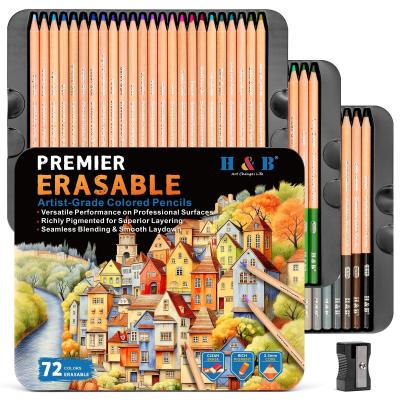
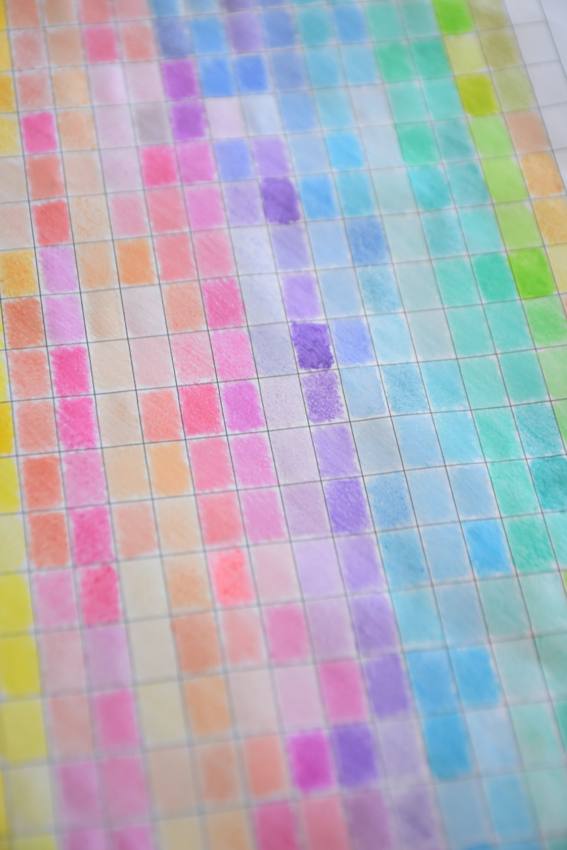
Ask for the exact color list and a physical sample of each proposed set. On the paper intended for the end user, make a light and a dense swatch of every color. Mark each swatch with the barrel number or name, then compare it with the supplied chart and pack list. Check whether the key color families have useful light, middle, and dark choices for the projects your customers make.
Next, try a short layering exercise. Select two related colors and apply them in controlled passes on the same paper. Record whether the shades combine as expected, how much pressure is needed, and whether the paper still accepts another layer. The result depends on the pencil and paper, so do not claim that one color count will always replace another through blending.
For a school or retail trial, observe whether a new user can choose colors without repeatedly searching through the set. This is a practical usability check, not a laboratory test. A clear color chart, consistent barrel codes, and an orderly case may make a large palette easier to use.
What belongs in the purchasing brief?
Specify the exact set count and color list; barrel identification; core and barrel dimensions; pack layout; included accessories; labeling language; target market; and reorder options. Keep the approved sample and a physical swatch chart as the reference for production and later deliveries. If the product is intended for children or makes safety or performance claims, request product-specific documentation for the destination market before approving packaging.
Compare the full sellable unit rather than price per pencil alone. Include packaging, freight, artwork, testing, and the cost of replacing or replenishing popular colors where applicable. For a range with multiple set sizes, confirm that each version has a distinct role instead of filling the shelf with overlapping palettes.
A useful decision before placing an order
Choose the smallest assortment that lets the intended customer complete the promised activity comfortably, then add larger options only when they provide a clear benefit: more useful shades, easier color matching, or a different working format. Validate that choice with physical swatches and user observation. Treat online conversations as a source of questions to investigate, while your approved samples and sales-channel requirements remain the basis for the purchase specification.