How to Choose Paint Brushes by Medium and Technique
A paint brush should help the user control a specific mark: a fine line, broad wash, textured stroke or smooth edge. The right choice depends on the paint, surface, brush shape and how the user cares for it. Hair labels and set counts offer clues, but a short painting test gives more useful evidence than calling one brush “best” for every artist.
Start With the Mark, Not the Brush Count
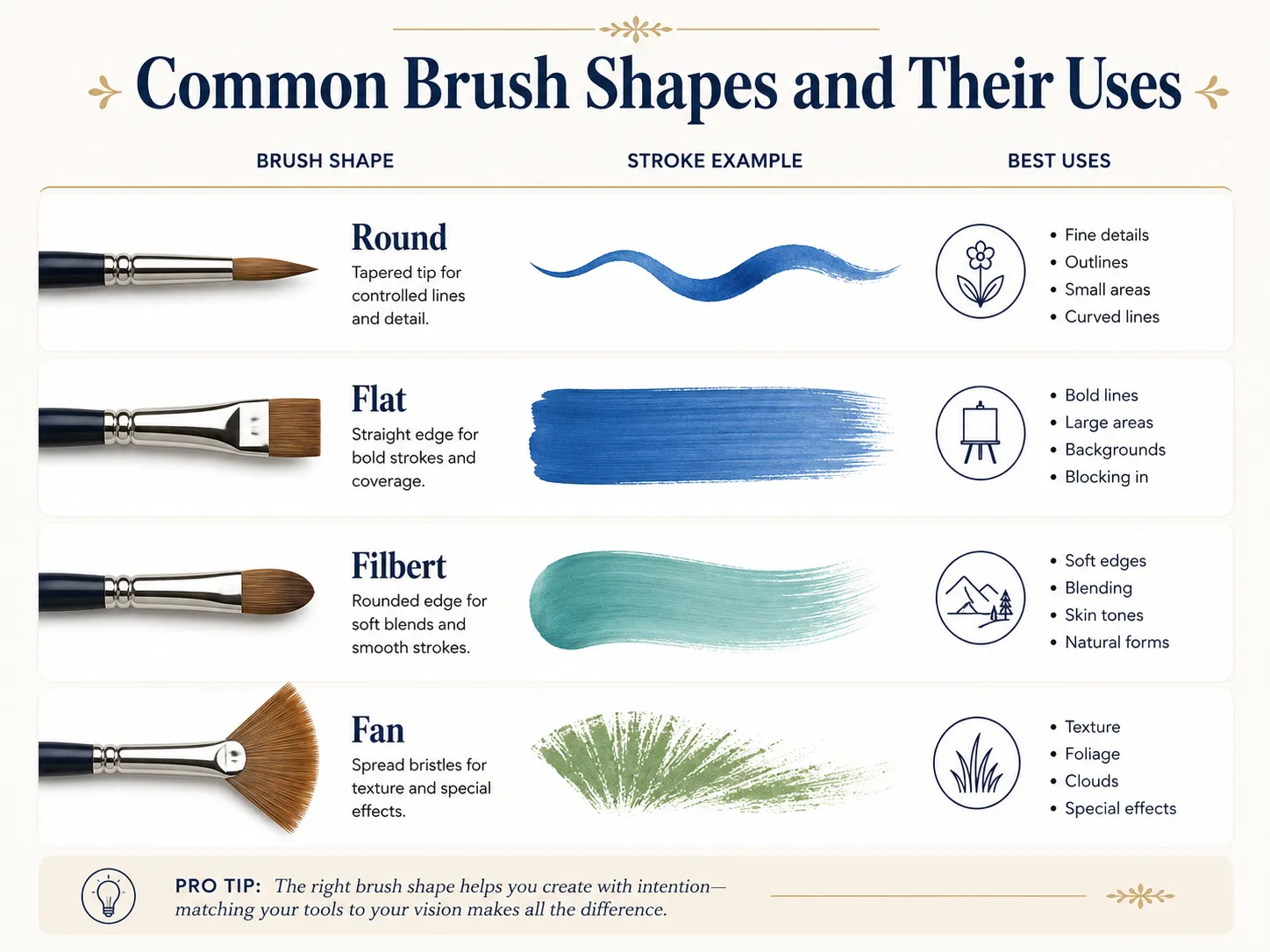
A watercolor beginner may need a round brush that forms a point and carries enough water for a small wash. An acrylic painter may need a flat brush for broad shapes and a smaller brush for edges. Detail work benefits from control, but an extremely small brush can dry quickly or feel difficult for a novice. Ask the user to make the marks in the lesson or artwork before selecting a set.
Build a compact group of distinct functions rather than many similar sizes. A round, flat and detail brush can cover different tasks if their actual dimensions and performance suit the paint. Test the intended paper or canvas as well as the brush.

Compare Tip Shape and Recovery
Wet the brush, load it with the intended paint and draw a fine line, a wide stroke and a turn. Watch whether the tip comes together, splays or recovers after pressure. Repeat after cleaning. A sample may look neat when dry yet lose shape when used; the painting task reveals the difference.
For a flat brush, check whether the edge stays even. For a round, check point formation. For a fan or textured brush, check whether the result matches the intended technique. Record the actual head width and length because size numbers are not a consistent measure across every product line.
Test Paint and Water Handling
Watercolor users often need controlled water release and a point that allows both washes and details. Acrylic users may need a brush that moves a thicker paint without excessive drag and cleans before paint dries in the ferrule. Oil painting has different solvent and cleaning considerations. Test each brush with the medium it is promoted for; do not infer suitability from a “natural” or “synthetic” label alone.
Make the same stroke sequence on the same surface with candidate brushes. Note how often the brush needs reloading, whether it sheds and whether the user can place an edge accurately. Ask users to describe comfort during a complete session, not only the first few strokes.
Inspect Ferrule and Handle Construction
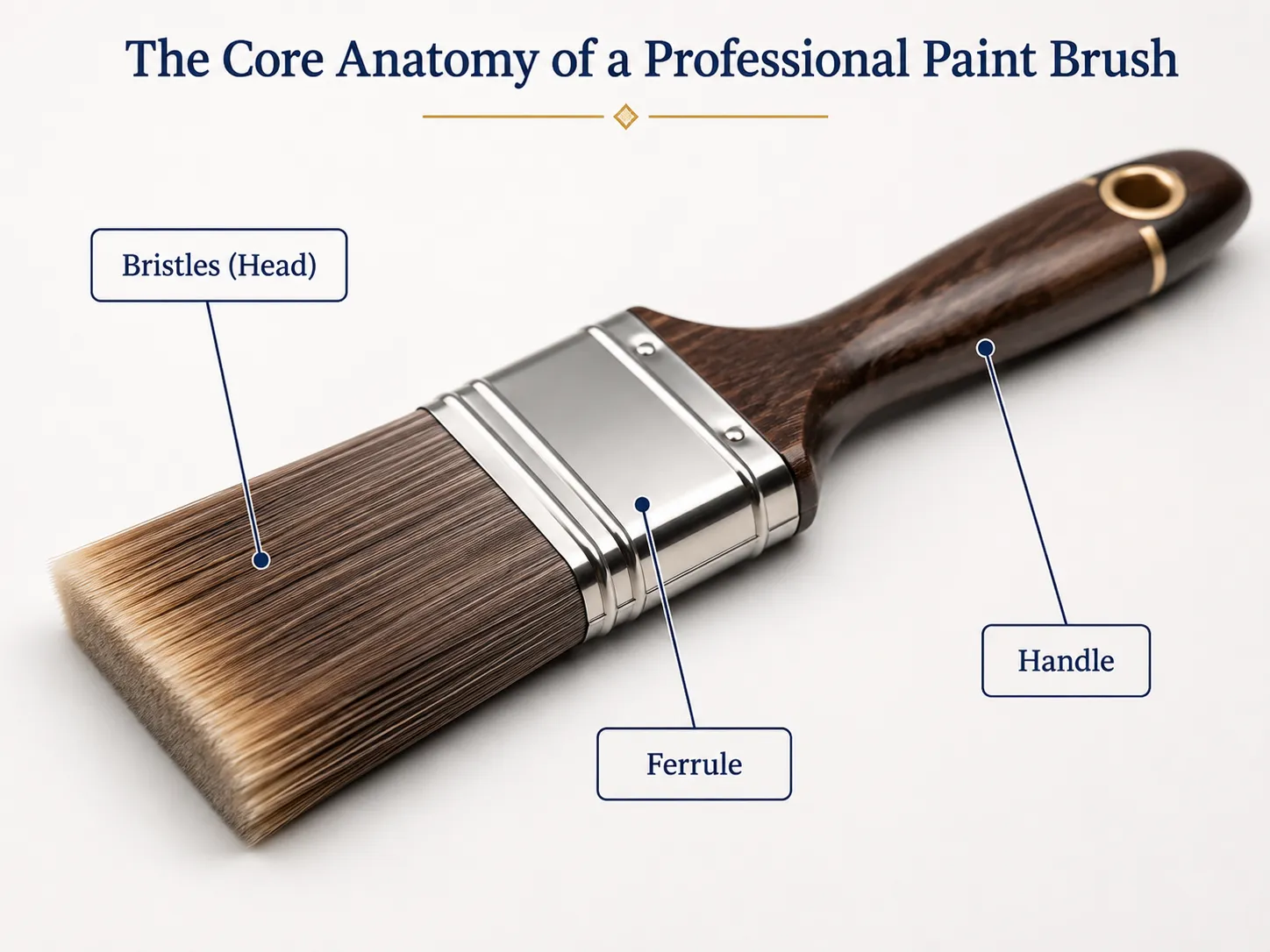
Check that the ferrule is secure, the handle finish is smooth and the brush head does not shed excessively during normal use and cleaning. After a wet session, look for wobble, loose crimping or peeling finish. Inspect several brushes from more than one carton, because a single sales sample cannot establish consistency.
For school or shared sets, also check whether handles can be identified by size and returned to storage. A clear sleeve or tray can protect tips in shipping, but it should be easy for the user to remove without bending the hairs.
Include Cleaning and Storage in the Test
Rinse a watercolor brush promptly and reshape it; wash acrylic paint from the brush before it cures. Follow the product’s recommended cleaning method for oil paint and other media. Observe whether pigment remains near the ferrule, whether the tip recovers after drying and whether a case crushes it. User instructions should match the materials actually sold.
Some performance complaints arise from care and storage rather than the original brush. Include concise care guidance where it helps the buyer’s customers, and avoid promising that any brush will last a fixed number of months without a defined use test.
Write a Brush Purchase Specification
- Paint medium, surface and target user.
- Brush shape, actual head dimensions and handle length.
- Filament or hair description and ferrule construction.
- Sample test for point recovery, shedding, water or paint release and cleaning.
- Set contents, individual identification and replacement availability.
- Packaging, carton protection, labeling and approved physical sample.
Ask the supplier to provide the same configuration for repeat orders and to notify you before changing the filament, ferrule or handle. For claims such as “professional,” use observable performance criteria rather than an undefined adjective.