How to Choose a Watercolor Paint Set: A Practical Guide for Artists and Buyers
A useful watercolor set helps its owner begin painting without fighting the materials. The paint should release from the pan or tube, spread predictably on the chosen paper and dry to a color the user can understand. For a school buyer or retailer, the same questions become a sample test: can a beginner make a clean wash, can the set be explained on the package, and can the approved configuration be reordered?
Start With the Painting Experience
Ask what the end user will paint and where. A travel sketcher may value a compact pan set and a secure case. A classroom may need straightforward color choices, easy cleanup instructions and packaging that survives repeated handling. A painter who mixes larger washes may prefer tubes or refillable pans. The right format depends on how much paint the user needs, the paper used and the workspace available.
“Student” and “professional” are marketing labels unless backed by specific information. Compare pigment information where supplied, strength after dilution, transparency, granulation, rewetting and color change after drying. An inexpensive set can be suitable for practice; a higher priced set still needs a test against its stated use.
Pans, Half Pans and Tubes
| Format | User Benefit | Buyer Check |
|---|---|---|
| Full or half pans | Portable, tidy and easy to select by color | Check rewetting, pan fit, lid closure and whether individual colors can be replaced. |
| Tubes | Convenient for larger mixes and repeated washes | Check fill, cap seal, separation after storage and labeling of each color. |
| Mixed kit | Ready to start with brush, tray and paper | Check each accessory against the promise on the box; count usable colors separately from pieces. |
A set with many colors is not automatically easier to use. Beginners benefit from a clear warm and cool range, a useful earth color and space to mix. Test whether similar shades are genuinely distinct after dilution. If the range is meant for repeat purchases, ask whether popular individual colors can be replenished.
Test the Set on the Paper It Will Be Used With
- Use the same watercolor paper and brush for every candidate. Record paper weight and surface.
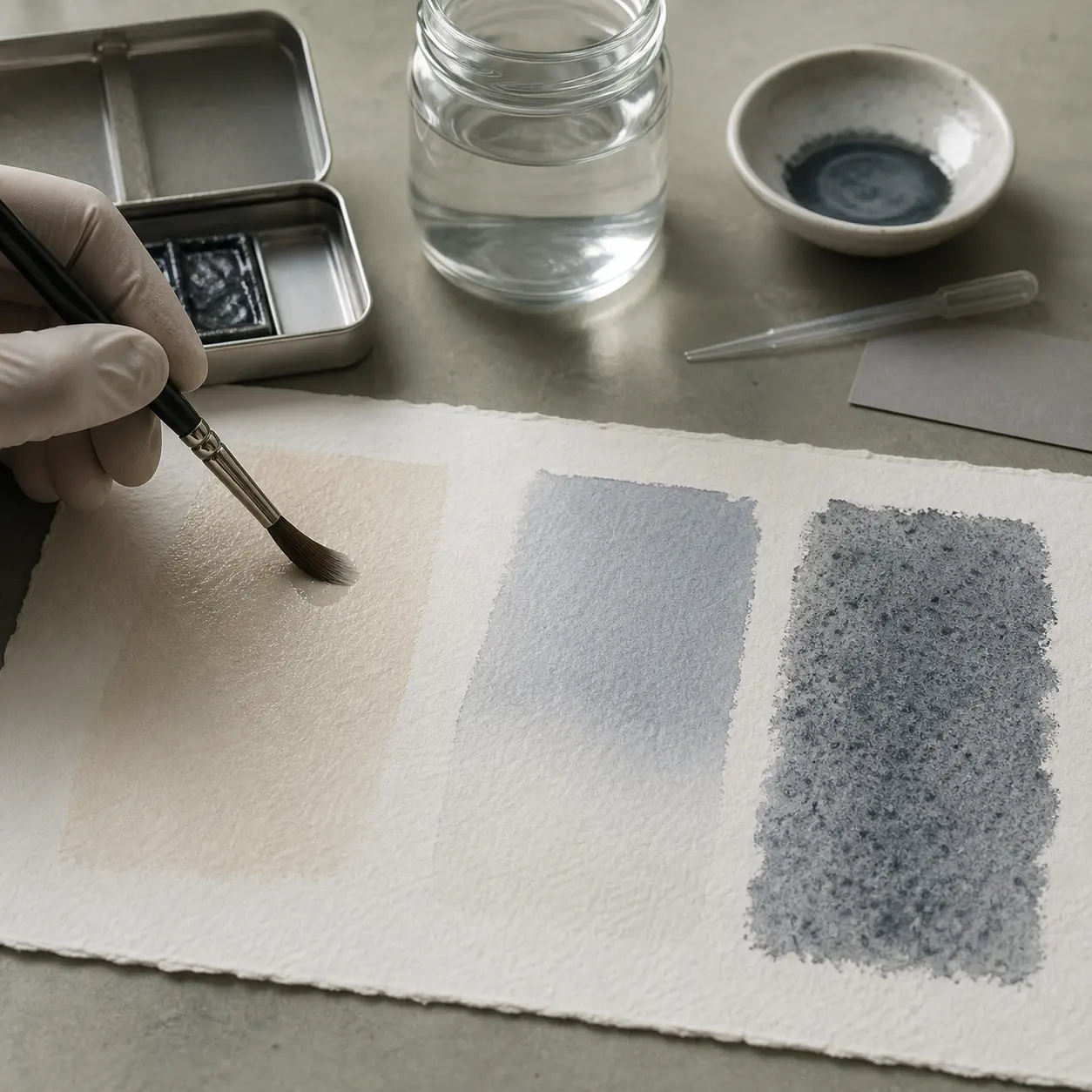
- Make a saturated mark, a single dilution and a graded wash from each test color. Use a consistent water volume.
- Let all swatches dry fully. Compare hue, evenness, visible granulation and any unexpected edge marks.
- Rewet a dried swatch and check whether it lifts or moves. Describe the result rather than assuming permanence.
- Check whether the brush, lid, mixing area and case still work after repeated opening and cleaning.
What to Specify Before an Order
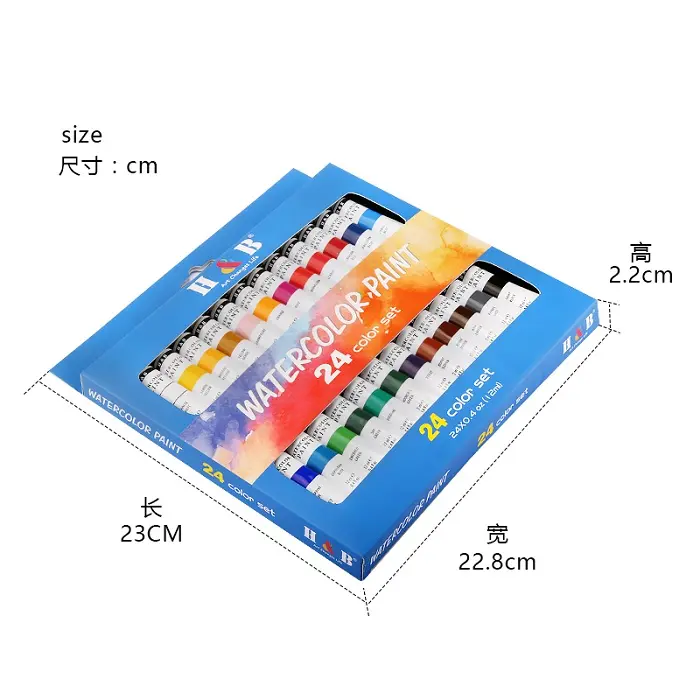
List the exact color count and color codes, pan or tube size, net fill where applicable, case material, accessories, carton pack, language requirements and artwork. Keep an approved physical sample and color chart as references. Define tolerances and what happens if a color or accessory must be substituted. Ask for a current specification and documentation tied to the exact SKU rather than a generic statement about the whole range.
For a product intended for children, review the applicable safety and labeling requirements in each destination market before printing claims. In the United States, CPSC guidance on art materials explains the ASTM D4236 toxicological review and conformity statement. In the EU, toy safety rules apply where the finished product is classified as a toy. A label claim needs the appropriate product-specific support.
Make the Shelf Promise Match the Set
Show dry or wet swatches from the actual colors, state whether the kit includes a brush and name the paper recommended for best results. Avoid promising artist-grade lightfastness without color-specific evidence and a stated test method. Include simple instructions for adding water and cleaning the palette. That helps the purchaser choose the set and helps the user get the result shown on the pack.
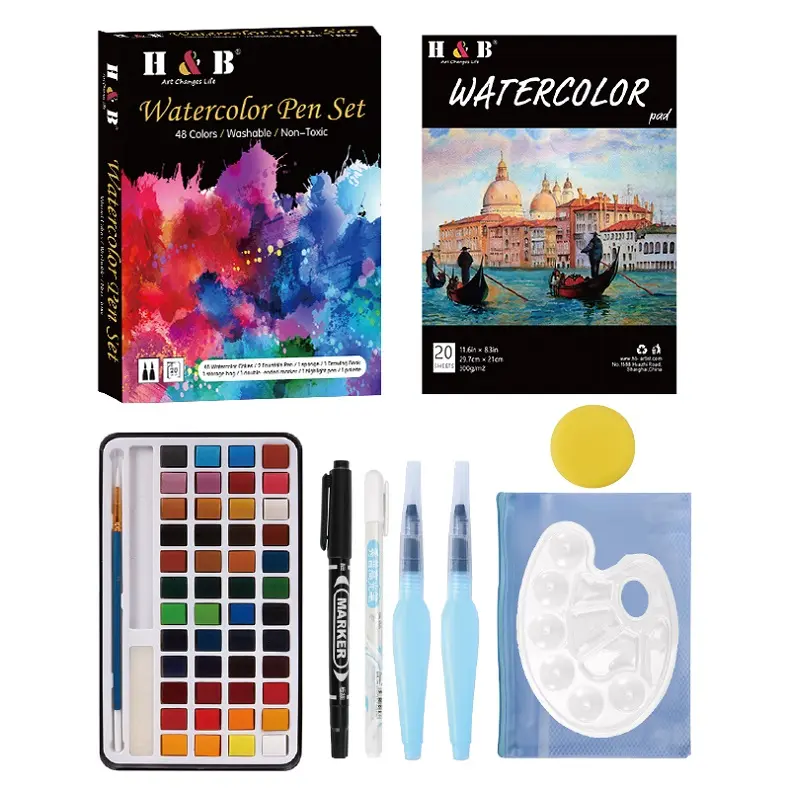
Related Watercolor Set Formats
These pages illustrate possible configurations; confirm the exact contents and claims on the quotation.