How to Price Private-Label Art Supplies: A Buyer’s Cost Worksheet
Pricing a private-label art supply set begins with the complete product and the route by which it reaches the customer. A factory unit price is useful, but it does not include every cost of packaging, freight, import, fulfillment and returns. Buyers should build a model from current quotes and their own channel data instead of applying a universal multiplier or target margin.
Start With a Defined Sellable SKU
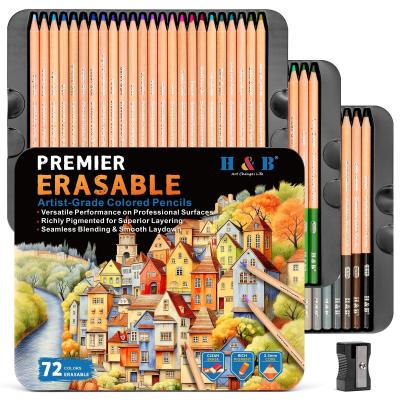
Write down the exact color range, materials, accessories, packaging, dimensions and carton pack. A price for loose pencils cannot be compared directly with a price for a finished tin set. Ask suppliers to identify tooling, artwork, sample, testing and one-time setup charges separately from the recurring unit price.
Use the same specification when requesting quantity breaks. A lower quote may reflect a different core, paper, case or level of protection. Test the user experience first, then decide which cost changes are acceptable. A product that disappoints its intended user can create returns and lost repeat sales that the purchase price does not show.

Build Landed Cost From the Trade Term
Record the agreed Incoterms rule and named place. The International Chamber of Commerce explains that Incoterms 2020 allocate costs, risks and obligations differently. An FOB quotation, for example, is not the same cost basis as a quote that includes carriage to the destination. Ask the freight forwarder to price the route and identify what is and is not included.
Your landed-cost sheet may need product and packaging cost, allocated setup charges, inland transport, international freight, insurance, customs brokerage, duty, nonrecoverable taxes, inspection, storage and receiving. The exact list depends on the contract and route. Do not use a fixed “FOB × 1.5” estimate as the final business case.
Classify the goods and verify current import measures. For the U.S., CBP notes that the final duty rate may differ from an online estimate. For the EU, the TARIC database contains current tariff measures. Confirm the destination, origin, classification and date with the responsible customs authority or adviser.
Separate Margin, Markup and Cash Flow
Gross margin and markup use different denominators. Gross margin is (selling revenue minus cost of goods sold) divided by selling revenue. Markup is the same difference divided by cost. State which metric a target refers to, and decide whether channel fees, discounts and returns are included. Otherwise, two teams can use the same percentage while expecting different results.
Track cash timing as well as unit economics. Deposits, production time, freight transit, marketplace payout cycles and inventory holding can create a funding gap even when an individual unit appears profitable. Model the first order and a realistic reorder separately, because tooling and launch costs may be one-time while packaging and shipping recur.

Include Channel-Specific Selling Costs
A distributor, retailer and marketplace seller face different fees and service expectations. Add the actual commission or wholesale discount, fulfillment, advertising, customer service, payment processing and expected returns relevant to your channel. Obtain current fee schedules rather than publishing a percentage that may change. If the product is a school set, account for bid terms, delivery windows and replacement pieces.
Estimate the cost of a return or complaint using your own history where available. If there is no history, test a range of scenarios and label it as an assumption. Do not represent a planning scenario as observed performance.
Check Price Against the User Promise
A price should correspond to what the buyer receives and can verify: color range, drawing performance, packaging, instructions and dependable replenishment. Ask whether a proposed feature improves the task enough to justify its cost. For example, a more robust case may protect pencils in transit and remain useful afterward; that value should be tested with the target user, not assumed to support a fixed retail premium.
Before launch, compare the proposed price with your own channel data and customer feedback. Record which features customers value and which cause returns. Revisit the model when freight, duty, supplier price or channel fees change. A price is an operational decision, not a one-time formula.
Review Compliance Costs Without Inventing a Timeline
List documents and tests required for the actual product and destination, then request current quotations and timing. The U.S. CPSC describes ASTM D4236 art-material assessment and labeling. EU toy requirements apply when the finished product is classified as a toy. A general “ASTM and EN71 certified” phrase does not tell you which SKU, colors or components were evaluated.
Budget for possible artwork revisions, sample changes and retesting if the formulation or included parts change. Do not promise buyers that all samples ship within a fixed number of days or that every product shares one MOQ; get a current project quotation.
Questions for the Pricing Worksheet
- What is the exact SKU, quantity, packaging and quoted currency?
- Which costs are one-time, and which recur on every order?
- What Incoterms 2020 rule and named place apply to the quotation?
- What are the current freight, customs, tax and receiving costs for the destination?
- What channel fees, discounts, returns and replacement costs apply?
- What price and volume scenarios remain workable if one assumption changes?
Keep the source, date and owner beside each line in the worksheet. That makes the decision reviewable when a freight quote expires or a tax treatment changes. Use the resulting model to decide whether the product meets the user promise at a sustainable price for your business.