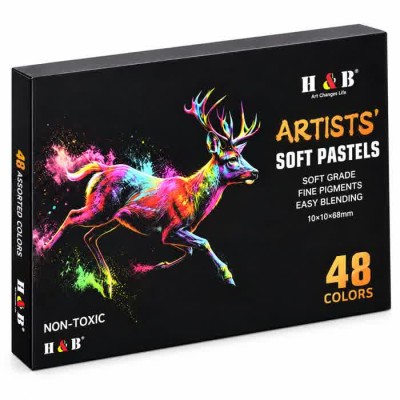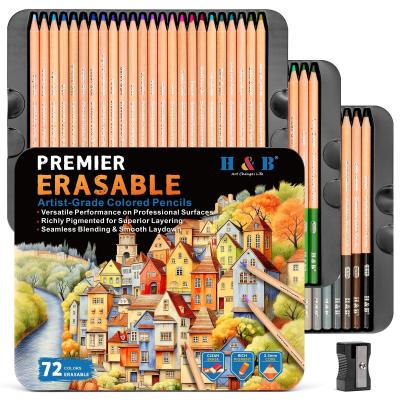
Kids’ Art Sets for Schools and Gifts: A Buyer’s Evaluation Guide
A children’s art set should make a real activity easy to start, finish and clean up. For school or gift buyers, the best configuration depends on age, skill, supervision, storage and the destination market. A high piece count or festive box cannot replace workable tools, clear instructions and product-specific safety evidence.
Begin With the Child’s Activity
Ask what the child will make and where. A quick classroom drawing lesson may need a compact colored-pencil palette, paper, a suitable sharpener and an eraser. A watercolor gift set may need a brush, paper that handles water, an instruction card and a safe place to dry work. A sketch kit for older students can introduce graphite grades only if the exercise explains why they differ.
Match the set to the age and abilities stated on its packaging. Watch a representative user open the box, identify the materials, follow the steps and put everything away. Record where adult help is needed. Do not assume that a product becomes age-appropriate because a package says “for kids.”

Check Every Included Component
Request a bill of materials listing pencils, crayons, paints, brushes, paper, sharpeners, erasers, cases and printed materials. Test how the pieces work together. A pencil may color well but break in the supplied sharpener; a watercolor pan may be fine but the included paper may buckle immediately. The sellable kit is the complete configuration.
Inspect small accessories, loose parts, closures and packaging edges in the context of the intended user. Check that instructions and warnings are readable in the destination language. When the set will be shared in a classroom, test whether students can remove and return pieces without losing or damaging them.
Use a Repeatable Sample Session
Give each sample the same task, time, paper and supervision. For pencils, check sharpening, color laydown, breakage and ease of color identification. For paints, check activation, coverage, cleanup and drying. For markers, check cap fit, line quality and leakage. Note what the child can complete unaided and what an adult must handle.
Keep the test as user observation rather than a laboratory claim. Agree separate acceptance criteria for production inspection: missing pieces, damaged cores, packaging defects, incorrect labels and functional failures. Use a complete approved sample as the reference for the shipment.

Review Safety Claims for the Destination Market
For U.S. art materials, the CPSC describes toxicological assessment and ASTM D4236 labeling. Its FAQ also explains that “non-toxic” is not a term defined by the relevant regulation. For an EU product classified as a toy, the European Commission explains applicable toy safety requirements and CE marking. The exact classification, age and components determine the document request.
Ask for current documents that name the SKU and tested materials. Compare the reports with the full kit and final artwork. A declaration or report for one component does not automatically cover added accessories or a changed formulation. Avoid “fully certified for all children” copy; state only substantiated claims for the precise item.
Choose Packaging for Classroom and Gift Handling
A gift set needs a clear contents list and an opening experience that leads quickly to a first project. A classroom set needs repeated access, durable storage, color organization and manageable replacement pieces. In either case, the box must protect the contents in shipping and leave room for required information. Test a packed sample after normal handling.
Confirm the outer carton, barcode, language panels, case pack and whether a retailer or school needs shelf-ready or class-pack formats. Do not claim that one material or package is a universal tender requirement. Ask for the actual tender or retailer specification and verify any sustainability claim against the relevant product evidence.
Plan Seasonal Delivery Without Invented Demand
A gift season or school term creates a real deadline, but the quantity and sales pattern vary by account. Work backward from the required arrival date. Allow time for sample approval, artwork, product-specific documents, production, inspection, freight and receiving. Request a current schedule for the exact configuration; do not publish a generic “seven-day sample” or fixed lead time as a guarantee.
For a first order, ask how much can be replenished if demand differs from the plan. Keep the color range, accessories and packaging revision stable where customers expect consistency. A small controlled pilot can reveal usage and return issues before the buyer commits to a wider assortment.
RFQ Questions for a Children’s Art Set
- What is the intended age, activity, user supervision and destination market?
- What exactly is in the finished set, including accessories and paper?
- Which sample exercise and defect definitions will be used for approval?
- Which current documents and warnings support the planned claims?
- What are the carton, labeling, delivery and reorder requirements?
- How will component or artwork changes be approved before future orders?
A buyer can then judge whether the kit helps a child create successfully, can be handled safely in its intended context and can be delivered consistently.