Private-Label Art Supplies: From User Brief to Repeatable Product
Private-label art supplies begin with a useful product for a clearly defined user. The logo and packaging matter, but they cannot rescue a set that sharpens poorly, dries out, lacks the right colors or cannot be reordered. A buyer should move from a user brief to samples, specifications, documents and a repeatable production reference before committing to launch quantities.
Define the User Problem Before the Product
Is the intended user a classroom beginner, a gift buyer, a hobby painter or an experienced illustrator? What result should they achieve with the product? A compact pencil set for first-time drawing needs clear colors, reliable sharpening and simple storage. A watercolor set also depends on paper, brush access and dry-down behavior. These examples should guide a brief; they do not prove that one category will be the most profitable.
Write down the expected use, target price band, minimum usable quality and channel requirements. Identify the first product’s main task and one reason a customer would buy it again. Avoid launching several unrelated items before learning which specification works for your users.
Select a Configuration You Can Specify
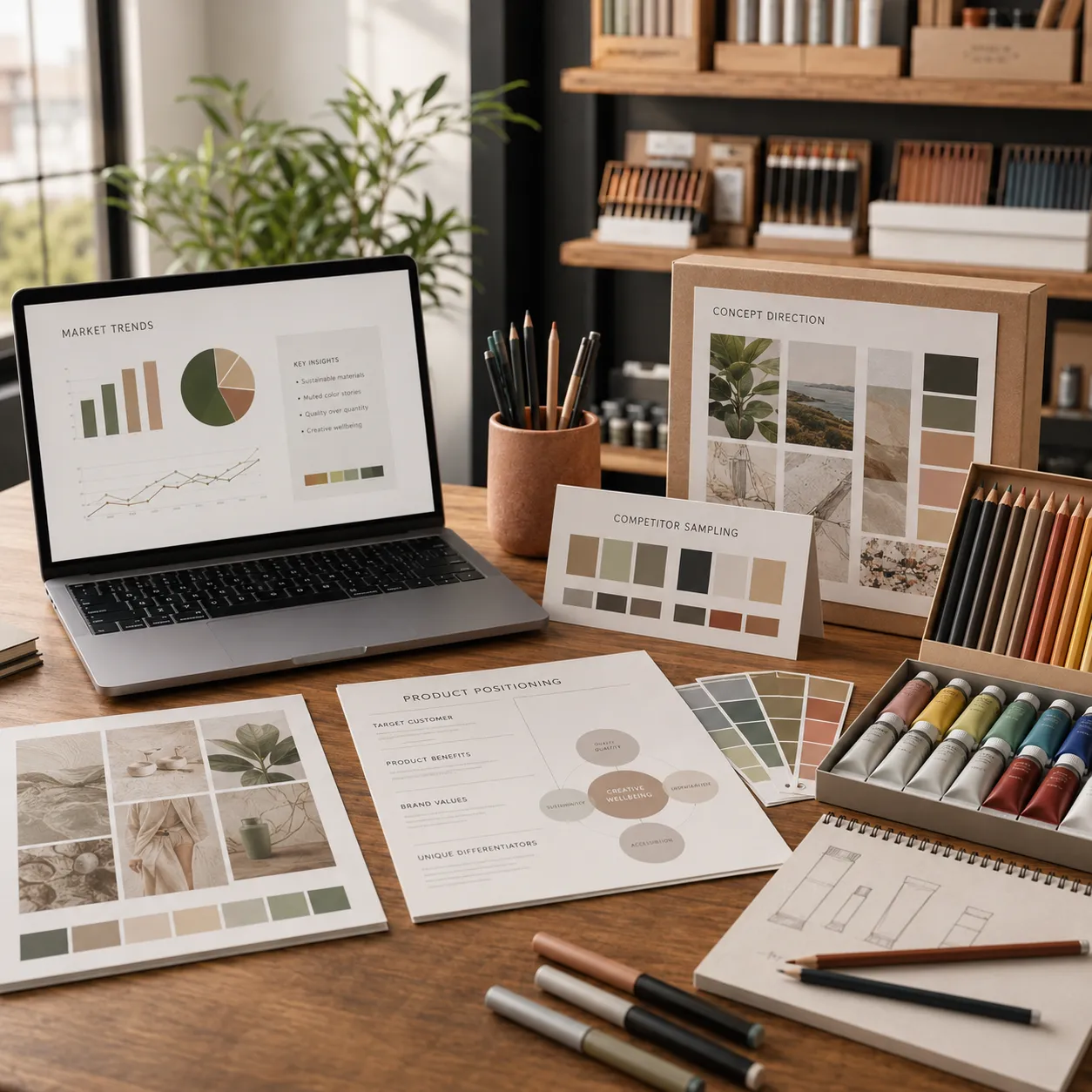
Choose the core product, color range, accessories and pack format together. A “72-color set” still leaves the palette, core, barrel, chart, tray and outer carton undefined. Ask the manufacturer to list every component and distinguish standard parts from custom tooling or artwork. A standard configuration may shorten development, but the actual lead time depends on the current materials and production plan.
Make a specification sheet with dimensions, materials, color codes, included items, packaging construction, print language and barcode placement. Record which details are fixed and which can change only after buyer approval. If a second shipment will be needed, ask how the supplier preserves the approved palette and component list.
Test Samples With the End User’s Task
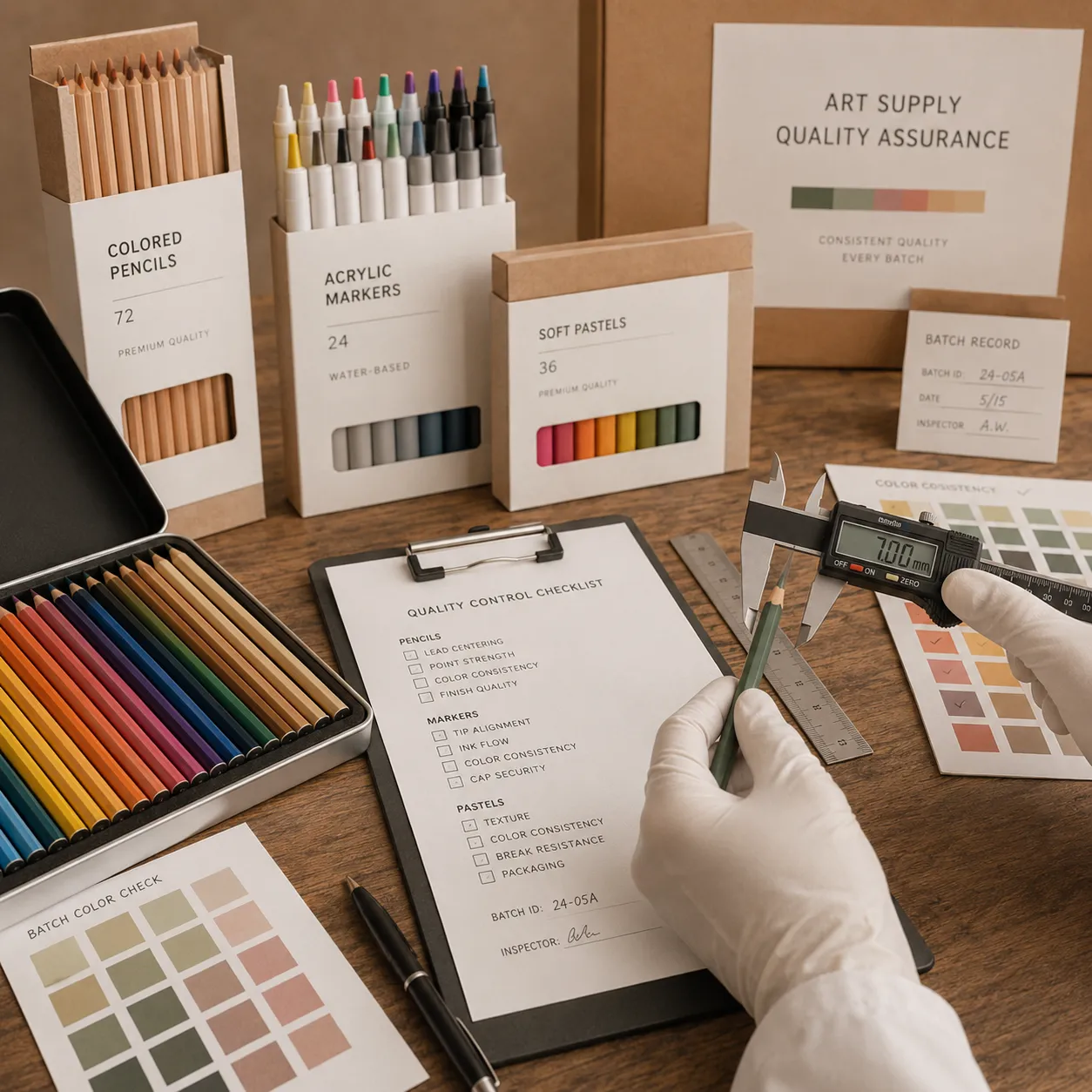
Use a repeatable evaluation sheet. For pencils, test laydown, layering, sharpening, barrel finish and breakage on the intended paper. For paints, test coverage, mixing, drying, rewetting or washability as relevant. For markers, test line quality, cap fit, leakage and performance on the specified surface. Include a packed sample so you can inspect the user experience from opening to cleanup.
Ask a small number of representative users to attempt the same task. Record where they struggle and what they value. This feedback is directional, not a statistically representative market study. Use it to refine the specification, then confirm the revised sample before approving production.
Build the Cost Model From Your Actual Order
Request a quotation that separates the product, packaging, tooling, artwork, inspection, freight terms and any testing or documentation charges. Then calculate landed cost with your destination-specific freight, duty, taxes, warehousing and channel fees. A percentage borrowed from another seller’s business cannot substitute for your own route and volume.
Compare several feasible quantities, including the first order and a realistic reorder. Check the cash tied up in inventory, the time needed to sell it and the cost of replacing damaged pieces. If a pack format raises unit cost, ask whether it also improves protection, storage or the customer experience you promised. Do not assume a higher retail price follows automatically.
Review Claims and Market Documents Before Printing
The packaging should say only what can be supported for the exact product. In the United States, the CPSC art-material guidance explains ASTM D4236 assessment and labeling. It is not a universal “non-toxic certificate.” In the EU, a product classified as a toy must be reviewed against applicable toy requirements, including relevant test evidence and CE documentation. Product classification and destination matter.
Ask for the report scope, tested SKU and materials, report date, responsible parties and final warning language. If the brand changes artwork or adds an accessory, check whether documentation and labels must be updated. Do not promise a fixed certification timeline without a current plan for the particular product and market.
Approve Artwork and Packaging as a Product Component
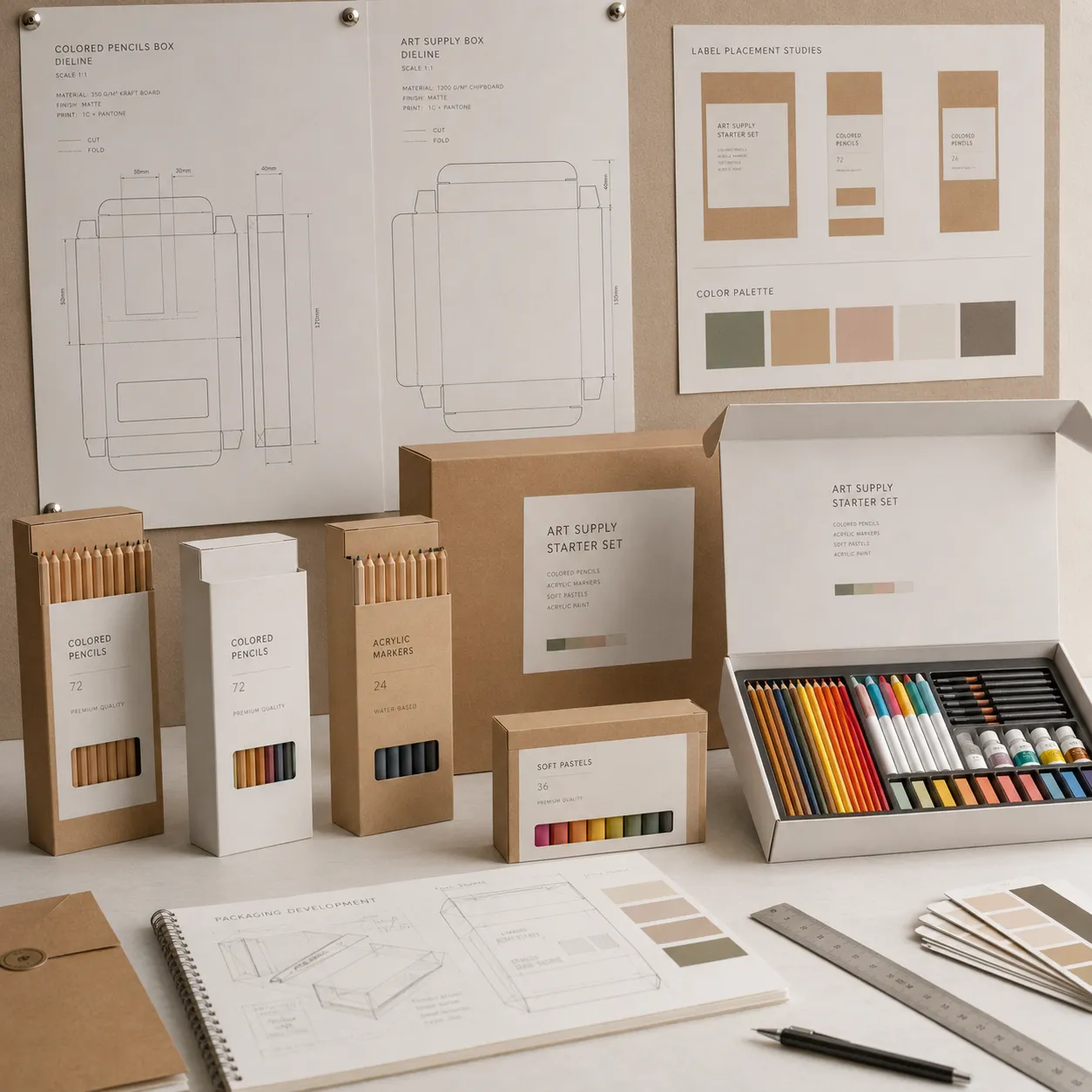
Verify color names, set count, instructions, country-specific information, barcode and any warnings on a printed proof. Check that the pack protects the materials in transit and is easy for the user to store. Confirm who owns the artwork files, who approves changes and how the final version is linked to the purchase order.
A pre-production sample should combine the approved product and pack. Retain it as the reference for incoming inspection. For a repeat order, compare the new goods to that sample and the latest specification revision, not to an early sales mock-up.
Use a Stage Gate Before Mass Production
- Brief: end user, technique, channel, destination and target cost.
- Sample: product and complete pack tested with agreed methods.
- Specification: dimensions, colors, contents, packaging and acceptance criteria fixed.
- Evidence: safety and performance claims matched to SKU-level documents and artwork.
- Quote: quantity, payment, trade term, tooling, freight and realistic production schedule recorded.
- Production approval: signed reference sample, inspection plan and change-notice process agreed.
If a gate is incomplete, resolve it before using launch dates or “certified” copy in marketing. The aim is a product that delivers the same user experience on the first and subsequent orders.
Questions for a Private-Label RFQ
Which components are standard and which require customization? What is the current MOQ for this exact configuration? What sample and artwork stages are included in the lead time? Which tests and documents support the claims we plan to print? How will color, formulation, accessories and packaging be held stable on the next order?