Wax-Based, Oil-Based and Watercolor Pencils: How to Choose by Technique
Choosing colored pencils starts with the marks a person wants to make. A beginner who colors broad shapes, an illustrator who builds precise layers and a painter who adds water to a sketch may need different pencils, paper and set sizes. Labels such as “oil-based” and “wax-based” are useful clues, but they do not guarantee a particular softness, break resistance or color strength. Compare physical samples under the same conditions before buying a range.
How Do the Three Common Labels Differ?
Conventional colored pencils use pigments, binders and other ingredients in a solid core. Many contain a blend of waxes and oils, so a simple “wax versus oil” split can overstate the technical difference between product lines. “Water-soluble” describes a user-visible function: dry marks can be moved with water. It is better treated as a separate technique choice than as proof of superior quality.
- Wax-based: Often marketed for a smooth feel and easy coverage. Actual softness, buildup and wax bloom depend on the formulation and application. Check the sample after repeated layers.
- Oil-based: Often marketed for point control and detailed lines. Test sharpening, point life and coverage on the intended paper; an oil label alone does not prove the core is harder.
- Watercolor or water-soluble: Makes dry marks that can be activated with a damp brush. Test both dry appearance and the final dried wash, including how readily it rewets.

Match the Pencil to the User’s Technique
For a child or first-time user, prioritize comfortable handling, dependable sharpening and a practical starter palette. A softer core may feel immediately rewarding, but frequent breakage or smudging can frustrate the user. Ask beginners to draw one light area, one dense area and a simple two-color blend. The right set should make those exercises approachable without special tools.
For detailed illustration, point retention and controlled layering matter more. Test fine lines, a gradual gradient and a dark area built from several colors. Check whether the paper surface fills too early, whether the barrel is comfortable for a long session and whether individual colors can be replaced after the original set is used.
For watercolor techniques, include a water test. Apply the same pencil pressure to each sample, then use the same brush and water amount. Record how easily the mark disperses, whether pencil lines remain visible and what the color looks like after complete drying. Ordinary drawing paper may buckle; use the paper weight and surface that the target user is likely to buy.

What Should Buyers Test Before Selecting a Set?
- Standardize the surface: use the same paper, pressure and number of passes for each candidate. Add a second paper if the product is promoted for mixed media.
- Check handling: sharpen several colors from different cartons; note broken cores, splintering wood and uneven barrel finishes.
- Check the color range: compare physical dry swatches, not only printed names. For watercolor pencils, add wet and fully dried swatches.
- Check replenishment: ask whether popular colors are available individually or in a repeatable set configuration. Record color codes and the approved physical reference.
- Check claims: request color-specific lightfastness evidence for any advertised rating, and product-specific safety and labeling documents for the destination market.
A practical purchase specification should name the core type or function, barrel and core dimensions, color list, set contents, packaging, language panels and approved sample. Avoid setting an acceptance threshold, such as a permitted breakage rate, without agreeing the test method and sample size with the supplier first.
How Should a Retail or School Assortment Be Built?
Begin with the end-user task. A small dry-color set can serve introductory drawing; a larger dry-color range can support extended layering; a watercolor set belongs where customers also have suitable paper and a brush. A mixed assortment can work when shelf labels make the dry and water-activated choices easy to understand.
Do not choose only by pencil count. Check whether the palette has useful light and dark values, whether adjacent colors are meaningfully different, and whether a replacement order can reproduce the same range. For schools, also review pack durability, naming consistency, classroom handling and the age and market shown on the packaging.
What Documents Support Safety Claims?
Do not describe every batch as “ISO 9001 certified.” ISO explains that ISO 9001 certification, when held, concerns an organization’s quality management system and is issued by an external certification body. Product inspection records and batch records are separate evidence.
For U.S. art materials, CPSC guidance describes toxicological assessment and the ASTM D4236 conformity statement. That statement is not a universal “non-toxic” certification. For an EU product classified as a toy, review the applicable toy safety requirements and product-specific evidence. Ask for the exact SKU, scope, dates and final label artwork; do not transfer a claim from one pencil set to an entire range.
Related Colored Pencil Options
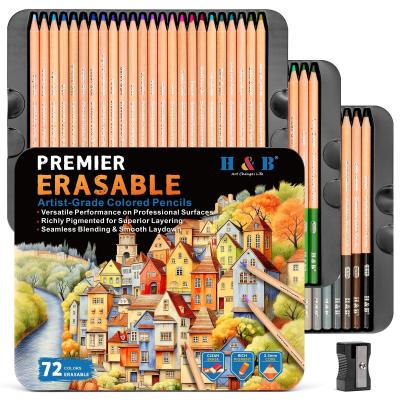
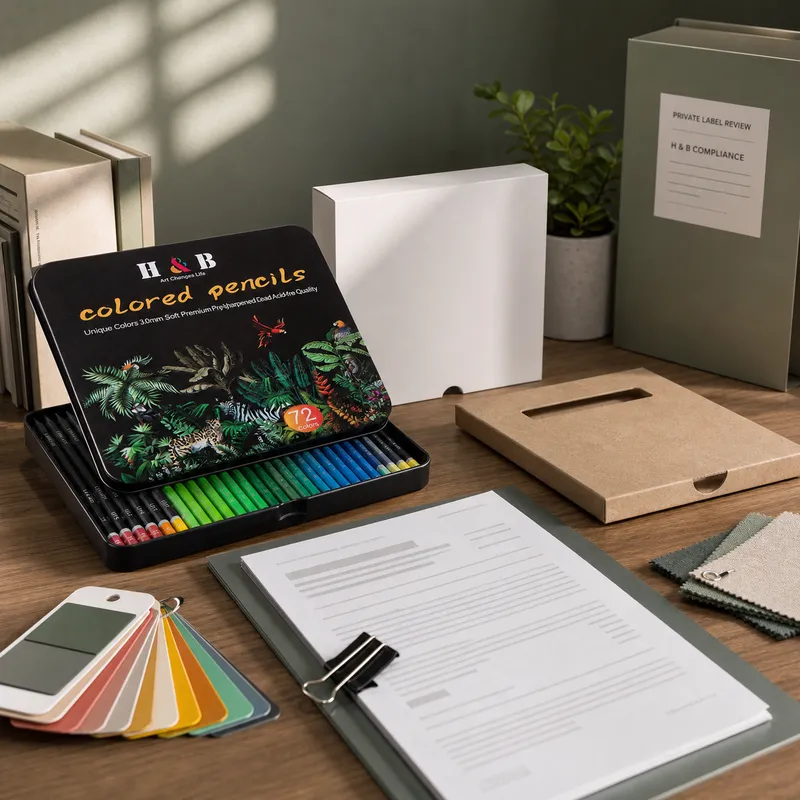
These product pages illustrate possible set formats. Confirm the precise specification and documentation for the SKU you select.