Acrylic Paint Markers: How to Choose Tips, Colors and Surfaces
Acrylic paint markers are useful when a user wants painted color with the control of a pen. The experience depends on the nib, paint flow, surface and drying conditions. A marker that writes well on paper may need a different preparation method on a nonporous object. For buyers, the most helpful question is whether the set delivers the techniques shown on its packaging under the conditions customers will actually use.
Begin With the User’s Project
Paper illustration, rock painting, signage and craft decorating place different demands on the marker. On absorbent paper, users may care most about smooth lines and low show-through. On a dark surface, opacity becomes more visible. On glass, ceramic or coated material, adhesion and handling after drying need a separate check. Give the shopper a surface-specific instruction rather than a blanket “works on everything” promise.
Choose the Nib for the Mark
| Nib Type | Useful For | Sample Check |
|---|---|---|
| Fine point | Lettering, outlines and small motifs | Draw repeated short lines and check tip wear and start-up flow. |
| Medium bullet | Filling small areas and broad outlines | Check coverage, line width and whether the tip spreads after pressure. |
| Brush or flexible tip | Variable-width strokes and calligraphy | Compare control under light and firm pressure, and check cap seal. |
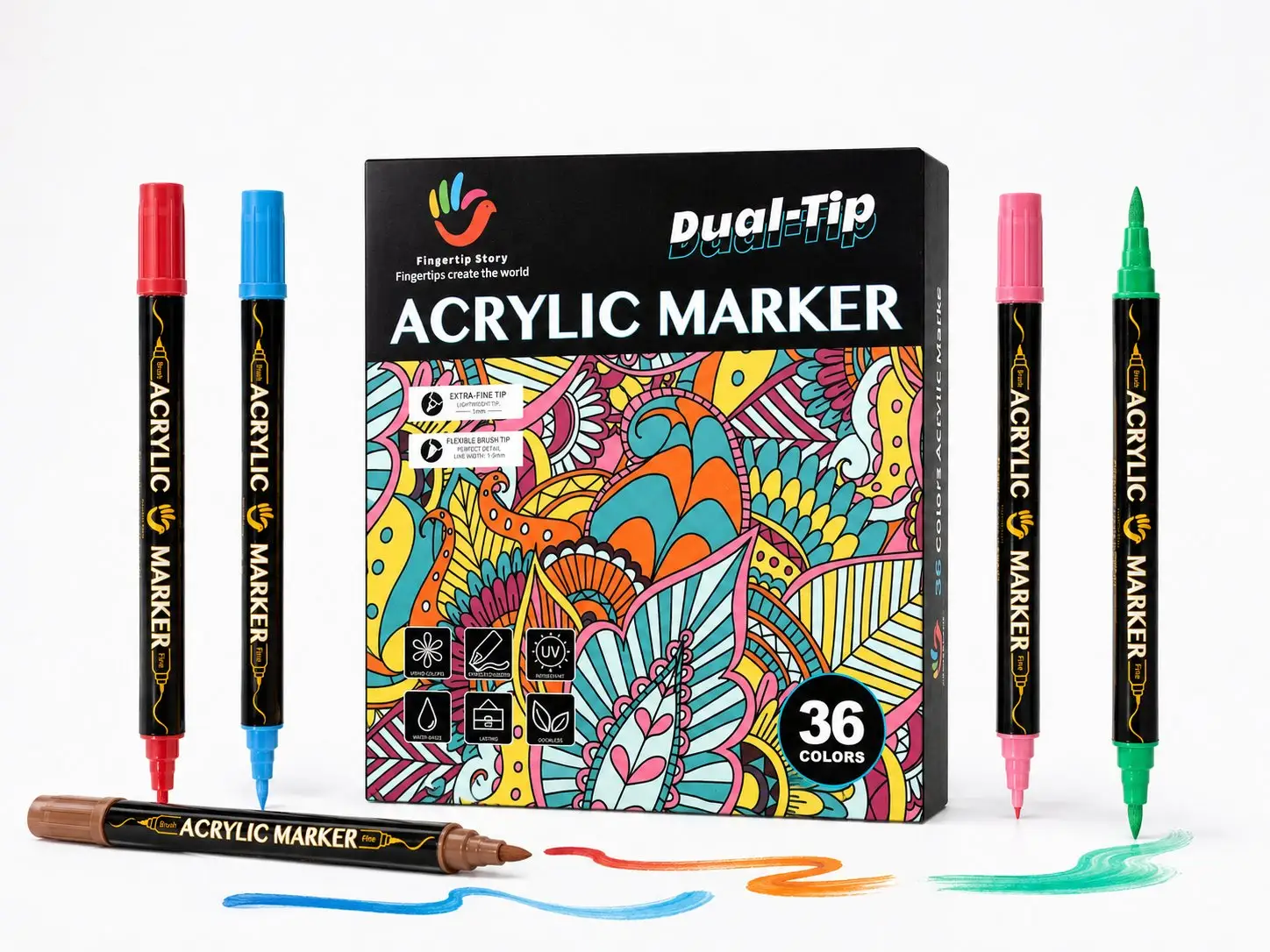
A dual-tip set can serve more than one project, but it also has more parts to evaluate. Check whether both ends use the same paint reservoir, whether the caps are clearly marked and whether either tip dries during ordinary storage. Explain priming or shaking steps in the user instructions where the product requires them.
Test Opacity and Flow on the Intended Surface
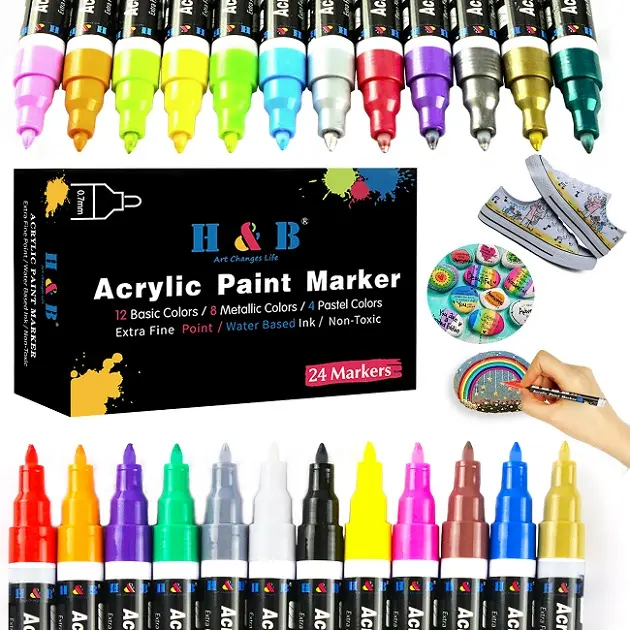
Make a simple sample card for each candidate. On light and dark paper, draw one pass and a second pass after the first has dried. Note whether the underlying surface is still visible, whether the paint pools at the start, and whether the line width is consistent. Repeat on the nonpaper surfaces named in the proposed packaging, following any preparation instructions supplied for the marker.
Record drying time under the room conditions used for the test. A result on one material is not a guarantee for another. Test smudging after drying with the same handling the end user will apply, and state whether the decorated object needs sealing or special care. Do not assume that “permanent” means washproof, heat resistant or suitable for food-contact surfaces.
Check Color Selection and Replenishment
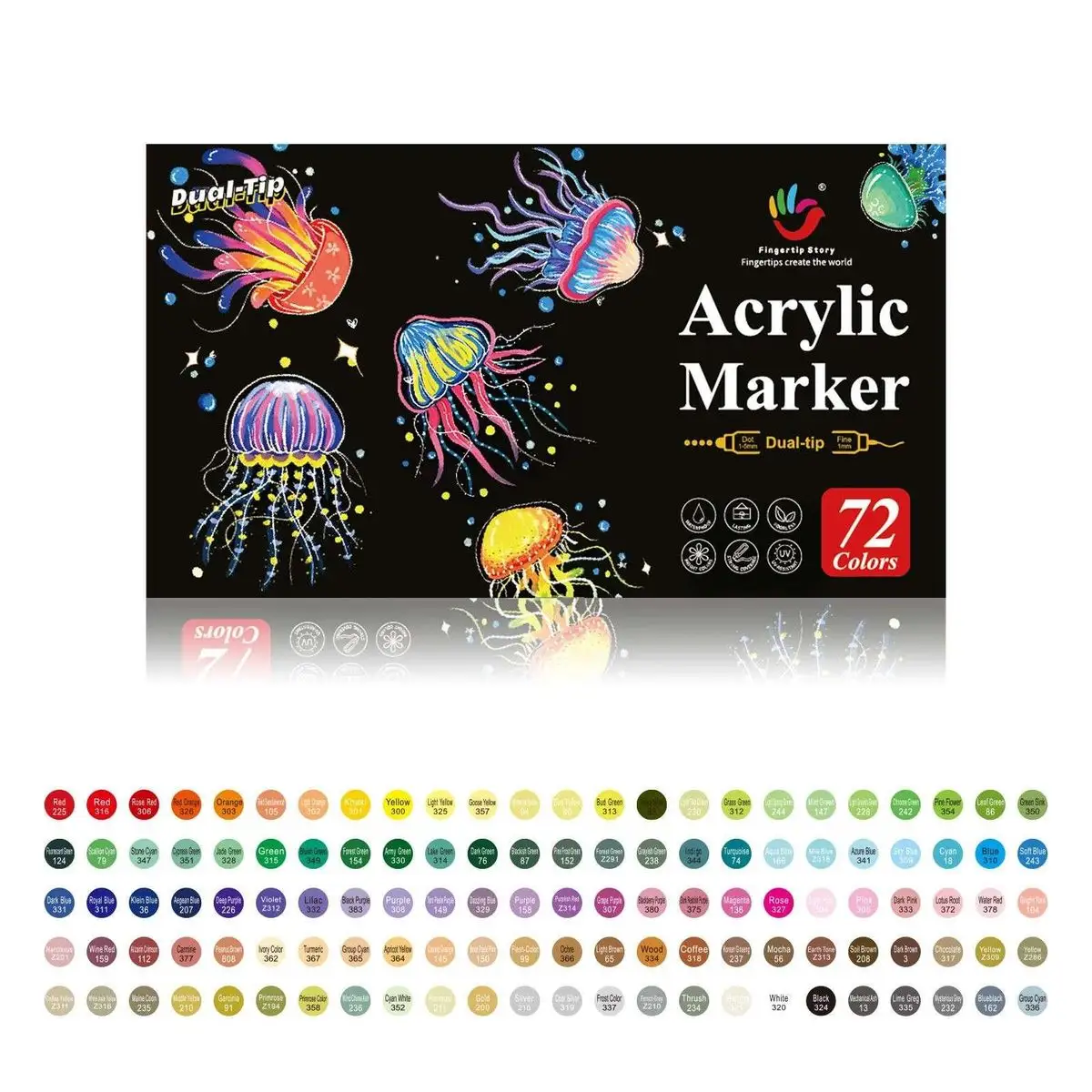
Set size should reflect useful color choices rather than a large number on the front of the box. Ask for a physical chart of dry marks on the intended surfaces. Look for distinguishable lights, darks and mixing colors. If the line is sold for schools, consider whether the most-used colors can be replenished. If it is sold for gift craft projects, check that the pack contains colors suited to the projects shown on the packaging.
Build a Repeatable Buyer Scorecard
- Record the exact model, color codes, nib types, intended surfaces and use instructions for each candidate.
- Prime every marker as directed and test the same colors on identical materials.
- Score first stroke, line consistency, opacity after one and two passes, tip wear and cap fit.
- Repeat after a planned storage interval to check restart performance.
- Inspect cartons from more than one sample batch for missing colors, leakage or damaged tips.
Keep approved samples and swatch cards as production references. Agree on what counts as an acceptable start-up delay, line variation, leakage or color mismatch before the purchase order is finalized.
Review Labels and Claims Before Printing
State the actual surfaces and any required preparation, drying and care steps. For goods marketed to children or sold into a regulated market, review the applicable safety and labeling rules for the finished SKU. The U.S. CPSC art-material guidance explains the scope of ASTM D4236 toxicological assessment and labeling. Do not turn a generic box claim or a supplier statement into a broad certification claim without the underlying product-specific evidence.
Packaging should tell the user what to do if the nib is dry, how to cap the marker and which surfaces were actually tested. That reduces avoidable complaints and lets the customer choose a set suited to the planned activity.
Related Acrylic Marker Formats
These product pages show possible set configurations. Confirm the quoted specification and any performance claims against samples.