How to Investigate Colored Pencil Core Breakage: A Buyer's Guide
A colored pencil that breaks once is frustrating. A pencil that breaks every time someone sharpens it can make an entire set difficult to use. For retailers, distributors and educational suppliers, repeated complaints can also mean product replacements, additional customer support and uncertainty about the quality of pencils in inventory.
There is no single reason why a colored pencil breaks. The point may be too long for the drawing task, the sharpener may have a dull blade, or the pencils may have been damaged during handling and transportation. In some cases, differences in pencil construction or production consistency may also contribute to the problem.
Looking at one broken tip rarely provides enough information to identify the cause.
This guide explains how buyers can identify different types of colored pencil breakage, investigate potential causes, compare physical samples and reduce quality risks in future bulk orders.
What Type of Colored Pencil Breakage Occurred?
Start by asking what the user actually experienced. Different types of breakage require different inspection methods.
Tip Breakage
Tip breakage occurs when the exposed pencil point chips or snaps during sharpening or drawing.
An occasional break may result from excessive drawing pressure, an unsuitable sharpening angle or a long, fragile point. However, repeated breakage under normal drawing conditions deserves closer investigation.
Internal Core Fracture
Internal core fractures are more difficult to identify. The wooden barrel may appear undamaged, yet pieces of the colored core may break away as the pencil is sharpened.
This pattern may indicate internal core damage, but it does not establish when or why the damage occurred. A poorly matched sharpener can also create new breaks during sharpening.
Comparing suitable sharpening tools and unused pencils helps distinguish between these possibilities.
Core Separation
Core separation occurs when the pigment core becomes loose or slides out of the wooden barrel.
Keep both the affected pencil and the separated core segment. Ask the supplier to check how firmly the core is attached to the wooden barrel, whether the core is centered, and how the pencil is built.
A single affected pencil does not establish that the entire production batch has the same issue.
What Information Should Buyers Record?
Before discussing possible causes, establish when the problem began. Did the customer notice the damage when opening the set, after an accidental drop, during sharpening or while drawing?
Which colors were affected? Was the customer using the sharpener supplied with the set?
These details help determine which samples and conditions should be compared.
| Record | What to Collect |
|---|---|
| Product Information | SKU (product code), set size, color code and purchase date |
| Batch Traceability | Batch number, carton identification or shipment reference |
| Breakage Event | When and how the pencil broke |
| Sharpener | Type, blade condition and whether it was supplied with the set |
| Packaging Condition | Photographs of the inner tray, storage case and outer carton |
| Physical Samples | Affected pencils, broken core segments and unused pencils from the same inventory |
Keep the physical pencils whenever possible. Photographs are useful, but they cannot reveal every condition inside the wooden barrel.
Link each complaint to the corresponding product and batch. Several emails about the same pencil should be recorded as one case rather than multiple independent failures.
What Causes Colored Pencil Core Breakage?
Four areas deserve particular attention: pencil construction, sharpening tools, packaging protection and drawing conditions. More than one factor may be involved.
Pencil Construction and Core Quality
Begin by checking the pencil itself.
Is the wooden barrel split? Is the core positioned off-center? Does the core feel loose inside the barrel?
The materials and mixture used in the core, whether it is centered and firmly attached, and the condition of the wooden barrel all matter when checking pencil construction.
Compare several colors and cartons. A problem limited to one color may require a different investigation from one appearing across multiple colors and sets.
It is also worth checking whether the delivered pencils match the approved reference sample. Have there been changes to the core formulation, barrel construction or production process?
Core diameter is another consideration, but it should not be evaluated independently of these other factors.
H&B Art's oil-based colored pencil range includes 3.0 mm, 3.3 mm and 4.0 mm core options, with round, hexagonal and triangular barrel configurations available across the range. Specific combinations depend on the selected product.
Our guide to 3.3 mm colored pencil cores explains why core diameter alone cannot determine sharpening performance or break resistance.
Sharpeners and Pencil Point Shape
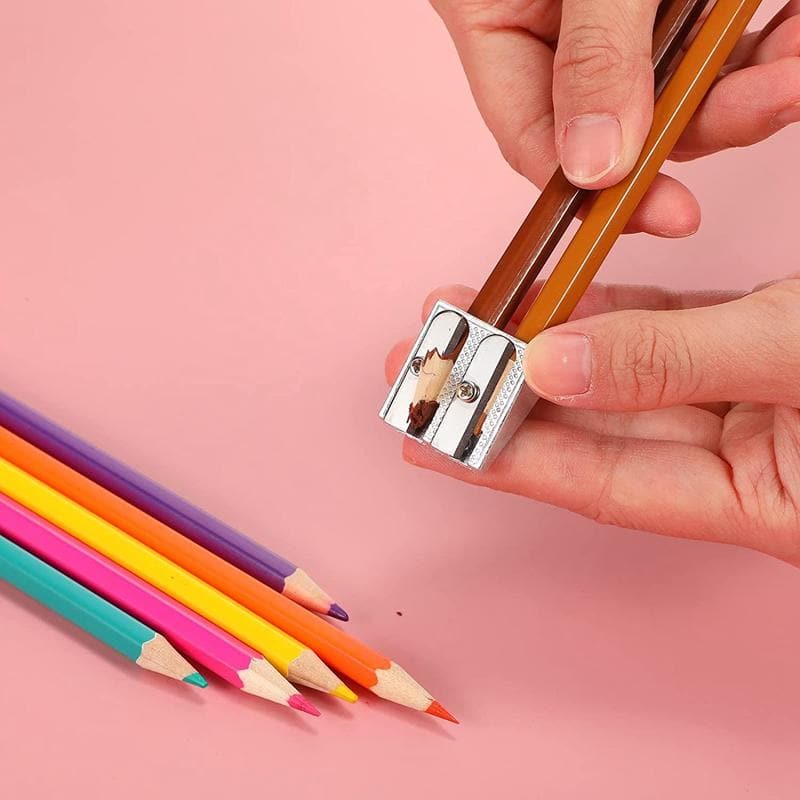
Check whether the pencil fits the sharpener and whether the blade is clean and sharp.
Look at the point produced by the sharpener. Is a long section of the colored core left exposed? Does the point break during sharpening, or only after drawing begins?
An incompatible sharpener, dull blade or unsuitable point shape may place additional stress on the core.
Fine-detail drawing may require a narrower point, while broad shading can often be performed with a shorter point. Evaluate the point shape that suits the intended drawing task rather than sharpening every pencil to the longest possible tip.
If a sharpener is included in the set, evaluate the pencil and sharpener together. Both components contribute to the customer's experience.
Packaging, Handling and Transportation
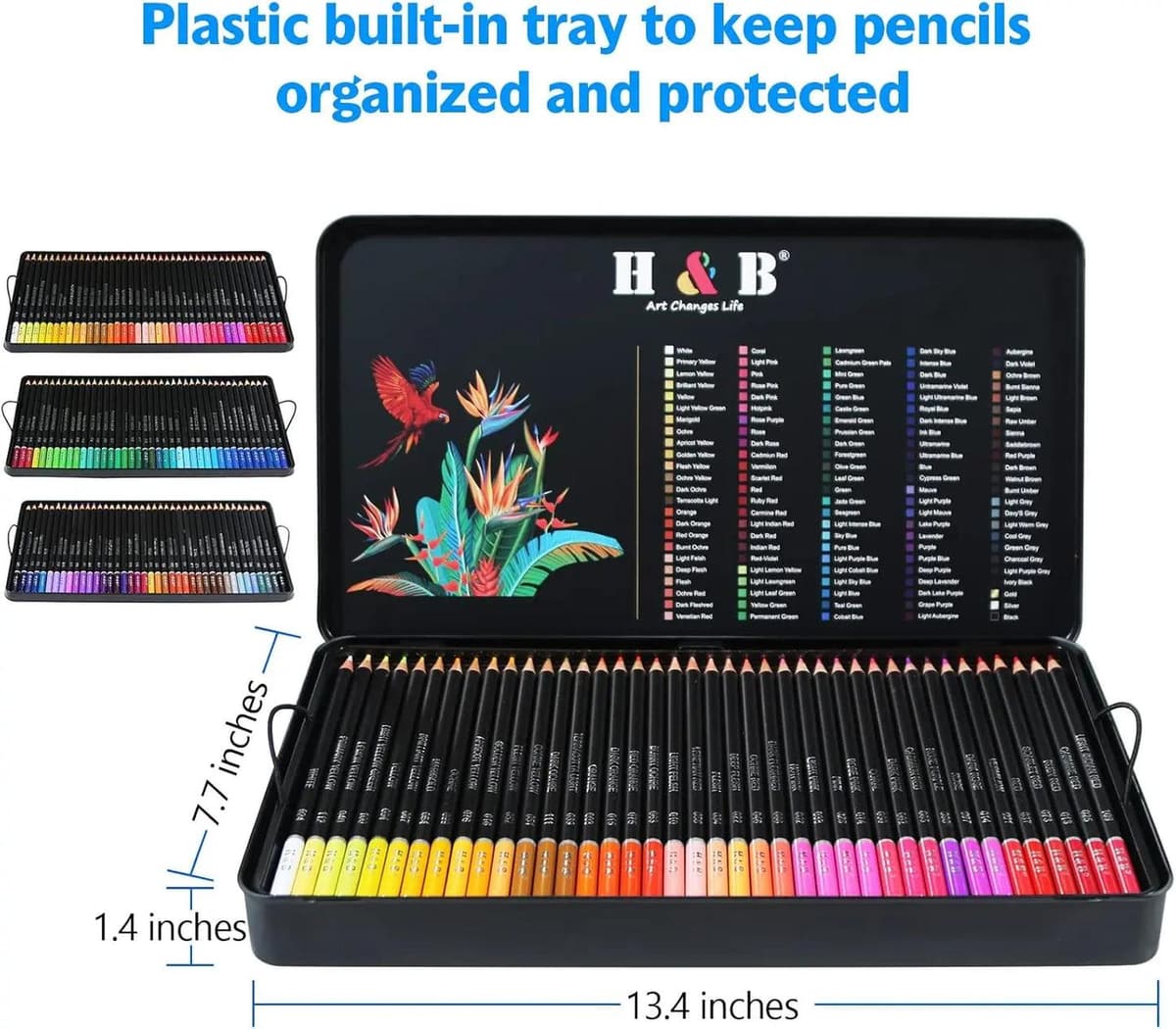
Open a fully packed sample and examine how the pencils are positioned.
Can the pencils move freely or strike one another? Does the inner tray hold them securely? Is the packaging closure suitable for repeated handling?
Check the outer carton as well. A visibly damaged carton may indicate a handling problem, although it does not establish that every pencil inside has been damaged.
For international bulk orders, packaging protection deserves attention because products may pass through several handling and distribution stages before reaching the end user.
Evaluate the complete packed set, not only the individual pencils. A metal tin, pencil case, plastic box or paper pack may require different internal support.
If transportation testing is required, agree on the packaging configuration, testing method and pass/fail criteria with the supplier before conducting the test.
Drawing Pressure and Intended Use
Use the colored pencil for the activity described on its packaging.
Heavy drawing pressure, repeated use of a very sharp point and rough paper surfaces may influence how the pencil tip behaves.
A pencil intended for broad shading does not need to feel identical to one designed for detailed illustration. Different core formulations and drawing applications may require different point shapes and handling techniques.
However, the pencil should perform adequately for its advertised purpose.
If users cannot complete the intended drawing task without repeated breakage, further product evaluation is necessary.
How Can Buyers Test Colored Pencil Breakage?
A repeatable sample comparison can help identify whether the problem is associated with a particular pencil, color, carton, batch or sharpening condition.
The purpose is to identify a pattern and determine the next investigation step, rather than calculate the defect rate of an entire shipment from a small number of samples.
Step 1: Select Comparable Samples
Keep the customer's affected pencil separate.
Where available, prepare unused pencils of the same color and batch, pencils of the same color from other cartons, several other colors from the affected batch and the approved pre-production reference sample.
Label the samples with their color codes, batch numbers and carton identification.
Agree on the sample quantity with the supplier according to the order size, complaint severity and inspection requirements.
Step 2: Evaluate Sharpening Performance
Start with a suitable sharpener whose blade is in good condition.
Use a consistent sharpening method for each comparable pencil. Record the number of pencils tested, sharpening cycles, resulting point shape and each breakage event.
Distinguish between minor tip chipping, complete point breakage and core separation.
If repeated breakage occurs, these details will help determine whether additional investigation is needed.
Step 3: Compare Another Sharpener if Necessary
If the pencils continue to break, test another compatible sharpener using a separate group of comparable unused pencils from the same batch wherever possible.
Reusing pencils that have already been shortened may affect the comparison.
Keep the results from the two sharpening tools separate so that any differences can be reviewed clearly.
Step 4: Evaluate Drawing Performance
Test the pencils on paper suitable for their intended application.
Try light-pressure lines, shaded areas, color layering and fine details. Keep the paper, drawing method and applied pressure as consistent as practical across the samples.
Does the point last long enough to complete the drawing task? Does the core crumble excessively on the paper? Does the user need to sharpen more frequently than expected?
Record failures during drawing separately from those occurring during sharpening.
| Sample Group | What to Compare |
|---|---|
| Customer's Affected Pencil | Original complaint and observable failure |
| Unused Same-Batch Pencils | Performance under the same sharpening and drawing conditions |
| Samples From Other Cartons | Whether the problem is limited to a particular carton |
| Other Colors | Whether breakage is concentrated in one color |
| Alternate-Sharpener Samples | Performance using a second compatible sharpening tool |
| Approved Reference Sample | Differences between approved and delivered products |
Keep the test sheets, broken core segments and photographs with the inspection record.
For example, a record stating that “three pencils from carton B experienced tip breakage during their second sharpening cycle” provides more useful information than simply stating that the cores are poor.
If the reported failure cannot be reproduced, record that result as well. A limited test with no observed failures does not prove that all pencils in inventory are free from defects.
What Should Buyers Do With the Affected Inventory?
The observed breakage pattern should guide the purchasing and inventory decision.
| Observed Issue | Recommended Buyer Action |
|---|---|
| One pencil fails, but comparable samples do not | Record the complaint, follow the agreed response to the customer and monitor related cases |
| One color fails repeatedly | Inspect the same color across additional sets and cartons |
| Similar failures appear across several cartons | Identify and consider setting aside the affected pencils until they can be inspected |
| Breakage occurs mainly with the supplied sharpener | Review sharpener compatibility, point shape and instructions |
| Packaging is visibly damaged | Inspect the inner and outer packaging before determining the cause |
| Cores repeatedly become loose | Request further inspection of pencil construction and sample history |
For retailers and distributors, connect complaints to inventory records and consider replacement costs, customer satisfaction and the accuracy of packaging claims.
For educational suppliers, evaluate whether repeated breakage interrupts classroom activities or causes pencils to be consumed too quickly through frequent sharpening.
For private-label brands, record any approved changes to the pencil, sharpener or packaging before the next production run. Update the product specification, physical reference sample and packaging artwork where necessary.
Ask the supplier to provide a written inspection summary covering the samples examined, observed findings, affected inventory, outstanding questions and proposed corrective actions.
Even when the exact cause remains uncertain, repeated failures may justify setting aside affected inventory until further inspection is complete.
How Can Buyers Reduce Breakage Risks in Future Orders?
Reducing quality risks begins with understanding how the customer will use the product and confirming the complete product configuration before production.
Define the Product Specifications
Start with the intended drawing application and target market.
An educational colored pencil set may have different requirements from a set designed for detailed illustration or advanced color layering.
Define the pencil type, core diameter, barrel shape, color assortment, supplied accessories and packaging configuration.
H&B Art offers different oil-based colored pencil configurations for dry drawing, shading and layering applications.
For buyers developing products for both dry and water-activated drawing techniques, watercolor pencils provide another product option.
Each pencil type should be evaluated according to its formulation, intended use and approved specifications rather than applying identical performance expectations to every product.
Approve the Complete Physical Sample
Test the exact pencils, accessories and packaging proposed for the order.
Keep an approved reference sample that reflects the complete product configuration.
If the supplier subsequently changes the core formulation, pencil construction, sharpener or packaging, determine which checks should be repeated before production.
Performance claims such as “break-resistant cores” should be supported by evidence applicable to the specific product. A larger core diameter alone is not a guarantee of greater break resistance.
Select Packaging for the Distribution Channel
Attractive packaging does not necessarily provide adequate product protection.
Different packaging formats require different purchasing considerations, particularly when products will be transported internationally or handled frequently by distributors, retailers and end users.
| Packaging Type | What Buyers Should Check |
|---|---|
| Metal Tin | Inner tray fit, pencil positioning and movement control |
| Zippered Pencil Case | Individual pencil retention and closure security |
| Roll-Up Pencil Case | Pencil retention, flexibility and fastening design |
| Plastic Case | Internal compartments, structural integrity and closure |
| Wooden Box | Internal fit, pencil positioning and shipping protection |
| Kraft Paper Packaging | Internal support, movement control and outer carton protection |
Test the complete packed sample under conditions relevant to the planned distribution channel.
Do not assume that pencils approved in one packaging configuration will perform identically when supplied in a different package.
Agree on Inspection Steps and Pass/Fail Rules
Establish inspection requirements before production begins.
Which colors and cartons will be sampled? Which sharpener and paper will be used? What counts as tip breakage, core separation or an unacceptable result?
What corrective action will be required if the product does not meet the agreed criteria?
Document these requirements in the product specification or buyer-supplier agreement.
Clear inspection procedures, batch traceability and approved reference samples provide a more consistent basis for evaluating delivered products.
H&B Art's colored pencil range includes different core specifications, color assortments, barrel configurations and packaging options for retail, educational and private-label markets.
Confirm the specifications and available configurations for the selected product before approving a bulk order.
Frequently Asked Questions
Why Do Colored Pencils Keep Breaking When Sharpened?
Repeated breakage may be associated with sharpener compatibility, blade condition, point shape, pencil construction or earlier handling.
Compare unused pencils under consistent sharpening conditions and evaluate another suitable sharpener if necessary.
Can Colored Pencils Have Internal Core Damage Without Visible Barrel Damage?
Yes. Internal core fractures may occur even when the wooden barrel appears undamaged.
However, repeated sharpening failures alone do not establish the presence or cause of internal damage. Comparing unused samples and suitable sharpening tools can help guide further inspection.
Does One Broken Colored Pencil Mean the Entire Batch Is Defective?
No. A single affected pencil does not establish a batch-wide quality problem.
Compare pencils from different sets, colors and cartons. If similar failures occur repeatedly, expand the inspection according to the agreed sampling procedure and identify the pencils that may be affected.
What Should Buyers Check Before Placing a Bulk Colored Pencil Order?
Approve a representative physical set, evaluate sharpening and drawing performance, inspect the complete packaging and agree on product-specific inspection steps and pass/fail criteria with the supplier.
The approved reference sample should reflect the product configuration intended for bulk production.
Conclusion: Make Evidence-Based Purchasing Decisions
Repeated colored pencil core breakage deserves a structured investigation rather than a quick explanation.
Start with the customer's experience, preserve physical samples and compare similar pencils under consistent sharpening and drawing conditions. Review pencil construction, packaging protection and the intended application before determining the appropriate corrective action.
For future orders, clearly defined product specifications, approved physical samples, suitable packaging and agreed inspection requirements can help reduce quality risks and support more consistent product performance.
The objective is not to assume that every broken pencil has the same cause, but to identify what needs to be checked, what needs to change and what should be confirmed before the next purchase order.