Top 10 Essential Tools Every Fine Art Studio Needs in 2026
Why Studio Tool Selection Matters More Than Ever in 2026
In 2026, a fine art studio is no longer defined solely by easels and paint. Today's professional artists operate at the intersection of traditional craftsmanship and digital workflow, requiring tools that bridge both worlds. Whether you are a gallery-exhibiting painter, a freelance illustrator managing commissions, an educator running workshops, or an OEM brand curating studio supply kits for your customers, the right set of tools separates productive, profitable studios from cluttered, inefficient ones. This guide covers the 10 essential categories every serious art studio needs — selected not for trendiness but for daily, measurable impact on workflow quality and creative output. At H&B Art, we manufacture many of the consumable supplies in this list — from colored pencils and acrylic markers to pastels and sketch kits — and we understand, from 16 years of serving professional artists globally, exactly what makes a tool essential.
1. The Professional Easel: Your Canvas Command Center
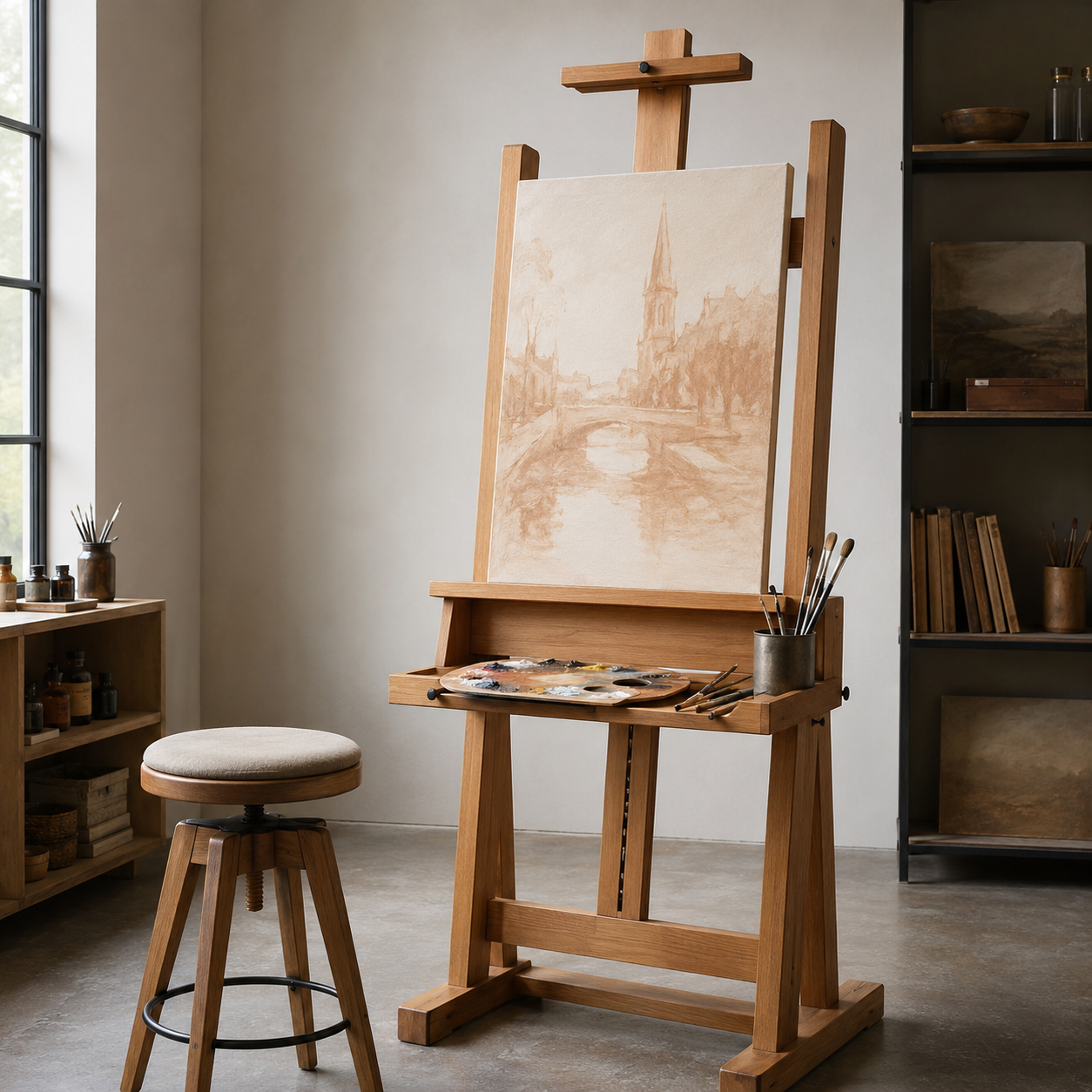
A studio easel is the single most important piece of equipment a painter owns. The right easel provides adjustable height and tilt angles, sturdy construction that absorbs brush pressure without wobbling, and adequate size capacity for your largest typical canvas. In 2026, the standard has shifted toward H-frame studio easels in hardwood (beech or oak) with ratchet-based height adjustment — more stable than A-frame or tripod designs, and capable of holding canvases up to 85 inches. For studios with limited space, wall-mounted folding easels have evolved significantly: modern versions feature gas-spring assist and built-in LED task lighting, making them viable alternatives to full floor easels. Budget recommendation: a solid H-frame easel should cost $150-$400; anything below $100 typically lacks the mass and stability for serious work. For art supply OEM brands, easel accessories — brush trays, canvas clips, extension masts — represent high-margin add-on opportunities with strong repeat purchase patterns.
2. Studio Lighting: Color Accuracy Is Non-Negotiable
Inadequate lighting is responsible for more color-matching errors than any other factor in a professional studio. In 2026, the standard is 5000K color temperature (D50 daylight simulation) with a Color Rendering Index (CRI) of 95 or higher. Many artists still work under warm household bulbs (2700K-3000K), which cause yellows and greens to appear dull and distort color choices that show up disastrously under gallery lighting, in photographs, or in print reproductions. LED panel lights with adjustable brightness and color temperature are now the default choice, offering instant-on performance, negligible heat output, and 50,000+ hour lifespans. For professional studios: mount two 5000K LED panels at 45-degree angles to the easel, positioned 3-4 feet away, achieving even, shadow-free illumination. For traveling artists and workshop educators, portable LED clip-on lights with USB-C rechargeable batteries are the fastest-selling lighting accessory in art supply catalogs — a high-demand OEM product category.
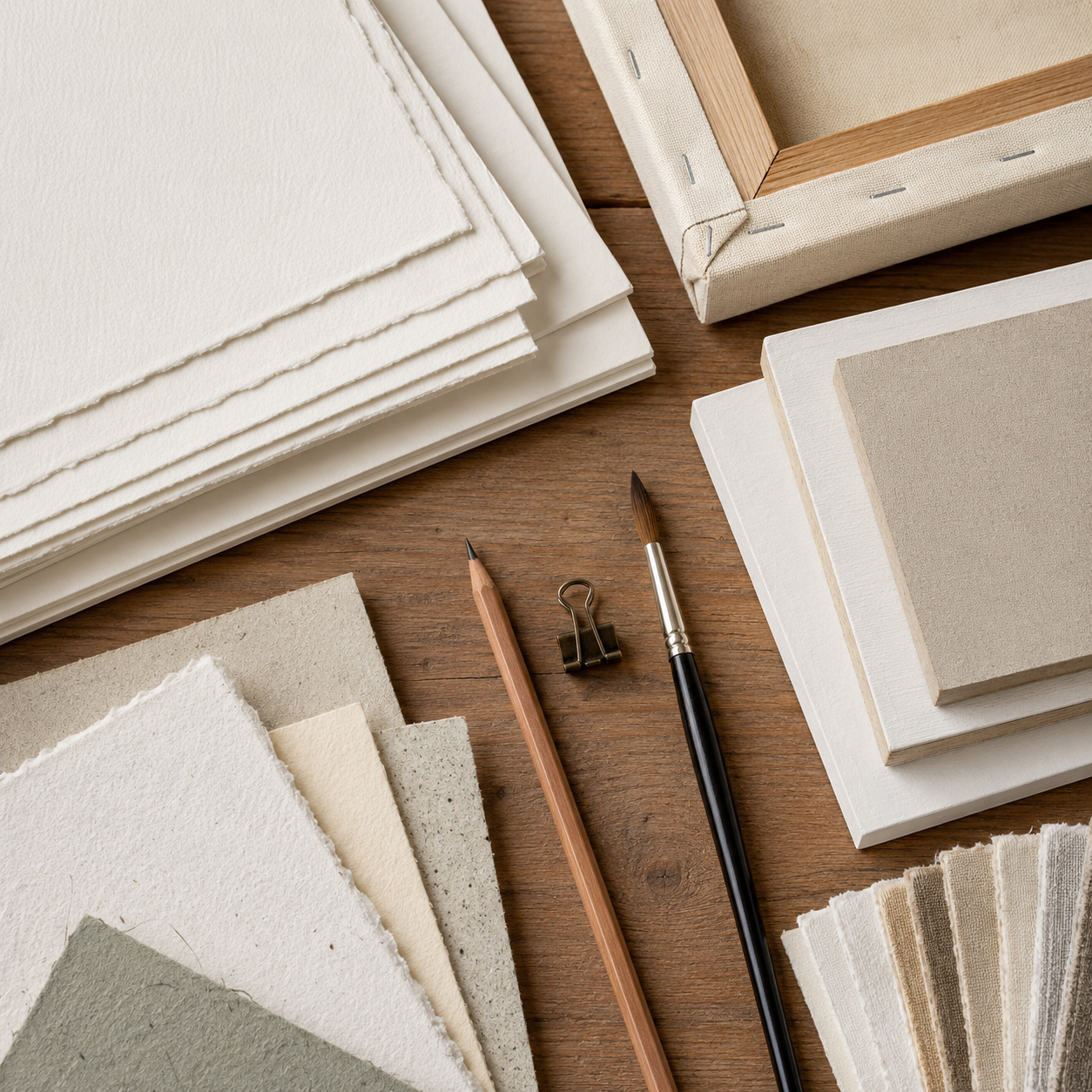
3. Paper and Canvas: The Foundation of Every Piece
No tool in this list has a greater impact on final artwork quality than the painting surface. Professional artists stock at least four surface types: stretched cotton canvas (medium to heavy weight, double-primed with acid-free gesso, 8oz or heavier), canvas panels for studies and quick work, specialty papers — hot-press watercolor paper for detailed acrylic work, cold-press for texture, pastel paper with 400+ grit tooth for soft pastels, mixed-media paper (minimum 98lb/160gsm) for marker and colored pencil, and wood panels (birch or maple cradled panels) gaining popularity for acrylic pouring and encaustic. The difference between student-grade and professional surfaces shows in archival longevity: acid-free, lignin-free papers with alkaline buffering will not yellow or embrittle over decades. For OEM brands, surface supplies represent the highest-volume recurring revenue category — artists consume paper and canvas at 3-5x the rate of any other consumable.
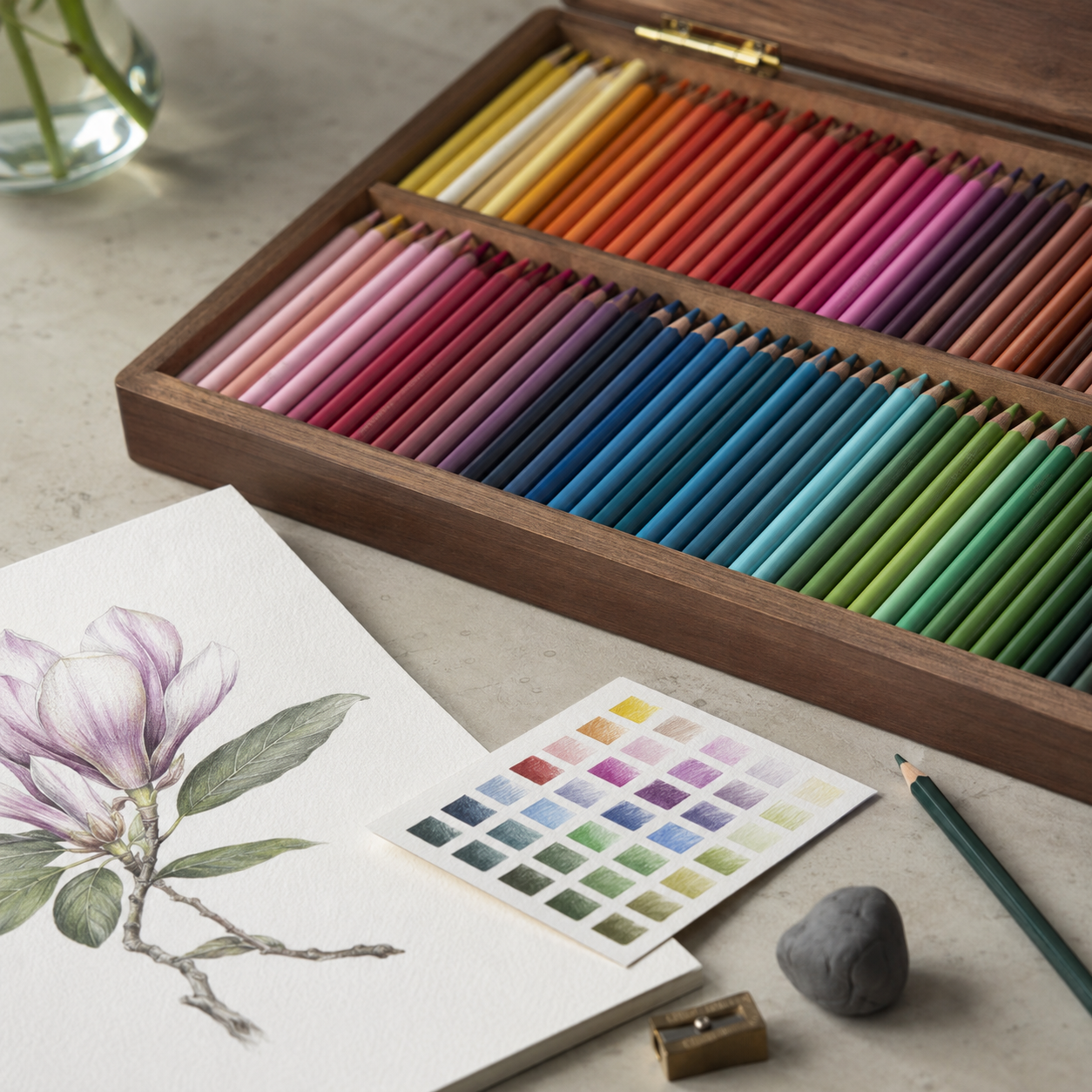
4. Colored Pencils: The Precision Workhorse
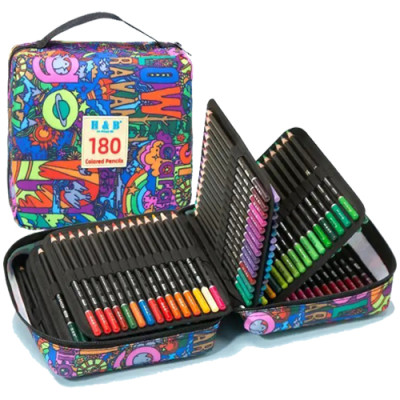
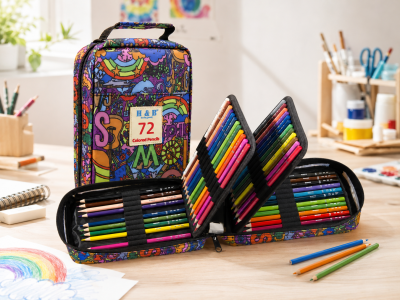
Every professional studio — regardless of primary medium — keeps a high-quality colored pencil set on hand. In 2026, the standard for professional colored pencils includes: 3.3mm-3.8mm soft-core leads with high pigment concentration (90%+ for artist grade), break-resistant center-bonded casings, oil-based or wax-based binders depending on the desired finish, lightfastness ratings of ASTM LF-I or LF-II, and at minimum 72 colors, with 120-180 colors becoming the new professional benchmark. Artists working across illustration, botanical drawing, architectural rendering, and portrait commissions rely on colored pencils for their precision, portability, and layering capability unmatched by any wet medium. At H&B Art, our professional colored pencil lines are manufactured with German-micronized mineral pigments and Japanese wax-oil binder formulations — the same supply chain foundation used by brands priced 3-5x higher at retail.
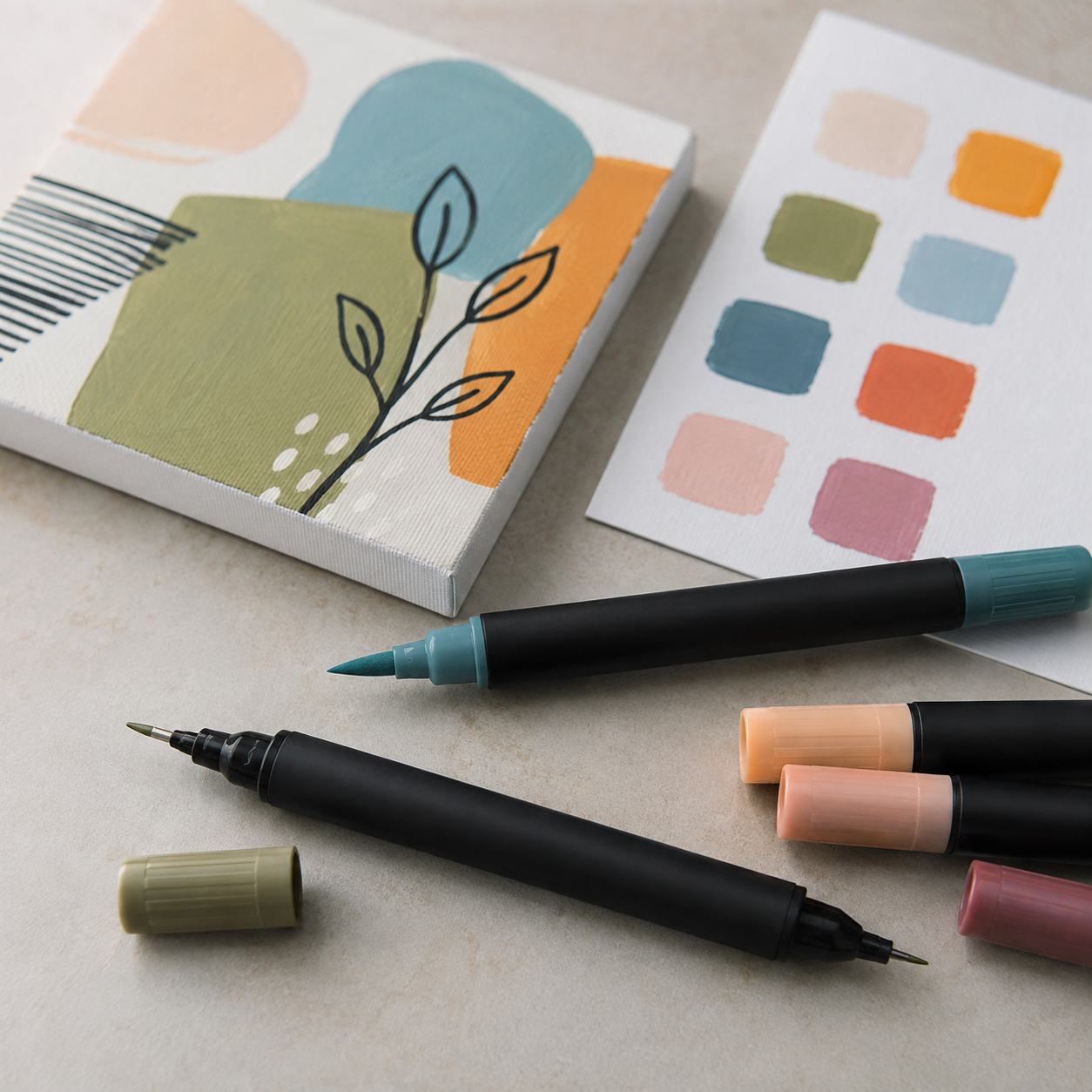
5. Acrylic Markers: The Bridge Between Drawing and Painting
Acrylic paint markers have exploded in popularity between 2023 and 2026, becoming the fastest-growing art supply category globally. Professional studios use them for: canvas detail work that brushes cannot achieve cleanly, rock and ceramic art, skateboard and sneaker customization, large-format murals where brush cleanup is impractical, and mixed-media pieces combining marker line work with traditional acrylic washes. The professional marker standard in 2026 includes: dual-tip design (fine point 1-3mm for detail + brush tip 3-6mm for coverage), water-based acrylic ink with high opacity on dark surfaces, ASTM D-4236 and EN71-3 certifications, multi-surface compatibility (canvas, wood, ceramic, glass, metal, fabric, plastic), and 48-120 color range with metallic and neon options. Paint markers are also the highest-growth OEM category — private label brands launching marker lines have seen 40-80% year-over-year revenue growth on platforms like Amazon and Etsy.
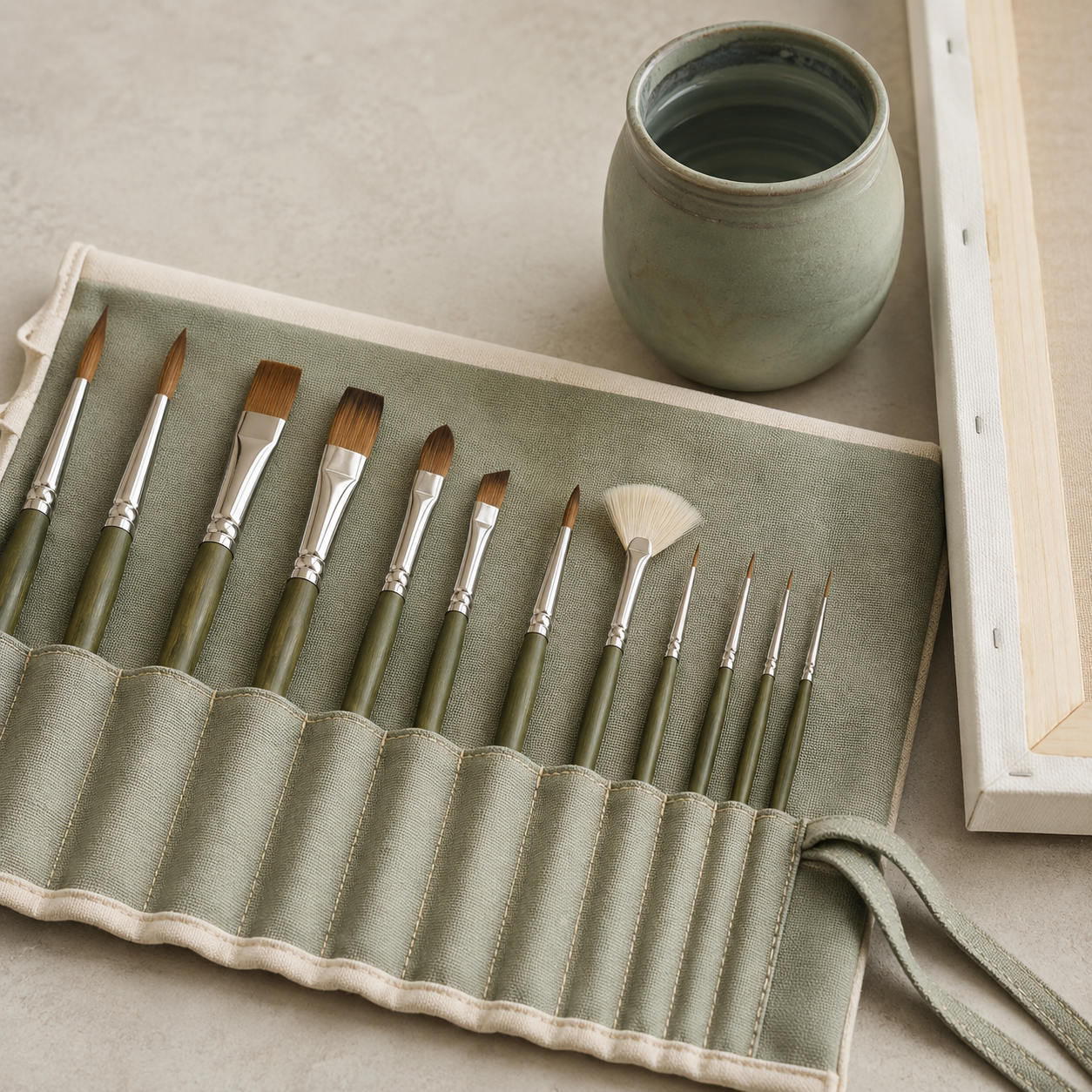
6. Brushes: The Artist's Most Personal Tool
Every professional artist develops a relationship with their brushes that borders on personal. In a well-equipped 2026 studio, you will find a curated set of 15-25 brushes spanning six essential shapes: rounds (sizes 0-12 for detail to broad strokes), flats and brights (sizes 2-24 for coverage and edges), filberts (sizes 2-12 for blending and organic shapes), fans (sizes 2-6 for texture and foliage), liners and riggers (sizes 0-2 for ultra-fine detail), and wash and mop brushes for large-scale coverage. Brush fiber choice splits between natural hair (Kolinsky sable for watercolor, hog bristle for heavy-body acrylic and oil) and high-quality synthetic (Taklon or proprietary nylon blends for acrylics, offering better spring and durability at lower cost). Professional artists clean brushes immediately after every session with brush soap and conditioner, store them bristles-up or horizontally, and replace worn brushes proactively — a damaged tip compromises an entire painting. For OEM suppliers, brush sets paired with paint or marker sets command 15-25% higher average order value than standalone products.
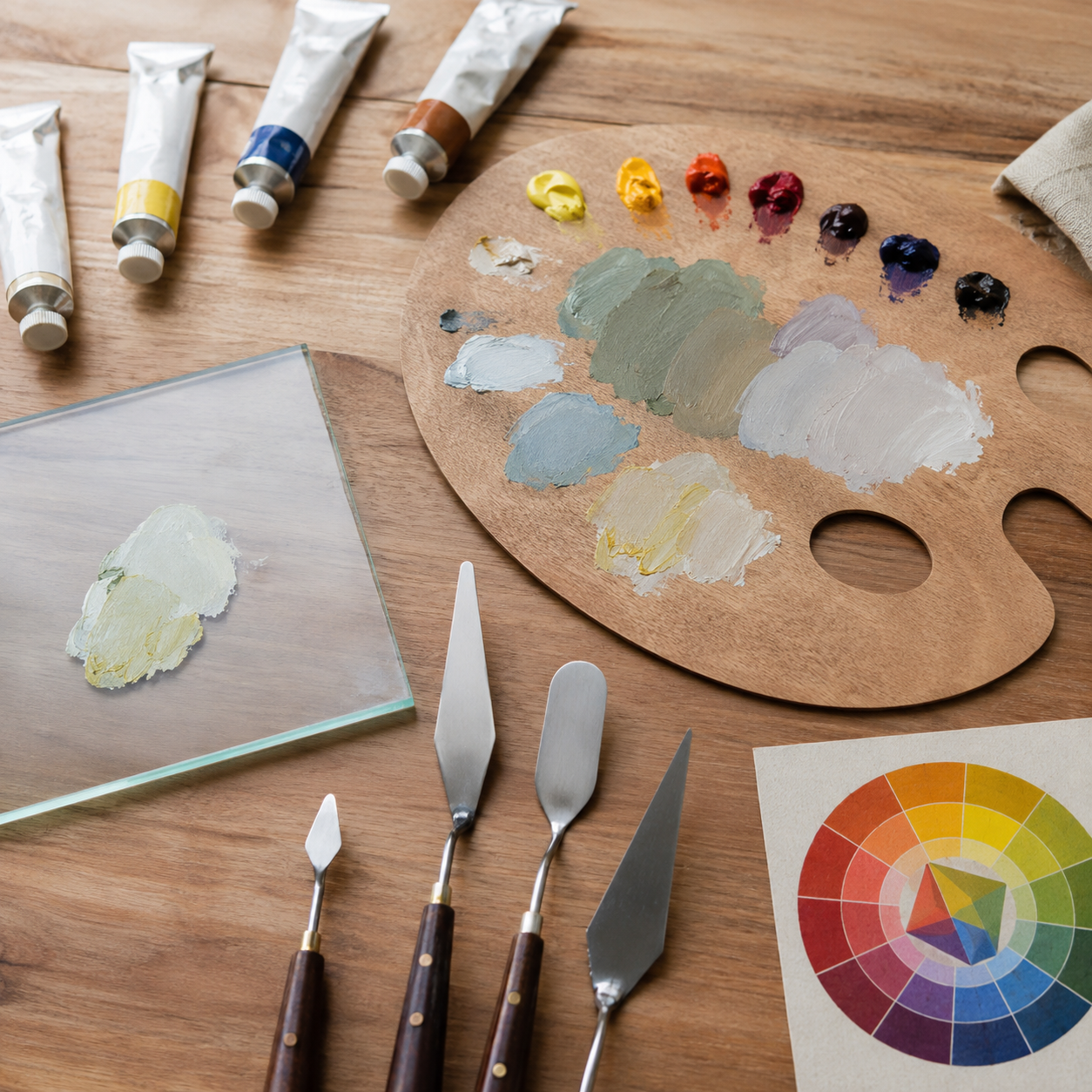
7. Palette and Mixing Tools: Where Color Theory Meets Practice
A professional palette is a strategic tool, not just a paint-holding surface. In 2026, artists choose palettes based on their primary medium: acrylic and oil painters use stay-wet palettes (airtight containers with hydration layers) to keep paint workable for days, reducing waste by up to 40%; watercolorists prefer porcelain or enameled steel palettes with deep wells and large mixing areas; pastel artists and colored pencil artists use compartmentalized trays that prevent color cross-contamination between compartments. The stay-wet palette represents the single most impactful consumable upgrade for an acrylic painter — the 40% reduction in paint waste alone pays for the palette within weeks of active studio use. Glass palettes (tempered, 4-6mm thick, with a neutral gray or white backing sheet) offer the easiest cleanup and the best surface for color-mixing accuracy, but require a dedicated permanent studio space.
8. Digital Tools: The Tablet and Scanner Revolution
In 2026, digital devices are not optional add-ons — they are integrated components of a professional studio workflow. The essential digital toolkit includes: a graphics tablet with display (iPad Pro with Apple Pencil or Wacom Cintiq 16" or larger) for digital sketching, color studies, and commission previews before committing to physical media; a high-resolution flatbed scanner (minimum 600 DPI optical, 48-bit color depth) for digitizing traditional artwork for prints, portfolios, and online sales; color-calibrated monitor (100% sRGB and 95%+ Adobe RGB coverage, hardware-calibrated with a colorimeter) for accurate digital-to-physical color matching; and studio management software — inventory tracking, commission scheduling, and pricing calculators. The tablet's most underrated studio function is color testing: artists can rapidly test dozens of color combinations digitally before committing expensive paint to canvas, saving hours and materials per piece. For OEM brands selling studio kits, including a QR code that links to a digital color-palette tool or instructional video is an emerging differentiator that costs virtually nothing to implement.
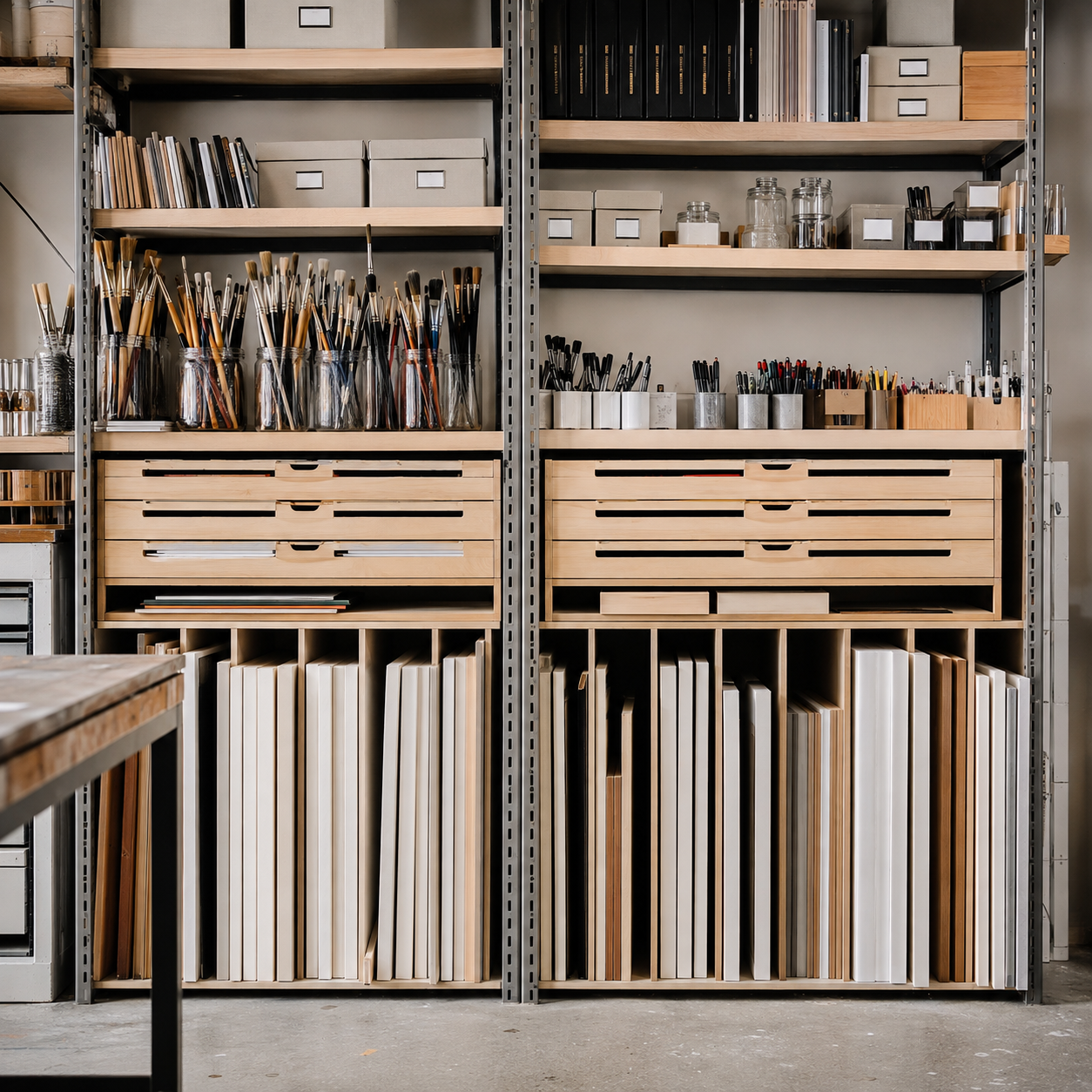
9. Storage and Organization: Protecting Your Investment
Art supplies represent a significant financial investment — a professional colored pencil set of 120 colors can cost $60-$120, and a full brush collection can exceed $500. Proper storage extends product life and protects that investment. Essential studio storage includes: marker and pencil cases with individual slots that prevent tip damage and allow color-at-a-glance identification (canvas roll-up cases remain the preferred format for portability; rigid toolbox-style cases for studio use); brush drying racks that hold brushes bristles-down at an angle to prevent water from seeping into the ferrule and dissolving the glue — the leading cause of premature brush failure; artwork drying racks (horizontal stacking, 20-50 shelves) for managing multiple in-progress pieces; and flat-file cabinets (steel, 5-10 drawers, 24"x36" minimum) for storing finished works on paper or unframed canvas. Label everything. Artists who implement systematic labeling and inventory tracking report a 30% reduction in duplicate supply purchases and a significant decrease in dried-out, forgotten materials.
10. Safety and Studio Environment: The Invisible Tool
The most overlooked studio tool is the studio environment itself. A professional space must address: ventilation — a HEPA air purifier (CADR rating matching room square footage) is essential for artists working with solvent-based media, spray fixatives, or acrylic mediums that release volatile organic compounds during curing; ergonomics — an adjustable-height drafting chair with lumbar support and a footrest prevents the chronic back and neck pain that ends careers; lighting controls — blackout curtains or blinds enable control over natural light, essential for still-life setups and consistent color work across sessions; and safety equipment — nitrile gloves, safety glasses for heavy-body paint work, and a well-stocked first aid kit with eye wash. Painters working 40+ hours weekly in poorly ventilated, non-ergonomic spaces report a 60% higher incidence of chronic pain and respiratory irritation compared to those with optimized environments — conditions that directly reduce creative output and career longevity.

H&B Art: Supplying the Consumables That Power Professional Studios
At H&B Art, we manufacture the everyday consumables that sustain professional art studios worldwide — colored pencils, pastels, acrylic markers, paint sets, sketch kits, and drawing tools. With 16 years of OEM manufacturing experience, we understand that the difference between a student-grade and artist-grade product is measured in microns of pigment particle size, percentage points of lightfastness rating, and layers of quality control inspection. Every product leaving our 5,000m2 Shanghai facility has been through a 5-stage QC process and certified to ASTM D-4236 and EN71-3 international safety standards. Whether you are an independent artist restocking your studio supplies, an educator equipping a classroom, or an OEM brand building a studio kit product line for your customers, H&B Art provides the quality, consistency, and certification support your work demands. Contact us today to request samples or discuss custom OEM requirements for your studio supply line.